
July 12, 2026 · Bizware
Marketing Agency Cost: 2026 Pricing Guide & Fee Models
Discover marketing agency cost structures for 2026. Compare pricing models, typical fees, and budget factors to maximize your marketing ROI.

Understanding marketing agency cost is essential for businesses planning their 2026 marketing budgets. The investment required to partner with a professional marketing firm varies significantly based on service scope, agency expertise, pricing structure, and project complexity. Whether you're exploring traditional marketing services or evaluating AI implementation services to enhance your sales and marketing operations, knowing what to expect financially helps you make informed decisions and maximize return on investment.
How Marketing Agencies Structure Their Pricing
Marketing agencies employ multiple pricing frameworks, each designed to align with different client needs and project types. The marketing agency cost model you choose directly impacts cash flow management, budget predictability, and overall partnership dynamics.
Monthly Retainer Pricing
Monthly retainer agreements represent the most common pricing structure in 2026. Agencies charge a fixed monthly fee for a defined scope of services, creating predictable costs for both parties. This model typically ranges from $3,000 to $25,000 monthly, depending on service breadth and agency reputation.
Key advantages of retainer pricing:
- Predictable monthly expenses for budgeting purposes
- Consistent access to agency expertise and resources
- Long-term strategic partnership development
- Priority service during peak periods
Retainer relationships work particularly well for ongoing needs like content marketing, social media management, and comprehensive digital marketing programs. The marketing agency pricing models you select should match your business objectives and resource availability.

Project-Based Fee Structure
Project-based pricing establishes a fixed cost for specific deliverables with defined start and end dates. Marketing agency cost under this model ranges from $5,000 for simple campaigns to over $100,000 for complex, multi-channel initiatives.
This approach suits businesses with distinct projects like website redesigns, product launches, or seasonal campaigns. Agencies typically provide detailed proposals outlining deliverables, timelines, and payment schedules. According to agency pricing models explained, project fees in 2026 have increased approximately 8-12% compared to 2025 due to enhanced AI integration requirements and data privacy compliance costs.
| Project Type | Typical Cost Range | Timeline |
|---|---|---|
| Website Redesign | $15,000 - $75,000 | 2-4 months |
| Brand Identity | $10,000 - $50,000 | 1-3 months |
| Product Launch Campaign | $20,000 - $100,000 | 2-6 months |
| SEO Audit & Strategy | $5,000 - $25,000 | 1-2 months |
Hourly Rate Arrangements
Hourly billing provides maximum flexibility for variable workloads or advisory relationships. Marketing agency cost per hour typically ranges from $100 to $300, with specialized expertise commanding premium rates. Senior strategists and technical specialists often bill at $250-$400 per hour in major metropolitan markets.
This model works best for consulting engagements, occasional project support, or when scope remains uncertain. However, hourly arrangements can create budget unpredictability and misaligned incentives if not carefully managed.
Factors That Influence Marketing Agency Cost
Multiple variables affect the total investment required to partner with a marketing agency. Understanding these factors helps businesses set realistic budgets and evaluate proposals effectively.
Agency Expertise and Specialization
Specialized agencies with proven track records in specific industries or channels command higher fees than generalists. Agencies focusing on advanced technologies like sales AI systems or niche B2B markets typically charge 20-40% premiums compared to general-practice firms.
Specialization areas that impact pricing:
- Industry vertical expertise (healthcare, finance, technology)
- Technical capabilities (AI integration, marketing automation, data analytics)
- Channel mastery (paid search, programmatic advertising, influencer marketing)
- Geographic market knowledge (international vs. domestic)
Service Scope and Complexity
Comprehensive marketing programs involving multiple channels, complex customer journeys, and sophisticated analytics naturally cost more than single-channel initiatives. The marketing services required for enterprise-level operations differ significantly from small business needs.
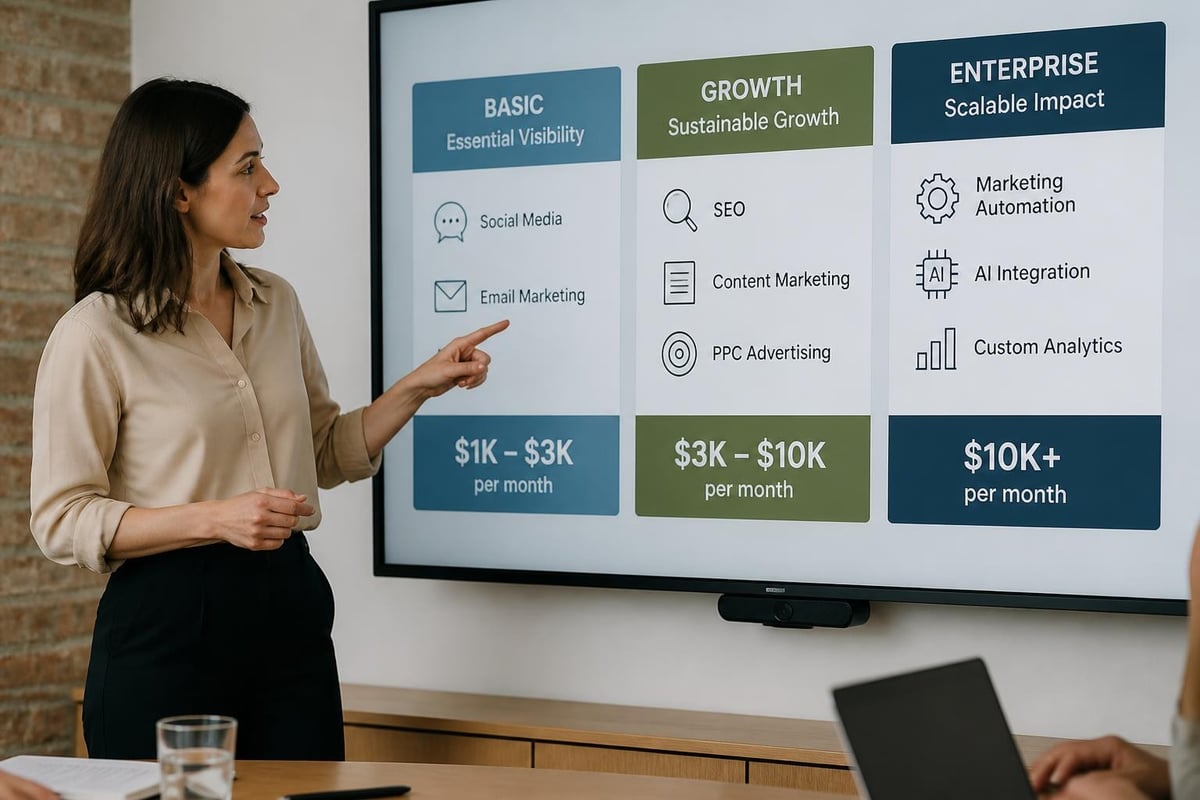
A full-service digital marketing program including SEO, PPC, content marketing, email campaigns, and social media management typically starts at $10,000 monthly. Adding advanced services like marketing automation, CRM integration, or custom AI solutions increases costs proportionally.
Team Composition and Seniority
Marketing agency cost reflects the expertise level of professionals assigned to your account. Senior strategists, creative directors, and technical specialists bill at higher rates than junior team members. Most agencies balance team composition to optimize value while controlling costs.

Performance-Based and Value-Based Pricing Models
Beyond traditional pricing structures, innovative compensation models align agency incentives with client business outcomes. These arrangements represent growing trends in 2026 as businesses demand greater accountability from marketing investments.
Performance-Based Compensation
Performance-based pricing ties marketing agency cost to measurable results like lead generation, revenue growth, or customer acquisition. Agencies typically charge a lower base fee plus bonuses when hitting predetermined targets.
This model appeals to businesses seeking risk-sharing partnerships and direct ROI accountability. However, marketing agency pricing guide research indicates that performance pricing requires clear attribution methods, realistic goal-setting, and longer partnership commitments to succeed.
Common performance metrics:
- Cost per lead (CPL) targets
- Customer acquisition cost (CAC) thresholds
- Revenue attribution percentages
- Conversion rate improvements
- Market share gains
Value-Based Pricing Framework
Value-based pricing establishes fees based on the business value created rather than time invested or services delivered. An agency might charge $50,000 for a campaign that generates $500,000 in new revenue, regardless of hours worked.
This approach requires deep understanding of client economics, strong strategic capabilities, and confidence in delivering measurable outcomes. Value-based models work best for agencies with proven methodologies and clients with clear attribution systems.
Service-Specific Marketing Agency Cost Breakdown
Different marketing services carry distinct price ranges based on complexity, resource requirements, and market demand. Understanding category-specific costs helps businesses allocate budgets appropriately.
Digital Advertising Management
Paid advertising management fees typically range from 10-20% of monthly ad spend, with minimum fees of $1,500-$3,000. For example, a company spending $20,000 monthly on Google Ads might pay $2,500-$4,000 in management fees.
| Ad Platform | Typical Management Fee | Minimum Monthly Fee |
|---|---|---|
| Google Ads | 12-20% of spend | $2,000 |
| Facebook/Instagram | 10-18% of spend | $1,500 |
| LinkedIn Ads | 15-25% of spend | $2,500 |
| Programmatic Display | 15-20% of spend | $3,000 |
The marketing agency fees structure for advertising management reflects the technical expertise required for campaign optimization, audience targeting, and performance analytics.
Content Marketing and SEO Services
Content marketing and search engine optimization represent long-term investments with variable pricing. Monthly SEO retainers range from $2,500 to $15,000, depending on competitiveness, site complexity, and content volume requirements.
Comprehensive content programs including strategy, creation, distribution, and optimization typically start at $5,000 monthly. Enterprise-level programs with extensive content production, advanced SEO, and multi-channel distribution can exceed $25,000 monthly. Businesses exploring B2B email marketing integration often add $2,000-$5,000 to base content costs.
Social Media Management
Social media marketing agency cost varies based on platform quantity, posting frequency, and content creation requirements. Basic management (3-4 platforms, daily posting, community management) starts around $2,000 monthly. Comprehensive programs with advanced content production, influencer partnerships, and paid social integration range from $5,000 to $20,000 monthly.
Marketing Automation and CRM Integration
Technical marketing services including marketing automation setup, CRM integration, and workflow development command premium pricing due to specialized expertise requirements. Initial implementation projects range from $10,000 to $50,000, with ongoing optimization retainers of $3,000-$10,000 monthly.
Businesses implementing sales performance management systems or custom AI solutions often require extensive integration work, increasing marketing agency cost proportionally.
Hidden Costs and Additional Expenses
Beyond base fees, marketing partnerships often involve supplementary costs that impact total investment. According to marketing agency cost analysis, these additional expenses can increase total spending by 15-30%.
Software and Technology Costs
Marketing agencies utilize various platforms and tools that may be billed separately. Common software expenses include:
- Marketing automation platforms ($500-$3,000 monthly)
- Analytics and reporting tools ($200-$1,000 monthly)
- Design and creative software ($100-$500 monthly)
- Project management systems ($50-$200 monthly)
Some agencies include technology costs in their base fees, while others pass expenses directly to clients. Clarifying this upfront prevents budget surprises.
Media Spend and Production Costs
Paid advertising budgets, content production expenses, and creative development costs typically fall outside agency fees. A $10,000 monthly retainer might require an additional $15,000-$50,000 in media spend to execute the strategy effectively.
Common additional expenses:
- Photography and videography production
- Stock imagery and asset licensing
- Influencer partnership fees
- Event sponsorships and activations
- Premium content distribution platforms
Rush Fees and Scope Changes
Projects requiring expedited timelines or significant scope modifications often incur additional charges. Rush fees typically add 25-50% to standard pricing, while scope changes are billed hourly or through change order processes.
Evaluating Marketing Agency Cost Against Expected Returns
Smart businesses assess marketing agency cost within the context of expected returns and business impact. The marketing agency charges by service should align with your customer lifetime value, acquisition goals, and revenue objectives.
Calculating Acceptable Customer Acquisition Cost
Determine your maximum acceptable customer acquisition cost (CAC) based on customer lifetime value (LTV). Industry best practices suggest maintaining a 3:1 LTV to CAC ratio minimum. If your average customer generates $10,000 lifetime value, your total marketing investment per customer should not exceed $3,333.
This calculation framework helps evaluate whether proposed marketing agency cost structures align with business economics. A $15,000 monthly retainer delivering 10 qualified customers monthly yields a $1,500 CAC, which works if your LTV exceeds $4,500.
Setting Realistic Timeline Expectations
Marketing investments require time to generate returns. SEO initiatives typically need 6-12 months to show significant results, while paid advertising can drive immediate traffic. Understanding these timelines helps evaluate marketing agency cost effectiveness appropriately.
| Marketing Channel | Time to Initial Results | Time to Maturity |
|---|---|---|
| SEO | 3-6 months | 12-18 months |
| PPC Advertising | 1-4 weeks | 3-6 months |
| Content Marketing | 2-4 months | 9-15 months |
| Email Marketing | 2-6 weeks | 4-8 months |
| Social Media | 1-3 months | 6-12 months |
Comparing In-House vs. Agency Costs
Building internal marketing capabilities involves salaries, benefits, technology costs, training, and management overhead. A mid-level digital marketer costs $75,000-$95,000 annually including benefits, while senior specialists command $100,000-$150,000 or more.
Agencies provide access to diverse expertise, advanced tools, and strategic insights at costs often lower than equivalent in-house teams. However, internal teams offer greater control, institutional knowledge, and dedicated focus. Many businesses adopt hybrid approaches, maintaining core capabilities internally while outsourcing specialized functions.
Negotiating Marketing Agency Contracts and Fees
Effective negotiation ensures marketing agency cost aligns with budget constraints while establishing productive partnerships. Most agencies expect some negotiation and build flexibility into initial proposals.
Understanding Contract Terms and Commitments
Agency contracts typically specify service scope, deliverables, payment terms, performance metrics, and termination conditions. Initial contracts often require 6-12 month commitments, though some agencies offer month-to-month arrangements at premium rates.
Key contract elements to review:
- Service level agreements (SLAs) and response times
- Deliverable specifications and approval processes
- Ownership of creative assets and content
- Termination clauses and notice requirements
- Non-compete and exclusivity provisions
Requesting Transparent Pricing Breakdowns
Ask agencies to itemize pricing by service component, team member allocation, and time estimates. Detailed breakdowns help identify cost drivers and potential optimization opportunities. Transparency in marketing agency pricing guide structures builds trust and facilitates productive discussions.
Exploring Flexible Engagement Models
Many agencies offer tiered service packages or modular options allowing businesses to start small and scale investment as results materialize. Pilot projects lasting 3-6 months let both parties assess fit before committing to long-term partnerships.
Consider proposing hybrid pricing models combining elements of different structures. For example, a base retainer plus performance bonuses creates predictable costs while aligning incentives around results.
Selecting the Right Agency for Your Budget
Marketing agency cost represents just one factor in partner selection. The optimal choice balances investment level with expertise, cultural fit, strategic alignment, and proven results in your industry or market.
Matching Agency Size to Business Needs
Large agencies offer extensive resources, diverse capabilities, and established processes but often charge premium rates and assign junior team members to smaller accounts. Boutique agencies provide senior-level attention and specialized expertise at moderate costs but may lack breadth for comprehensive programs.
Mid-size agencies frequently offer the best value proposition for growing businesses, combining specialized expertise with reasonable pricing and dedicated attention. Businesses interested in marketing your business with modern approaches should seek agencies demonstrating technical sophistication and strategic thinking.
Verifying Industry Experience and Results
Review case studies, client references, and performance data from companies similar to yours in size, industry, and objectives. Agencies with relevant experience typically deliver results faster and more efficiently, justifying higher marketing agency cost through superior outcomes.
Request specific examples of challenges addressed, strategies employed, and measurable results achieved. Generic portfolios without performance data raise concerns about actual capabilities.
Assessing Cultural and Communication Fit
Partnership quality significantly impacts marketing program success. Evaluate communication styles, responsiveness, strategic thinking, and collaborative approach during the selection process. Agencies aligned with your values, pace, and business philosophy deliver better long-term results regardless of pricing structure.
Schedule working sessions or trial projects before committing to extensive contracts. These interactions reveal how agencies approach problems, communicate recommendations, and respond to feedback.
Understanding marketing agency cost structures and evaluation criteria empowers businesses to make informed investment decisions that drive measurable growth. Whether you choose retainer, project-based, or performance pricing models, aligning costs with business objectives and expected returns creates foundation for successful partnerships. Ryan Cook specializes in developing custom AI solutions that enhance sales and marketing effectiveness while optimizing resource allocation. Our sales AI systems support your entire revenue operation from lead generation through customer onboarding. Discover how intelligent automation can transform your marketing performance at Ryan Cook.