
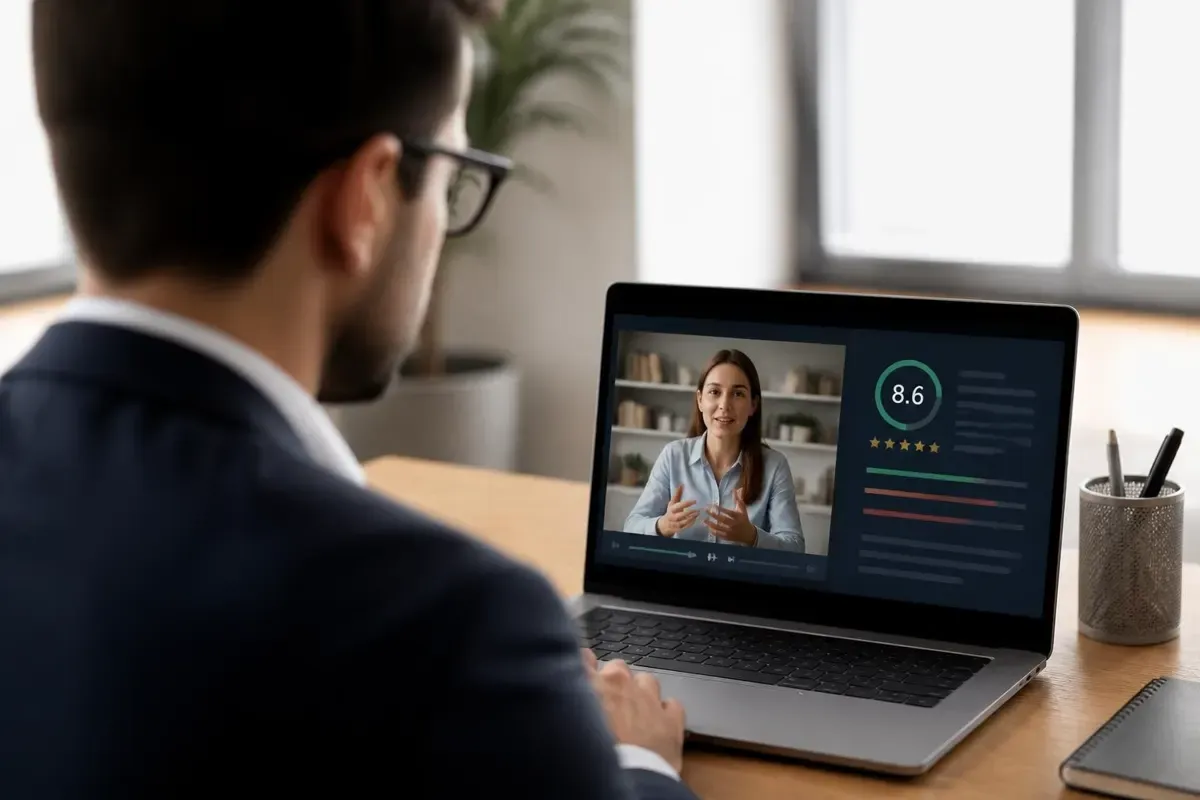
If you lead a small B2B sales team, you may not need another dashboard. You may need a better way to answer a simple question: what should each rep do differently on the next call? AI sales coaching for small B2B teams can help founders, VPs of Sales, and Sales Managers turn real conversations into focused coaching instead of relying on occasional call reviews.
Start a free trial and test the coaching loop with one real call behavior your team wants to improve.
The useful version of AI coaching is not a meeting-notes tool with a score attached. It listens for the behaviors that matter in your sales motion, points to a specific gap, and gives the rep a way to practice it. The goal is a repeatable loop: score the call, identify the missed moment, drill the behavior, and measure the next call.
This guide explains where that loop fits, how a founder can use it with a 5–20-rep team, and what to check before choosing a platform. It also shows how to start small, protect manager time, and connect coaching to the conversations your team already has.
Why Founders Look for AI Sales Coaching for Small B2B Teams
In a small company, coaching often belongs to the person with the least spare time. A founder may join late-stage calls, review a few recordings on a Friday, and answer rep questions in between product, hiring, and customer work. A Sales Manager may know exactly what good discovery sounds like but lack enough hours to review every rep consistently.
That creates a gap between the sales process written in a playbook and the behavior heard on live calls. A rep may ask a strong opening question but rush past the business impact. Another may explain the product clearly but fail to confirm the buyer's decision process. A third may hear an objection and answer too quickly. These moments are coachable, but they are easy to miss when feedback depends on memory.
AI coaching gives a small team a way to make those moments visible. It does not replace a founder's judgment or a manager's context. It gives the team a more complete starting point for the conversation that follows. Instead of saying “be more consultative,” a manager can discuss the exact question, response, or transition that changed the call.
The small-team case is also different from the enterprise case. You may not need a complex enablement department, a long implementation, or a large collection of dashboards. You need coaching that matches your ICP, offer, objections, and best-performer behaviors, then fits the rhythm of weekly one-on-ones and deal reviews.
How AI Sales Coaching for Small B2B Teams Works
A practical AI sales coach turns a conversation into a next action. The platform analyzes a call against the behaviors and standards you define. It can then surface a scorecard, highlight gaps, and direct the rep toward a focused drill or practice session.
| Coaching step. | What the team needs to learn. | Example output. |
|---|---|---|
| Score. | How the conversation performed against the sales playbook. | A scorecard for discovery, listening, objection handling, and next steps. |
| Identify gaps. | Which behavior mattered most in this call. | The rep moved to a demo before confirming the buyer's business problem. |
| Drill. | How to improve the missed moment. | A short roleplay that practices a follow-up question or objection response. |
| Measure the next call. | Whether the behavior is becoming more consistent. | A new scorecard and a manager discussion about the next improvement. |
The value is in the sequence, not in any single score. A score without a behavior change is just a report. A roleplay without a connection to a real call may feel like theater. The coaching loop works when the team can move from evidence, to practice, to another observed conversation.
For a small B2B company, the standards should be specific. The phrase build rapport sounds useful, but it is hard to score consistently. A better standard asks how the current process affects the buyer's team before presenting the solution. That gives a rep and manager something concrete to hear for. The more clearly your team defines a good conversation, the more useful the feedback becomes.
A Real Coaching Moment: From Call Gap to Next Call
Imagine a founder reviewing a discovery call from a rep who sells a workflow product to operations leaders. The buyer explains that work is delayed when requests arrive by email. The rep immediately describes product features and asks whether the buyer wants a demo. The buyer agrees, but the underlying cost of the delay was never explored.
A weak coaching note would say that the rep should ask more discovery questions. A useful coaching note points to the moment: after the buyer described the delay, the rep could have asked how often it happens, who is affected, and what the delay costs the team. That gives the rep a narrow behavior to practice rather than a broad instruction to change personality.
The next step can be a short voice roleplay. The AI plays a buyer who gives a partial answer, raises a common objection, or asks about price too soon. The rep practices staying with the business problem before moving to the product. The manager does not need to invent a scenario from scratch or sit through ten repetitions.
On the next live call, the manager can listen for one behavior: did the rep ask a useful follow-up before presenting the solution? That is a better early signal than trying to improve every part of a call at once. It also creates a clean coaching conversation: what happened, what did you try, and what will you repeat?
Not every call needs the same lesson. A rep who is strong in discovery may need help with mutual action plans. Another may need to slow down during objections. AI coaching is most useful when it helps the team select the next behavior instead of treating every scorecard as a verdict on the rep.
What Founders Should Evaluate Before Choosing a Platform
Founders often compare AI sales coaching tools by feature count. That can hide the question that matters more: will this help our team change behavior during the sales week? Use the following checks to evaluate a platform against your actual coaching capacity.
- Can it evaluate real calls? Look for a workflow that works from the conversations your team already records. The product should help you inspect specific moments, not only produce a generic activity summary.
- Can you teach it your sales motion? Your ICP, offer, objections, discovery framework, and top-performer behaviors should shape the coaching. A generic rubric may miss the moments that matter in your market.
- Does feedback lead to practice? Ask what a rep does after a gap is found. A useful path includes a focused drill, voice roleplay, or another way to rehearse the behavior before the next live call.
- Can a manager see the pattern? A small team needs enough visibility to spot recurring gaps without creating another reporting project. Look for clear scorecards and a way to discuss progress in one-on-ones.
- Can you start with one behavior? The first rollout should be narrow. If the system makes it easy to select one coaching priority for each rep, adoption is more realistic than a large scorecard that tries to fix everything.
- Is the next step clear? A founder should be able to tell how the team moves from a reviewed call to practice, another call, and a manager conversation. If that path is unclear, the feature list will not create a coaching habit.
Also check what the platform does not claim. Coaching tools can organize evidence and practice, but they cannot guarantee a score, a ranking, a revenue lift, or a particular outcome. Treat those as claims to question. Look for a product that makes the work of coaching more concrete and measurable without pretending that a tool replaces judgment.
How to Roll Out AI Coaching Without Overloading the Team
A founder does not need to launch a company-wide coaching program on day one. Start with a small, visible loop that fits the team's existing routine. Choose one sales stage, one call type, or one behavior that is already important in your playbook.
Before the first review, write down what good looks like in plain language. Include the questions a rep should ask, the evidence they should confirm, and the transition they should make next. Add the common objections that make the behavior difficult. This gives the platform and the manager a shared standard.
Then run the rollout in five steps:
- Pick a focused behavior. For example, confirm the buyer's current process before describing the product.
- Review a small set of calls. Use enough examples to see a pattern, but not so many that review becomes a new administrative burden.
- Discuss one gap with each rep. Keep the feedback tied to a moment in the conversation and the next action the rep can try.
- Practice the hard part. Use voice roleplay or a manager-led drill to rehearse the behavior in a realistic scenario.
- Recheck the next call. Look for evidence of the chosen behavior, then keep it, refine it, or select the next priority.
Make the first success easy to see. If the team can say, “We are getting better at confirming the business problem before presenting,” the program has a useful anchor. That is more durable than announcing that the team will become data-driven or improve sales performance in general.
Managers should also explain how call analysis will be used. Position it as a coaching input, not a surveillance score. Be clear about who can see recordings and scorecards, how the team handles customer data, and how feedback will connect to development. Trust is part of adoption, especially when a small team works closely with its founder.
Where Bizware AI Fits for a Small B2B Sales Team
Bizware AI is built around the coaching loop: score real calls, identify specific gaps, drill the missed moments, and measure improvement on the next call. The distinction matters because summaries and CRM sync can support a workflow, but they do not by themselves tell a rep what to do differently next time.
Bizware AI Sales Coach can be trained on your ICP, offer, objections, sales playbook, and top-performer behaviors. Coach Mode supports individual practice, including voice roleplay. Manager Mode helps a founder, VP of Sales, or Sales Manager review patterns and turn them into a focused coaching conversation.
Small teams can choose a starting point that matches their size. Solo is $97 per month for one user. Team is $397 per month for up to five users and is the most popular plan. Growth is $697 per month for up to ten users. Enterprise is custom for 10 or more users. Self-service plans include a 30-day trial, $0 today, and cancel anytime. Annual billing offers a 20% discount.
If you want to understand the workflow first, see how Bizware coaches every call. If the team wants to practice a difficult conversation, explore AI voice roleplay. When you are ready to test the coaching loop, start a free trial. Teams with 10 or more users or a custom coaching need can talk to sales about a strategy session and working demonstration.
See the AI sales coaching workflow before choosing the first behavior to coach.
Frequently Asked Questions
What is AI sales coaching?
AI sales coaching uses conversation analysis and guided practice to help salespeople improve specific behaviors. A strong workflow scores a call, identifies a gap, drills the missed moment, and checks the next call for progress. It is different from a meeting-notes tool because the primary output is a coaching action.
Is AI coaching useful for a team with only five to twenty reps?
It can be useful when coaching time is limited and the team has repeatable sales conversations. The best starting point is a narrow behavior tied to the team's ICP, offer, or objections. A small group can then use the same evidence in one-on-ones and deal reviews without needing a large enablement department.
Will AI sales coaching replace a founder or sales manager?
No. AI can organize call evidence and create practice opportunities, but a manager still provides context, judgment, encouragement, and accountability. The tool should make human coaching more specific and consistent, not remove the person who understands the business and the customer.
What should a founder measure first?
Measure whether the chosen behavior appears more consistently in the next set of calls. For example, track whether reps confirm the buyer's current process before presenting a solution. Over time, you can add manager adoption, practice completion, and the quality of next steps, but early measurement should stay close to the behavior being coached.
How should a small team start an AI coaching trial?
Choose one call type and one behavior, define what good sounds like, review a few calls, and practice the missed moment. Then listen for that behavior on the next call. Keep the first test small enough that a founder or manager can explain the lesson clearly and decide what to improve next.
AI sales coaching is most valuable when it helps a small B2B team act on what happened in a real conversation. Start with one behavior, make practice part of the workflow, and use the next call as the test. That is how a founder can turn limited coaching time into a repeatable habit.