June 26, 2026 · Bizware
AI Sales Training: Transform Your Team's Performance
Discover how AI sales training revolutionizes team performance with real-time coaching, personalized learning, and data-driven insights in 2026.

The landscape of sales training has undergone a dramatic transformation with artificial intelligence becoming the cornerstone of professional development. Modern sales organizations are moving beyond traditional training methods to embrace AI-powered solutions that deliver personalized coaching, real-time feedback, and measurable performance improvements. As businesses compete for market share in an increasingly digital world, ai sales training has emerged as a critical differentiator that enables teams to close more deals, understand customer behavior, and adapt to changing market conditions with unprecedented speed.
The Evolution of Sales Training Through Artificial Intelligence
Traditional sales training relied heavily on classroom sessions, role-playing exercises, and periodic coaching calls that often failed to address individual skill gaps or provide ongoing support. These methods were time-intensive, expensive, and difficult to scale across growing teams.
AI-driven training platforms have fundamentally changed this paradigm by offering continuous learning experiences that adapt to each salesperson's unique needs and performance patterns. These systems analyze thousands of data points from actual sales conversations, identifying specific areas where representatives struggle and delivering targeted interventions exactly when needed.
Real-Time Performance Analysis
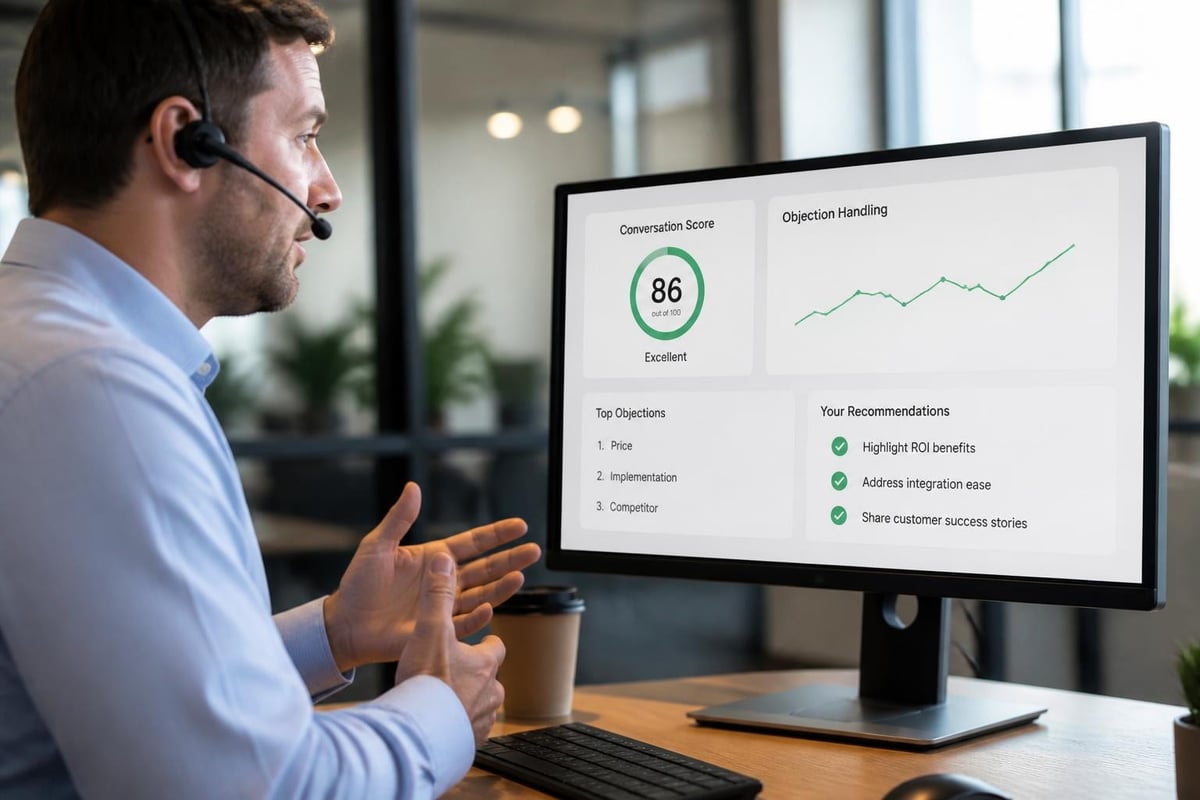
Modern ai sales training solutions monitor live sales calls and digital interactions to provide immediate feedback. Unlike traditional training that might take weeks to deliver insights, AI systems can identify objection-handling mistakes, missed opportunities, or tone issues within seconds of their occurrence.
- Conversation intelligence that tracks key phrases and sentiment patterns
- Automated scoring of calls based on proven success metrics
- Instant recommendations for improving specific skills
- Comparative analysis against top performers in the organization
The transformation from traditional to AI-enhanced selling represents a fundamental shift in how sales professionals approach their craft. This technology allows representatives to focus on relationship-building while AI handles the analytical heavy lifting.
Core Components of Effective AI Sales Training Programs
Implementing ai sales training requires more than simply purchasing software. Organizations need to understand the key components that make these programs successful and how they integrate into existing workflows.
Personalized Learning Paths
Every sales representative brings different strengths, weaknesses, and experience levels to their role. AI training systems create customized development plans by assessing current performance and mapping individual learning trajectories.
| Training Component | Traditional Approach | AI-Powered Approach |
|---|---|---|
| Skill Assessment | Annual reviews | Continuous monitoring |
| Content Delivery | One-size-fits-all | Personalized modules |
| Practice Scenarios | Generic role-plays | Customized simulations |
| Progress Tracking | Manual reporting | Automated analytics |
| Coaching Frequency | Quarterly sessions | Daily micro-coaching |
These personalized paths ensure that time spent in training directly translates to improved performance. Representatives work on skills that matter most to their individual development rather than sitting through generic content that may not address their specific challenges.
Conversational AI Simulations
One of the most powerful aspects of modern sales training involves conversational AI that simulates realistic customer interactions. These systems ground responses in actual product information and customer feedback, creating authentic practice environments without requiring manager time or risking real customer relationships.
Sales representatives can practice difficult conversations dozens of times, experimenting with different approaches and receiving detailed feedback on what works and what doesn't. This repetition builds confidence and muscle memory that translates directly to improved performance in real selling situations.
The ability to practice high-stakes conversations in a safe environment represents a significant advantage over traditional role-playing, which often feels artificial and fails to replicate the pressure of actual sales scenarios. For teams looking to enhance their overall marketing services strategy, integrating AI training creates a foundation for consistent messaging and superior customer engagement.
Implementation Strategies for Maximum Impact
Rolling out ai sales training requires careful planning and change management to ensure adoption and maximize return on investment. Organizations that treat implementation as a strategic initiative rather than a technology deployment see dramatically better results.
Data Integration and Quality
AI training systems require access to high-quality data from CRM platforms, call recording software, email systems, and other sales tools. The first step in any implementation involves auditing existing data sources and establishing clean integration points.
Critical data sources include:
- Customer relationship management (CRM) records
- Call recordings and transcriptions
- Email correspondence and response rates
- Meeting notes and outcomes
- Deal progression and closure data
- Product information and pricing structures
Organizations should ensure that data flows automatically between systems rather than requiring manual uploads or transfers. This automation enables real-time training insights and reduces the administrative burden on sales teams.
Change Management and Adoption
The most sophisticated ai sales training system delivers zero value if representatives don't use it. Successful implementations focus heavily on change management, addressing concerns about AI replacing jobs, demonstrating clear value to individual users, and making training a seamless part of daily workflows.
Leadership buy-in proves absolutely critical. When sales managers actively use AI training insights during coaching sessions and celebrate improvements driven by the system, adoption rates increase dramatically. Representatives need to see that the technology enhances their capabilities rather than scrutinizing their every move.

Advanced Applications of AI in Sales Development
Beyond basic training modules, cutting-edge organizations are leveraging AI to transform every aspect of sales development and performance optimization. These advanced applications represent the future of sales enablement.
Predictive Coaching and Intervention
Real-time sales conversion prediction systems analyze ongoing conversations to calculate the probability of successful outcomes and suggest strategic adjustments mid-call. This capability transforms coaching from a reactive activity into a proactive performance driver.
Predictive systems can:
- Identify early warning signs that a deal is going off track
- Recommend specific conversation tactics based on customer signals
- Alert managers when representatives need immediate support
- Prioritize coaching time toward the highest-impact opportunities
- Generate automated follow-up suggestions personalized to each prospect
These predictive capabilities ensure that coaching happens at the moment of maximum impact rather than days or weeks after opportunities are lost. Representatives receive guidance when they need it most, during live customer interactions.
Immersive Training Environments
While conversational AI provides text-based practice, virtual reality environments take sales training to another level by creating fully immersive scenarios. These environments allow representatives to practice body language, presentation skills, and interpersonal dynamics in ways that traditional online training cannot replicate.
VR training proves particularly valuable for high-value B2B sales where presentation skills and executive presence play crucial roles. Representatives can practice board room presentations, trade show interactions, and other complex scenarios repeatedly until they achieve mastery.
The combination of AI analytics with immersive environments creates a powerful feedback loop. Representatives practice in VR, receive detailed AI analysis of their performance, adjust their approach based on insights, and practice again with measurable improvement each iteration.
Measuring ROI and Training Effectiveness
Organizations invest significant resources in sales training, making measurement and accountability essential components of any ai sales training program. Modern AI systems provide unprecedented visibility into training effectiveness and business impact.
Key Performance Indicators
Tracking the right metrics ensures that training investments deliver measurable business results rather than simply checking compliance boxes. Effective measurement frameworks connect training activities directly to revenue outcomes.
| Metric Category | Specific KPIs | Measurement Frequency |
|---|---|---|
| Skill Development | Objection handling scores, discovery question quality | Weekly |
| Activity Metrics | Call volume, email response rates, meeting bookings | Daily |
| Pipeline Impact | Average deal size, sales cycle length, win rates | Monthly |
| Revenue Results | Quota attainment, new customer acquisition, revenue per rep | Quarterly |
| Behavioral Change | Adoption rates, practice session completion | Real-time |
These metrics should be tracked at both individual and team levels, allowing organizations to identify top performers, diagnose systemic issues, and allocate coaching resources effectively. The goal is creating a data-driven culture where training decisions are based on measurable outcomes rather than intuition.
Continuous Optimization
The most successful ai sales training implementations treat the program as a living system that evolves based on performance data and changing business needs. Regular analysis of what's working and what isn't allows organizations to refine content, adjust coaching priorities, and maximize impact over time.
Optimization activities include:
- A/B testing different training approaches to identify what drives results
- Updating conversation simulations based on emerging customer objections
- Refining coaching algorithms as new success patterns emerge
- Incorporating feedback from sales representatives and managers
- Adjusting training priorities based on strategic business initiatives
Organizations that embrace continuous improvement see training effectiveness compound over time as AI systems become increasingly sophisticated and better aligned with specific business contexts. This iterative approach ensures that training remains relevant even as products, markets, and customer expectations evolve.
Building a Culture of Continuous Learning
Technology alone cannot transform sales performance. The most successful ai sales training implementations are embedded within broader cultural transformations that value continuous learning, embrace data-driven decision-making, and reward skill development alongside quota attainment.
Manager Enablement
Sales managers play a pivotal role in translating AI training insights into meaningful coaching conversations and performance improvements. Organizations must invest in manager training to ensure leaders understand how to interpret AI-generated insights and incorporate them into their coaching approach.
Effective manager enablement includes teaching leaders how to balance AI recommendations with their own experience and judgment. The goal is augmenting human expertise rather than replacing it. Managers who successfully integrate AI insights with relationship-based coaching create the most powerful development environments.
For organizations exploring AI business solutions more broadly, sales training often serves as an ideal entry point that demonstrates clear ROI and builds organizational confidence in AI adoption.

Peer Learning Networks
AI training platforms can facilitate peer-to-peer learning by identifying top performers and sharing their successful tactics across the organization. When a representative discovers an effective way to handle a common objection, AI systems can automatically create training modules that teach that approach to other team members.
Peer learning components include:
- Automated identification of winning conversation patterns
- Crowdsourced objection handling libraries
- Internal best practice repositories
- Gamification elements that encourage knowledge sharing
- Recognition systems for training contributors
This approach democratizes expertise and accelerates the spread of effective techniques throughout the organization. Rather than waiting for formal training updates, teams learn from each other's successes in real-time.
Selecting the Right AI Training Platform
The market for ai sales training solutions has exploded in recent years, with dozens of vendors offering varying capabilities, pricing models, and integration options. Organizations need structured evaluation frameworks to identify platforms that align with their specific needs and constraints.
Essential Capabilities
Before evaluating specific vendors, organizations should define their must-have capabilities based on team size, sales complexity, existing technology stack, and strategic priorities. Not every organization needs every feature, and trying to implement overly complex systems often leads to poor adoption and wasted investment.
Core capabilities to consider:
- Integration depth with existing CRM and communication platforms
- Customization options for industry-specific scenarios and terminology
- Analytics sophistication and reporting flexibility
- User experience for both representatives and managers
- Scalability to support team growth and expanded use cases
- Security and compliance features for regulated industries
- Vendor support including implementation assistance and ongoing training
Organizations should also evaluate whether platforms offer comprehensive AI-powered courses that cover the full spectrum of sales applications or focus on specific use cases like call coaching or email optimization. The right choice depends on current skill gaps and strategic priorities.
Pilot Programs and Proof of Concept
Rather than committing to organization-wide deployments, successful implementations typically begin with focused pilot programs that demonstrate value and identify implementation challenges before full rollout. Pilots should involve a representative cross-section of the sales team rather than only top or struggling performers.
Effective pilots include:
- Clear success metrics defined before launch
- Limited scope focused on specific use cases
- Regular feedback collection from participants
- Executive sponsorship and visible support
- Documentation of lessons learned for broader rollout
The pilot phase provides opportunities to refine training content, adjust coaching workflows, and address technical integration issues in a controlled environment. Organizations that skip this step often face significant challenges during enterprise-wide deployment.
Future Trends in AI-Powered Sales Training
The field of ai sales training continues to evolve rapidly as new capabilities emerge and organizations discover innovative applications. Understanding where the technology is headed helps organizations make implementation decisions that remain valuable as the landscape changes.
Multimodal Learning Experiences
Future training systems will combine conversational AI, video analysis, sentiment detection, and biometric data to create comprehensive skill development programs. These multimodal approaches provide richer feedback and more nuanced coaching than systems analyzing single data streams.
Representatives might practice presentations while AI analyzes their word choice, tone, facial expressions, and even stress levels to provide holistic feedback. This approach mirrors how human coaches observe multiple factors simultaneously to assess performance and provide guidance.
Autonomous Sales Assistants
The next generation of sales AI will move beyond training into active assistance during live customer interactions. Systems that provide real-time information retrieval and strategic guidance during calls represent the convergence of training and execution support.
These assistants will answer product questions, suggest relevant case studies, calculate custom pricing, and handle administrative tasks while representatives focus on relationship-building and strategic conversation. The training value comes from observing how AI handles various situations and incorporating those approaches into personal selling styles.
Hyper-Personalized Development Plans
AI systems will increasingly create development plans tailored not just to skill gaps but to individual learning styles, career aspirations, and personal motivations. Some representatives learn best through repetitive practice while others prefer conceptual frameworks and strategic discussions.
Future platforms will detect these preferences automatically and adjust content delivery accordingly, maximizing engagement and retention. This personalization extends to pacing, difficulty progression, and the types of examples and scenarios used in training modules.
AI sales training represents a fundamental shift in how organizations develop sales talent, moving from periodic, generic training events to continuous, personalized development that drives measurable performance improvements. As the technology continues to advance, early adopters gain significant competitive advantages through faster skill development, higher quota attainment, and more efficient use of training resources. Ryan Cook specializes in implementing custom AI solutions that transform sales training, marketing processes, and customer onboarding for organizations ready to harness these powerful capabilities and accelerate team performance in 2026 and beyond.