
July 14, 2026 · Bizware
Marketing Agency Leads: Complete Guide for 2026
Discover proven strategies to generate high-quality marketing agency leads in 2026. Learn AI-powered techniques and actionable tactics to scale.

The marketing landscape continues to evolve at breakneck speed, and acquiring quality marketing agency leads has become both more sophisticated and more critical than ever. For agencies offering specialized services like AI-powered sales and marketing solutions, traditional lead generation methods no longer deliver the results needed to sustain growth. In 2026, the agencies that thrive are those that combine data-driven strategies with cutting-edge automation to build predictable, scalable pipelines.
Understanding the Current State of Marketing Agency Leads
Marketing agency leads represent potential clients actively seeking or open to professional marketing services. These prospects typically fall into several categories: businesses launching new products, companies dissatisfied with current providers, or organizations recognizing gaps in their marketing capabilities.
Recent data shows that 68% of B2B marketers consider lead quality more important than lead quantity, according to comprehensive lead generation statistics. This shift reflects the reality that chasing unqualified prospects wastes resources and damages team morale.
The Quality Versus Quantity Debate
The tension between volume and value defines modern lead generation. Many agencies still measure success by raw numbers, tracking how many contacts enter their database monthly. This approach creates a fundamental problem: most contacts never convert.
Key metrics that matter in 2026:
- Conversion rate from lead to qualified opportunity
- Average deal size by lead source
- Cost per acquisition by channel
- Time from first contact to closed deal
- Customer lifetime value by acquisition method
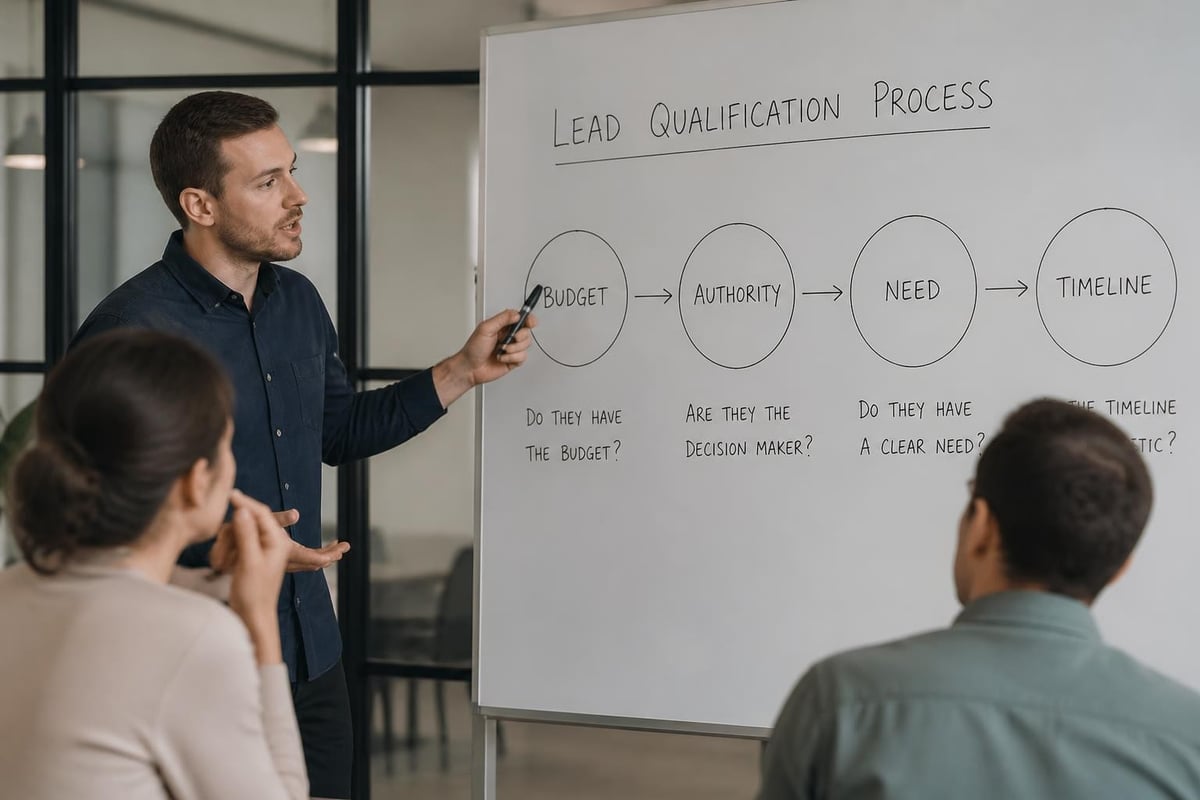
Smart agencies now focus on ideal client profiles that match their service offerings. For AI solutions providers, this means targeting businesses already investing in technology transformation rather than those just beginning their digital journey.
Strategic Approaches to Generate Marketing Agency Leads
Building a sustainable pipeline requires multiple channels working in concert. Forbes Agency Council identifies 19 effective methods, but the most successful agencies master a focused subset rather than spreading efforts too thin.
Content Marketing as Foundation
Educational content remains the cornerstone of inbound lead generation. Agencies that consistently publish valuable insights establish authority and attract prospects actively researching solutions. This strategy works particularly well for specialized services where buyers need education before making decisions.
The process follows a clear progression:
- Research audience pain points through customer interviews and social listening
- Create comprehensive resources addressing specific challenges
- Optimize for search intent targeting questions prospects actually ask
- Distribute across multiple channels including email, social, and partnerships
- Capture engagement data to identify high-intent prospects
AI content marketing strategies have transformed this process, enabling agencies to produce more targeted content at scale while maintaining quality and relevance.
Leveraging Video for Engagement
Video content generates 1200% more shares than text and images combined. Marketing agencies using video demonstrations, client testimonials, and educational webinars see significantly higher engagement rates.
| Video Type | Average Engagement | Lead Quality Score | Production Difficulty |
|---|---|---|---|
| Client Testimonials | High | Excellent | Medium |
| Product Demos | Very High | Good | Medium |
| Educational Webinars | Medium | Excellent | High |
| Behind-the-Scenes | Medium | Fair | Low |
| Case Study Walkthroughs | High | Excellent | Medium |
The key is matching video content to prospect awareness levels. Early-stage prospects need educational content, while late-stage leads respond better to detailed case studies and implementation walkthroughs.
Outbound Strategies That Actually Work
While inbound marketing builds long-term assets, outbound prospecting delivers more predictable short-term results. The challenge lies in cutting through noise in increasingly crowded channels.
Modern outbound demands personalization at scale. Generic email blasts achieve response rates below 1%, while carefully targeted sequences using account-based approaches can exceed 20%. This requires deep research into prospect companies, challenges, and existing technology stacks.
Multi-Touch Campaign Design
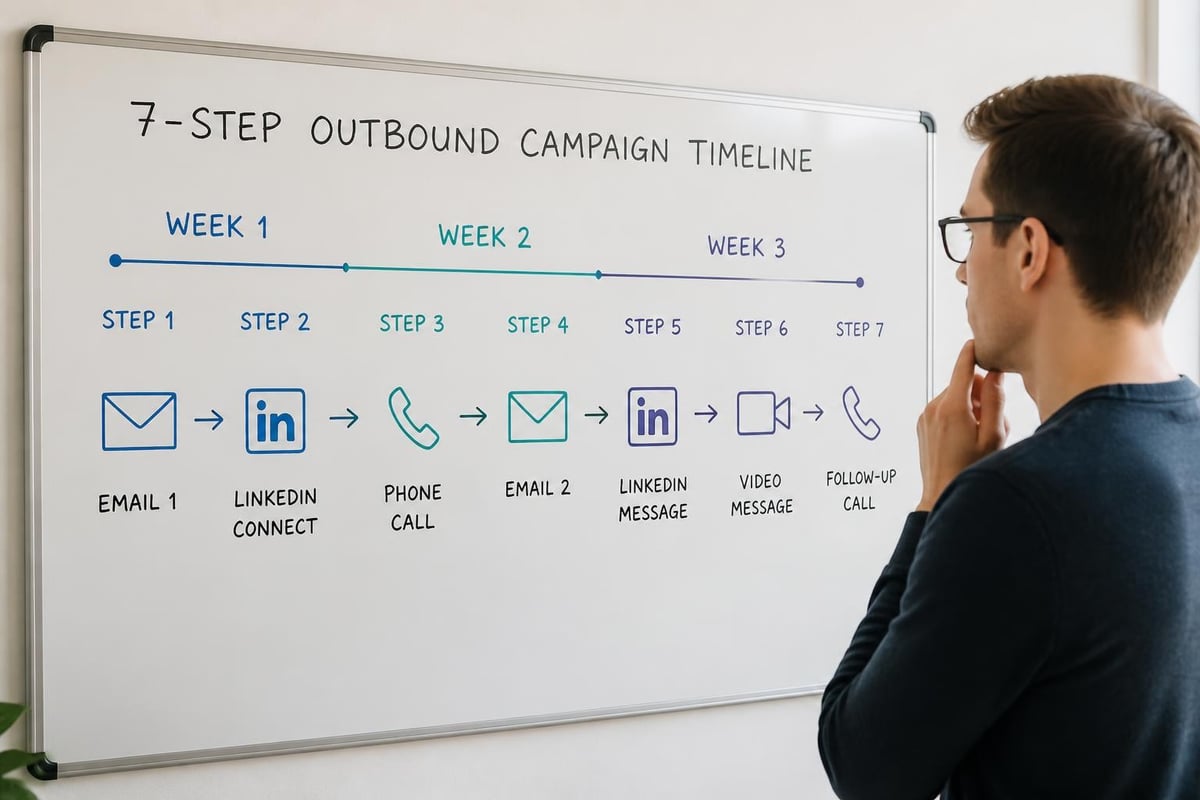
Effective outbound campaigns combine multiple touchpoints across different channels. A typical sequence might include:
- Initial personalized email referencing specific company initiatives
- LinkedIn connection request with context
- Follow-up email sharing relevant case study
- Phone call to qualified responses
- Video message addressing specific use case
- Final value-add email before pause
This approach recognizes that decision-makers need multiple exposures before engaging. SEMrush recommends at least seven touchpoints before expecting meaningful conversation.
The Role of Sales AI in Lead Generation
Artificial intelligence has revolutionized how agencies identify and engage prospects. Sales AI systems now handle tasks that previously required significant manual effort:
- Predictive lead scoring using behavioral and firmographic data
- Automated personalization at scale across email and social channels
- Optimal timing detection for outreach based on engagement patterns
- Conversation intelligence analyzing calls and emails for buying signals
- Pipeline forecasting predicting which opportunities will close
These capabilities allow smaller teams to compete with larger agencies by working smarter rather than harder. The technology handles repetitive research and outreach tasks, freeing humans to focus on relationship building and strategic thinking.
Conversion Optimization for Maximum ROI
Generating marketing agency leads means nothing if they don't convert. The gap between initial interest and signed contracts represents the biggest opportunity for improvement at most agencies.
Landing Page Fundamentals
Every lead generation campaign needs dedicated landing pages optimized for specific offers. Generic "contact us" pages convert at dismal rates because they lack focus and urgency.
High-converting landing pages include:
- Clear, benefit-focused headline addressing specific pain point
- Concise explanation of offer value (not features)
- Social proof through testimonials or client logos
- Simple form requesting minimum necessary information
- Strong, action-oriented call-to-action
- Trust indicators like security badges or guarantees
Testing shows that reducing form fields from 11 to 4 increases conversions by 120%, though this varies by offer complexity and audience.
Nurture Sequences That Build Trust
Most prospects aren't ready to buy immediately. Effective nurture campaigns maintain engagement while educating prospects and building credibility over time.
The most effective sequences deliver value in every interaction rather than simply asking for meetings. This might include:
- Welcome email with immediate value (template, checklist, or tool)
- Educational content addressing common objections
- Case study demonstrating results for similar companies
- Industry insights or trend analysis
- Invitation to low-commitment engagement (webinar, assessment)
Onboarding best practices from customer success apply equally to prospect nurture-create clear progression paths and celebrate small wins.
Partnership and Referral Programs
Word-of-mouth remains the highest-quality source of marketing agency leads. Clients acquired through referrals close faster and at higher rates than any other source, with significantly better retention.
Building systematic referral generation requires intentionality. The agencies seeing best results implement formal programs with clear incentives and making it effortless to refer.
| Referral Incentive Type | Participation Rate | Quality Score | Administrative Burden |
|---|---|---|---|
| Cash/Credit | 35% | Good | High |
| Service Upgrades | 28% | Excellent | Medium |
| Exclusive Access | 22% | Excellent | Low |
| Charitable Donation | 18% | Good | Medium |
| Public Recognition | 31% | Very Good | Low |
Strategic Partnerships
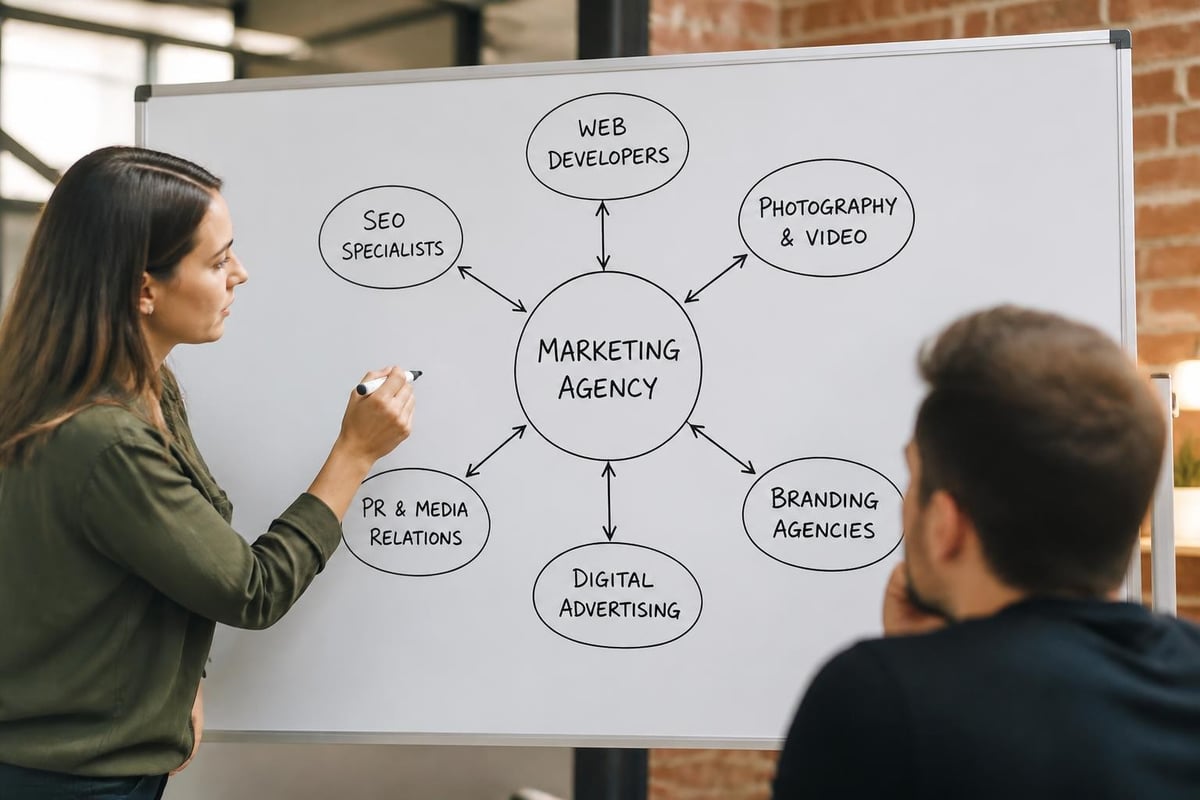
Complementary service providers offer untapped lead generation potential. For agencies offering AI solutions for sales and marketing, natural partners include CRM consultants, business coaches, and technology implementation specialists.
Yelp for Business highlights how professional network leverage creates sustainable lead sources. The key is structuring relationships that deliver mutual value rather than one-sided referral expectations.
Successful partnership programs define:
- Ideal client overlap ensuring referred prospects match both partners' criteria
- Clear handoff processes preventing leads from falling through gaps
- Revenue sharing agreements motivating active participation
- Regular communication rhythms maintaining top-of-mind awareness
- Joint marketing initiatives expanding reach for both organizations
Measurement and Attribution Challenges
Understanding which activities generate marketing agency leads proves surprisingly difficult. Most agencies rely on simplistic "first touch" or "last touch" attribution models that misrepresent reality.
Multi-touch attribution provides more accurate pictures by assigning credit across the entire buyer journey. A prospect might discover your agency through content, engage via social media, attend a webinar, and finally convert after a personalized email-each touchpoint contributed.
Key Performance Indicators Worth Tracking
Beyond vanity metrics like website traffic or social followers, focus measurement on indicators directly tied to revenue:
- Marketing Qualified Leads (MQL) meeting minimum engagement and fit criteria
- Sales Qualified Leads (SQL) verified as active opportunities by sales team
- Opportunity conversion rate from SQL to closed deal
- Average sales cycle length by lead source
- Customer acquisition cost (CAC) across all channels
- Return on ad spend (ROAS) for paid campaigns
Research from AMW Group shows that agencies tracking these metrics achieve 34% better ROI than those relying on surface-level analytics.
Emerging Trends Shaping Lead Generation
The marketing agency leads landscape continues evolving rapidly. Staying ahead requires awareness of emerging patterns and early adoption of effective new approaches.
AI-Powered Personalization at Scale
Generative AI now enables personalization previously impossible at scale. Agencies can create custom landing pages, email sequences, and content recommendations for each prospect based on industry, role, technology stack, and engagement history.
Research on AI frameworks for marketing strategy demonstrates how these technologies enhance both efficiency and effectiveness when properly implemented.
Privacy-First Lead Generation
Data protection regulations and consumer privacy expectations are reshaping how agencies collect and use prospect information. Academic research on lead marketing practices reveals significant privacy risks in traditional approaches.
Forward-thinking agencies now prioritize:
- Transparent data collection clearly explaining what information is gathered and why
- First-party data strategies reducing reliance on third-party tracking
- Consent-based marketing respecting prospect communication preferences
- Value exchange models providing genuine utility in return for information
These approaches build trust while ensuring compliance with evolving regulations.
Community-Led Growth
Building communities around shared interests creates sustainable lead sources. Unlike transactional lead generation, community approaches focus on long-term relationship building.
Successful community strategies include:
- Creating exclusive groups for target audience segments
- Facilitating peer-to-peer connections and knowledge sharing
- Positioning agency as helpful resource rather than vendor
- Identifying high-intent members through engagement patterns
- Converting naturally through demonstrated expertise
This approach requires patience but delivers superior lead quality and conversion rates.
Integration With Existing Systems
Generating marketing agency leads is only valuable if they flow smoothly into sales processes. Poor integration between marketing and sales systems causes leads to fall through cracks or receive inconsistent follow-up.
Modern lead management requires:
- Automated lead routing based on territory, specialty, or workload
- Real-time notifications ensuring prompt follow-up on high-intent actions
- Unified prospect data accessible across all customer-facing teams
- Activity tracking capturing every interaction across channels
- Pipeline reporting connecting marketing activities to revenue outcomes
Sales effectiveness improves dramatically when marketing and sales operate from shared data and aligned processes.
The technical implementation matters less than ensuring seamless handoffs and clear accountability. Whether using dedicated marketing automation platforms or integrated CRM solutions, focus on eliminating friction in the lead-to-opportunity transition.
Budget Allocation Across Channels
Resource constraints force agencies to make strategic choices about where to invest lead generation efforts. The optimal allocation varies based on service offerings, target market, and competitive positioning.
| Channel | Average Budget % | Typical ROI | Payback Period | Best For |
|---|---|---|---|---|
| Content Marketing | 25-30% | 300-500% | 6-12 months | Long-term growth |
| Paid Search | 15-20% | 200-400% | 1-3 months | Quick wins |
| Social Media | 10-15% | 150-300% | 3-6 months | Brand building |
| Email Marketing | 5-10% | 400-800% | 1-2 months | Nurture & retention |
| Events/Webinars | 15-20% | 250-450% | 2-4 months | Relationship building |
| Partnerships | 10-15% | 500-1000% | 3-9 months | Sustainable growth |
These benchmarks provide starting points, but agencies should continuously test and optimize based on actual performance data. What works for one market or service mix may underperform in different contexts.
Success in generating marketing agency leads demands both strategic thinking and operational excellence. The agencies winning in 2026 combine human expertise with AI-powered automation to identify ideal prospects, engage them with relevant value, and convert relationships into partnerships. If you're ready to transform your lead generation with custom AI solutions purpose-built for your sales and marketing processes, Ryan Cook can help you build systems that consistently deliver qualified opportunities.