
July 15, 2026 · Bizware
Qualified Lead Generation: Build a Sustainable Pipeline
Master qualified lead generation with AI-powered strategies. Learn frameworks, scoring methods, and proven tactics to convert prospects into customers.
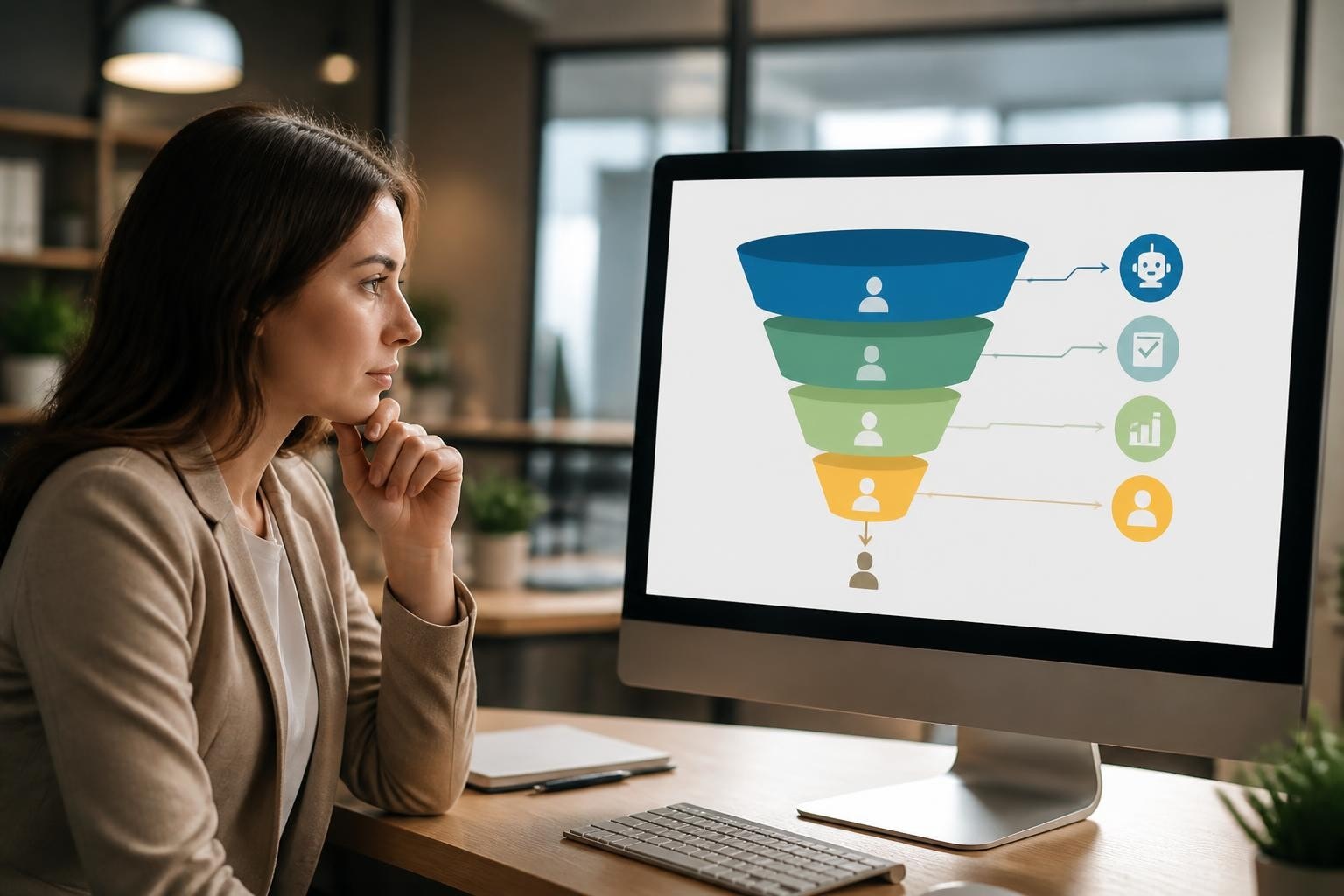
In today's competitive marketplace, generating leads isn't enough. Businesses waste countless hours pursuing prospects who will never convert, draining resources and frustrating sales teams. The solution lies in qualified lead generation, a strategic approach that focuses on identifying and nurturing prospects who have genuine potential to become paying customers. By implementing systematic qualification processes and leveraging AI-powered tools, organizations can dramatically improve conversion rates while reducing acquisition costs.
Understanding the Foundation of Qualified Lead Generation
Qualified lead generation represents a fundamental shift from quantity-focused tactics to quality-driven strategies. Rather than casting the widest possible net, this approach prioritizes leads based on specific criteria that indicate readiness to purchase.
The distinction between qualified and unqualified leads centers on three core dimensions: fit, interest, and timing. A qualified lead matches your ideal customer profile, demonstrates active engagement with your solutions, and operates within a realistic purchase timeline. Without all three elements, even the most enthusiastic prospect may never convert.
Marketing Qualified Leads vs Sales Qualified Leads
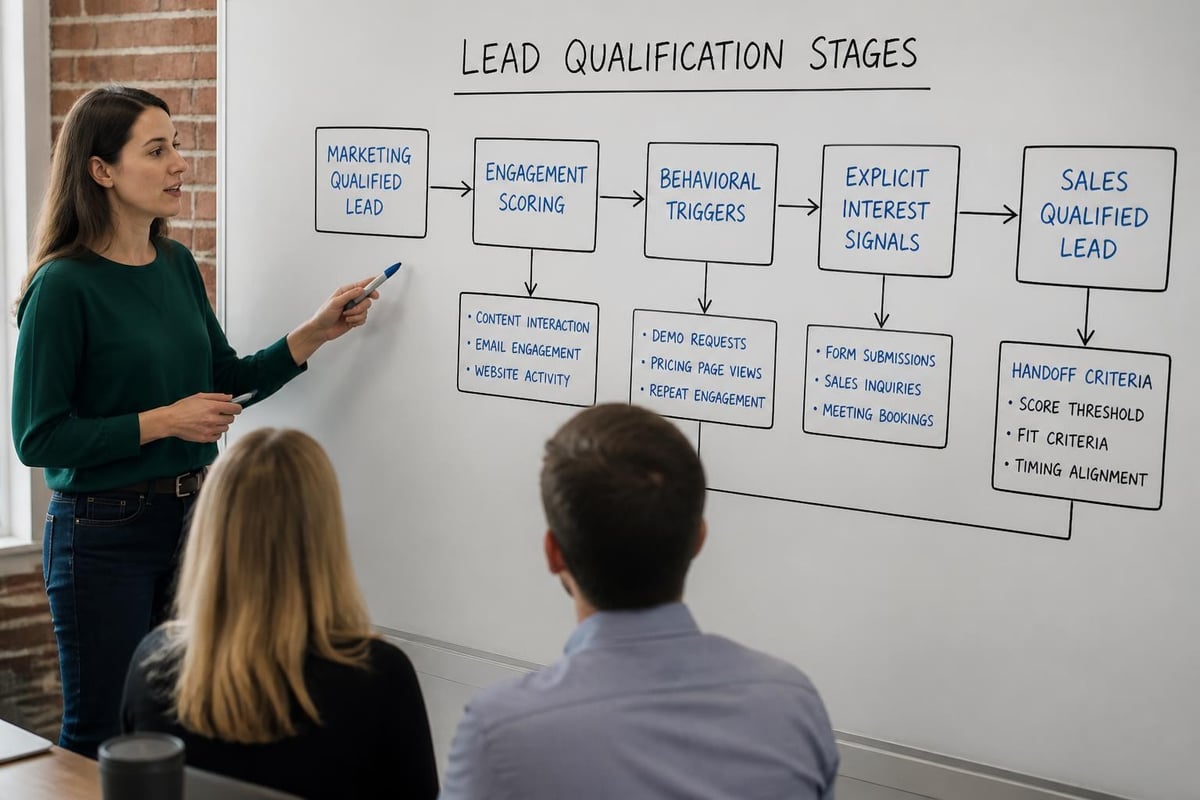
Two primary qualification categories form the backbone of modern lead generation systems. Marketing Qualified Leads (MQLs) show behavioral signals indicating interest, such as downloading resources, attending webinars, or repeatedly visiting pricing pages. These prospects meet baseline criteria but require additional nurturing before sales engagement.
Sales Qualified Leads (SQLs) represent prospects who have been vetted by sales teams and deemed ready for direct conversation. They've typically expressed explicit interest, possess the authority or influence to make purchasing decisions, and operate within organizations that fit your target profile. Understanding the distinction between MQLs and SQLs ensures marketing and sales teams align on handoff processes and qualification standards.
The progression from MQL to SQL shouldn't be arbitrary. Establishing clear conversion criteria prevents premature handoffs that waste sales time and ensures marketing continues nurturing leads until they're genuinely ready for sales engagement.
Building Your Lead Qualification Framework
Effective qualified lead generation requires structured frameworks that create consistency across teams. Without standardized approaches, qualification becomes subjective and unreliable.
The BANT Framework and Modern Alternatives
The classic BANT methodology evaluates leads across four dimensions:
- Budget: Does the prospect have financial resources allocated for your solution?
- Authority: Are you speaking with decision-makers or influencers in the buying process?
- Need: Does the prospect have a genuine problem your solution addresses?
- Timeline: When does the prospect intend to make a purchasing decision?
While BANT provides a solid foundation, modern B2B sales often require more nuanced approaches. The CHAMP framework (Challenges, Authority, Money, Prioritization) shifts focus to pain points before budget discussions. The MEDDIC methodology (Metrics, Economic Buyer, Decision Criteria, Decision Process, Identify Pain, Champion) adds layers for complex enterprise sales.
| Framework | Best For | Key Advantage |
|---|---|---|
| BANT | Traditional B2B sales | Simple, widely understood |
| CHAMP | Consultative selling | Prioritizes problem-solving |
| MEDDIC | Enterprise accounts | Comprehensive buyer mapping |
| GPCTBA/C&I | Strategic partnerships | Focuses on business impact |
Selecting the right framework depends on your sales cycle complexity, average deal size, and organizational structure. Many organizations customize hybrid approaches that incorporate elements from multiple methodologies.
Implementing Lead Scoring Systems
Lead scoring quantifies qualification by assigning numerical values to prospect attributes and behaviors. Demographic scoring evaluates firmographic data like company size, industry, and job title. Behavioral scoring tracks engagement activities including email opens, content downloads, and website visits.
Advanced scoring systems incorporate negative scoring to identify disqualifying factors. A prospect from outside your target geography, using a personal email address, or from a company too small to benefit from your solution receives negative points that offset positive engagement signals.
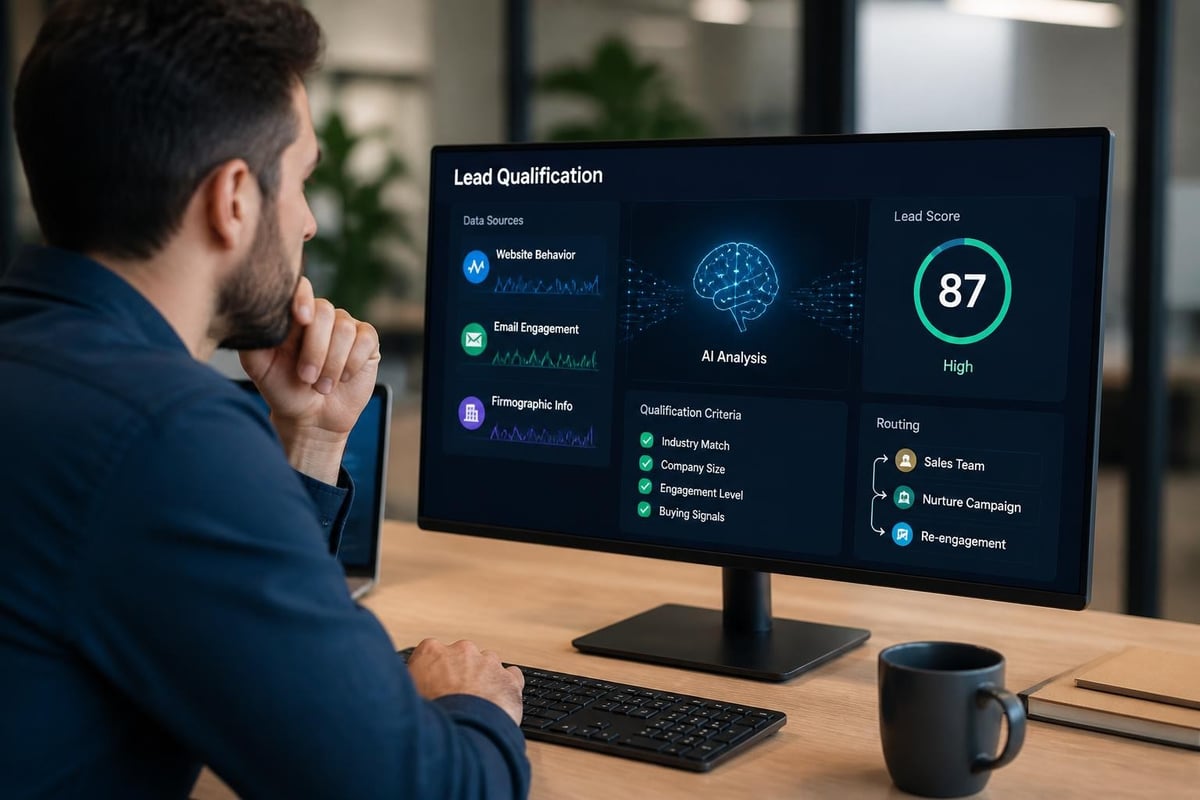
AI-powered tools enhance lead scoring by identifying patterns human analysts might miss. Machine learning algorithms analyze historical conversion data to determine which combinations of attributes and behaviors most reliably predict closed deals. These systems continuously refine scoring models based on actual outcomes, improving accuracy over time.
Strategies for Generating Qualified Leads
Once qualification frameworks are established, the focus shifts to attracting prospects who meet your criteria. Qualified lead generation demands targeted strategies that speak directly to ideal customer segments.
Content Marketing for Lead Qualification
Strategic content serves dual purposes: attracting relevant prospects while naturally filtering out poor fits. Creating content that addresses specific pain points experienced by your ideal customers ensures the audience self-selects based on relevance.
Effective content types for qualified lead generation include:
- Industry-specific case studies demonstrating ROI
- Technical whitepapers requiring business email addresses
- Interactive tools like calculators or assessments
- Webinars featuring advanced implementation strategies
- Comparison guides for prospects evaluating alternatives
The key is progressive profiling through gated content. Rather than requesting extensive information upfront, collect basic details initially and gather additional qualification data through subsequent interactions. This approach reduces form abandonment while building comprehensive prospect profiles over time.
B2B email marketing campaigns nurture leads through qualification stages by delivering targeted content aligned with specific buyer journey phases. Segmentation based on engagement levels, firmographic data, and expressed interests ensures relevance that drives continued interaction.
Leveraging AI for Qualification at Scale
Artificial intelligence transforms qualified lead generation by automating time-consuming qualification tasks. Natural language processing analyzes prospect communications to identify buying signals and intent. Predictive analytics score leads based on thousands of data points, surfacing high-potential prospects that might otherwise go unnoticed.
Custom AI solutions enable sophisticated automation while maintaining personalization. Chatbots qualify website visitors through conversational interfaces, asking qualification questions naturally while providing immediate value. AI-powered email systems adjust messaging based on prospect responses, dynamically adapting nurture sequences to individual engagement patterns.
The most effective implementations combine AI efficiency with human judgment. Automated systems handle initial qualification and routine follow-up, while sales professionals focus on high-value conversations with genuinely qualified prospects.
Optimizing Your Qualification Process
Even well-designed qualified lead generation systems require continuous refinement. Regular optimization ensures processes evolve with changing market conditions and buyer behaviors.
Analyzing Qualification Metrics
Key performance indicators reveal qualification effectiveness and highlight improvement opportunities. Track these essential metrics:
- MQL to SQL conversion rate: Percentage of marketing-qualified leads accepted by sales
- SQL to opportunity rate: Proportion of sales-qualified leads progressing to active deals
- Lead velocity: Speed at which leads move through qualification stages
- Cost per qualified lead: Total acquisition cost divided by qualified leads generated
- Source quality: Conversion rates by lead generation channel
Benchmark your metrics against industry standards while recognizing that optimal performance varies by business model and market segment. According to industry research, typical MQL to SQL conversion ranges from 10% to 30%, though top performers often exceed these benchmarks.
Regular analysis should identify bottlenecks where leads stall or drop off. If many MQLs fail to progress to SQL status, qualification criteria may be too loose or nurture content insufficiently compelling. If SQLs rarely convert to opportunities, sales teams may need additional qualification questions or earlier involvement in the process.
Aligning Sales and Marketing Teams
Qualified lead generation breaks down when sales and marketing operate in silos. Service Level Agreements (SLAs) formalize mutual commitments: marketing delivers a specific quantity of qualified leads meeting defined criteria, while sales commits to timely follow-up and feedback on lead quality.
Monthly or quarterly alignment meetings review qualification definitions, discuss trends in lead quality, and adjust criteria based on frontline sales insights. Marketing and sales collaboration ensures both teams work toward shared revenue goals rather than conflicting departmental metrics.
Closed-loop reporting connects marketing activities to revenue outcomes. When sales provides feedback on lead disposition (won, lost, timing not right), marketing teams analyze which sources, campaigns, and content types generate the highest-quality opportunities. This data-driven approach continuously improves targeting and qualification accuracy.
Channel-Specific Qualification Tactics
Different lead generation channels require tailored qualification approaches. Understanding channel-specific best practices maximizes qualified lead output from each source.
Paid Advertising and Lead Quality
Paid search and social advertising offer precise targeting capabilities that improve lead quality from the first click. Rather than broad awareness campaigns, qualified lead generation through paid channels focuses on high-intent keywords and specific audience segments.
LinkedIn advertising excels for B2B qualified lead generation through detailed professional targeting. Filter audiences by job title, seniority, company size, industry, and even specific companies. Lead gen forms pre-populate with LinkedIn profile data, reducing friction while collecting accurate qualification information.
Facebook and Instagram advertising work effectively when targeting decision-makers in specific industries or interest categories. Custom audiences built from existing customer lists enable lookalike targeting that finds prospects with similar characteristics to your best customers.
The qualification happens through ad copy and landing page messaging. Clearly communicating who your solution serves and what problems it solves helps prospects self-qualify before submitting information. A financial services company might specify "for registered investment advisors managing $50M+ AUM" to attract qualified prospects while deterring poor fits.
Event-Based Lead Generation
Webinars, conferences, and virtual events generate leads actively researching solutions in your category. The registration process itself provides qualification opportunities through strategic form fields.
Beyond basic contact information, request:
- Current challenges or pain points
- Solutions currently being evaluated
- Decision timeline and budget availability
- Role in the purchasing process
Post-event follow-up should reference specific content or discussions from the event, demonstrating personalization while advancing qualification. Attendees who ask questions during Q&A sessions or request one-on-one conversations signal higher qualification levels than passive participants.
Research from marketing leaders emphasizes the importance of defining qualification criteria before launching campaigns, ensuring all lead generation activities align with your ideal customer profile.
Advanced Qualification Techniques
As qualified lead generation programs mature, advanced techniques further improve efficiency and conversion rates.
Intent Data and Behavioral Signals
Third-party intent data identifies prospects actively researching solutions in your category, even before they visit your website. This information reveals companies showing buying signals through content consumption patterns across the web.
Combine intent data with first-party behavioral signals for comprehensive qualification. A prospect from a target account showing third-party intent who then visits your pricing page and downloads a case study demonstrates significantly higher qualification than someone who only meets demographic criteria.
Behavioral scoring should weight actions based on their correlation with eventual conversion. Time spent on specific pages, return visit frequency, and progression through content stages all indicate growing interest and qualification level. Detailed frameworks for lead qualification help establish scoring thresholds that accurately identify sales-ready prospects.
Conversational Marketing for Real-Time Qualification
Live chat and chatbot implementations qualify leads in real-time while they're actively engaged with your brand. Rather than waiting for form submissions, conversational interfaces ask qualification questions naturally through back-and-forth dialogue.
Advanced chatbot implementations use branching logic to adapt questions based on previous responses. A prospect indicating they're comparing multiple solutions receives different qualification questions than someone just beginning their research. The conversation creates personalized experiences while efficiently gathering qualification data.
High-value prospects identified through conversational qualification can be routed immediately to available sales representatives, capitalizing on peak interest moments. This real-time engagement significantly improves conversion rates compared to delayed follow-up processes.

Measuring ROI and Continuous Improvement
Qualified lead generation programs justify investment through measurable business impact. Calculating return on investment requires tracking costs and revenue attribution across the entire customer journey.
Attribution Modeling for Qualification Programs
Multi-touch attribution recognizes that qualified leads typically interact with multiple touchpoints before converting. First-touch attribution credits the initial engagement source, while last-touch attributes conversions to the final interaction before purchase.
More sophisticated models distribute credit across all touchpoints, weighted by their influence on conversion probability. U-shaped attribution gives more credit to first and last touches while acknowledging middle-funnel interactions. W-shaped models also emphasize the point where leads become opportunities.
The right attribution model depends on your sales cycle length and typical buyer journey complexity. Case studies demonstrate that optimized qualification processes can deliver dramatic improvements, with some organizations seeing qualified lead volumes increase over 300% through targeted refinements.
Testing and Iteration Frameworks
Systematic testing improves every element of qualified lead generation programs. A/B test form fields to optimize for both conversion rate and lead quality. Sometimes requesting one additional qualification question reduces form submissions but significantly improves lead quality, resulting in better overall ROI.
Test nurture sequence timing, content types, and messaging approaches. Experiment with qualification thresholds to find the optimal balance between lead volume and quality. Track how adjustments to scoring models affect downstream conversion rates and revenue per lead.
Quarterly program reviews should examine:
| Review Area | Key Questions | Action Items |
|---|---|---|
| Qualification criteria | Are our standards too strict or too loose? | Adjust scoring thresholds |
| Channel performance | Which sources generate highest-quality leads? | Reallocate budget to top performers |
| Conversion bottlenecks | Where do qualified leads stall? | Enhance nurture content or sales processes |
| Cost efficiency | How does cost per qualified lead trend? | Optimize underperforming campaigns |
Leading organizations leverage AI tools to accelerate testing and analysis, identifying optimization opportunities faster than manual review processes allow.
Overcoming Common Qualification Challenges
Even sophisticated qualified lead generation programs encounter obstacles. Recognizing common challenges enables proactive solutions.
Balancing Volume and Quality
Sales teams often pressure marketing to deliver more leads, potentially compromising qualification standards. Resist the temptation to lower thresholds simply to hit volume targets. Instead, demonstrate through data how qualified leads convert at significantly higher rates, making them more valuable despite lower quantities.
Calculate the true cost of unqualified leads: wasted sales time, delayed follow-up on genuine opportunities, and damaged team morale. This analysis typically reveals that doubling qualified lead volume (even if total leads decrease) dramatically improves pipeline value and revenue outcomes.
Managing Long Sales Cycles
Complex B2B sales often span months or years, making lead qualification an ongoing process rather than a one-time determination. Implement progressive qualification that reassesses leads as circumstances change and engagement evolves.
Nurture programs should continue qualifying even after initial sales conversations. A prospect not ready to purchase today may become highly qualified in six months due to organizational changes, budget availability, or competitive pressures. Effective sales processes maintain engagement throughout extended buying cycles without overwhelming prospects.
Data Quality and Integration Issues
Qualified lead generation depends on accurate, complete data. Implement validation rules that prevent obvious errors like invalid email formats or incomplete phone numbers. Require business email addresses to filter out personal accounts that rarely represent genuine business prospects.
Integration between marketing automation platforms, CRM systems, and other tools ensures qualification data flows seamlessly across systems. When sales teams update lead status or add notes from conversations, this information should automatically update scoring models and trigger appropriate marketing responses.
Regular data hygiene practices remove duplicates, update outdated information, and enrich records with missing qualification details. Clean, comprehensive data enables accurate qualification and meaningful analytics.
Qualified lead generation transforms marketing from a volume game into a precision operation that consistently delivers prospects ready to engage with sales teams. By implementing structured qualification frameworks, leveraging AI-powered automation, and continuously optimizing based on performance data, organizations build sustainable pipelines that drive predictable revenue growth. If you're ready to enhance your lead qualification processes with intelligent automation that integrates seamlessly with your sales and marketing operations, Ryan Cook specializes in custom AI solutions designed to identify, score, and nurture your highest-value prospects throughout the entire customer journey.