
July 6, 2026 · Bizware
Sales Performance Improvement: Strategies That Work
Discover proven sales performance improvement strategies for 2026. Learn how to boost revenue, optimize processes, and empower teams with AI.

Sales organizations face mounting pressure to exceed targets while adapting to rapidly changing buyer behaviors and technological advancements. The difference between meeting quotas and surpassing them often comes down to implementing strategic sales performance improvement initiatives that address both people and processes. With AI-driven tools and data analytics reshaping how sales teams operate in 2026, organizations have unprecedented opportunities to identify gaps, optimize workflows, and drive measurable results.
Understanding the Foundation of Sales Performance
Sales performance improvement requires a comprehensive approach that examines every touchpoint in the customer journey. Rather than applying isolated tactics, successful organizations build frameworks that connect strategy, execution, and measurement into cohesive systems.
Key Components That Drive Results
Effective sales performance improvement initiatives rest on several interconnected pillars. Revenue metrics provide the quantitative foundation, while behavioral indicators reveal how teams actually engage with prospects. Process efficiency determines how quickly opportunities move through pipelines, and technology adoption amplifies human capabilities.
Organizations implementing custom AI solutions for sales gain significant advantages in tracking these components simultaneously. AI systems can monitor conversation quality, identify coaching opportunities, and predict which deals require immediate attention based on engagement patterns.
Consider these fundamental elements:
- Clear performance benchmarks aligned with business objectives
- Real-time visibility into pipeline health and activity metrics
- Consistent coaching frameworks that develop skills systematically
- Technology infrastructure that eliminates manual data entry
- Compensation structures that reward both activity and outcomes

Establishing Measurable Goals and Accountability
According to research on sales performance strategies, organizations with clearly defined goals see 30% higher achievement rates than those with ambiguous targets. The challenge lies not in setting goals, but in creating accountability mechanisms that drive consistent execution.
SMART Goal Framework for Sales Teams
Sales performance improvement accelerates when teams work toward Specific, Measurable, Achievable, Relevant, and Time-bound objectives. This framework transforms vague aspirations into actionable targets that team members can track daily.
| Goal Type | Example | Measurement Method |
|---|---|---|
| Revenue | Increase quarterly revenue by 25% | CRM revenue reports |
| Activity | Complete 50 qualified conversations weekly | Call tracking analytics |
| Conversion | Improve demo-to-close rate from 18% to 25% | Pipeline stage analysis |
| Efficiency | Reduce average sales cycle from 45 to 35 days | Deal velocity metrics |
Breaking annual targets into monthly and weekly milestones creates manageable checkpoints. Sales representatives who review progress weekly maintain 40% better focus than those who only assess quarterly performance. This frequent evaluation enables rapid course correction when activities drift off track.
Creating Team Ownership Through Collaborative Planning
Involving sales teams in goal-setting processes dramatically improves buy-in and execution. When representatives contribute to target discussions, they develop deeper commitment to outcomes and better understand how individual efforts connect to organizational success.
Modern B2B email marketing strategies demonstrate how collaborative planning extends beyond internal teams to include marketing alignment. When sales and marketing jointly define qualified lead criteria and conversion expectations, both departments optimize their efforts toward shared objectives.
Leveraging AI Systems for Performance Optimization
Artificial intelligence has transformed sales performance improvement from reactive problem-solving to proactive opportunity identification. AI systems analyze thousands of data points across calls, emails, and meetings to surface insights that would remain hidden in manual review processes.
Practical Applications of Sales AI
Organizations deploying AI tools for sales optimization report significant improvements in conversion rates and deal velocity. These systems don't replace human judgment but augment it with pattern recognition capabilities that exceed human capacity.
Conversation intelligence platforms record and analyze sales calls to identify successful talk patterns, objection handling techniques, and buying signals. Representatives receive personalized coaching recommendations based on their actual conversations rather than generic advice.
Predictive analytics engines evaluate historical win/loss data to score current opportunities by likelihood of closing. Sales leaders can prioritize resources toward deals with highest conversion probability while addressing risk factors in stalled opportunities.
Automated outreach systems personalize communication at scale by analyzing prospect behavior and engagement history. These platforms determine optimal contact timing, message content, and channel selection based on individual response patterns.
Integration with digital business cards like Spreadly's smart contact solutions enables sales teams to capture and nurture leads more efficiently. When prospect information flows automatically into CRM systems, representatives spend less time on data entry and more time building relationships.
Developing Continuous Training Programs
Sales performance improvement stalls without ongoing skill development. The capabilities that helped representatives succeed six months ago may prove inadequate as buyer expectations evolve and competitive landscapes shift.

Designing Training That Drives Behavior Change
Effective training programs combine multiple learning modalities to accommodate different learning styles and schedules. Consider this structured approach:
- Skills gap assessment using conversation analysis and performance data
- Microlearning modules delivered in 10-15 minute sessions
- Role-playing exercises with recorded feedback and peer review
- Field application assignments with measurable success criteria
- Follow-up coaching to reinforce new behaviors and address obstacles
Organizations investing in marketing and sales technology stacks create learning environments where representatives access training resources within their daily workflows. This contextual learning proves more effective than quarterly offsite sessions that feel disconnected from real selling situations.
Coaching Frameworks That Multiply Performance
The best training programs fail without consistent coaching that translates knowledge into action. Managers who conduct weekly one-on-one coaching sessions see 19% higher team performance than those who coach monthly or quarterly.
Structured coaching conversations should address:
- Recent wins and what made them successful
- Lost opportunities and alternative approaches to consider
- Upcoming high-value meetings and preparation strategies
- Skill development priorities and practice plans
- Resource needs and obstacle removal
Optimizing Sales Processes and Workflows
Many sales teams work harder rather than smarter, trapped in inefficient processes that consume time without producing proportional results. Strategic sales performance improvement requires examining every workflow step to eliminate friction and redundancy.
Mapping the Customer Journey for Efficiency Gains
Process optimization begins with understanding how buyers actually make decisions rather than how sales teams hope they decide. Journey mapping reveals disconnects between organizational processes and customer needs.
| Journey Stage | Buyer Need | Process Optimization |
|---|---|---|
| Awareness | Educational content | Automated nurture sequences |
| Consideration | Comparative analysis | Interactive assessment tools |
| Evaluation | Proof of value | Case study libraries with AI matching |
| Decision | Risk mitigation | Streamlined approval workflows |
Identifying bottlenecks in each stage enables targeted improvements. If prospects consistently stall during technical evaluation, creating detailed comparison guides or trial experiences may accelerate decisions. When contracts languish in legal review, standardized terms and pre-approved templates reduce cycle time.
Technology Integration That Eliminates Friction
Sales representatives juggling multiple disconnected systems waste hours daily on duplicate data entry and context switching. Organizations implementing comprehensive marketing services with integrated technology platforms report 25-30% productivity improvements.
The ideal technology stack connects:
- CRM platforms for relationship and opportunity management
- Communication tools for multi-channel prospect engagement
- Analytics dashboards for real-time performance visibility
- Content libraries for instant access to relevant materials
- Proposal automation for rapid, accurate quote generation
Integration eliminates manual handoffs and ensures data flows seamlessly between systems. When a prospect opens a proposal, attends a webinar, or downloads content, this activity automatically updates their CRM record and triggers appropriate follow-up sequences.
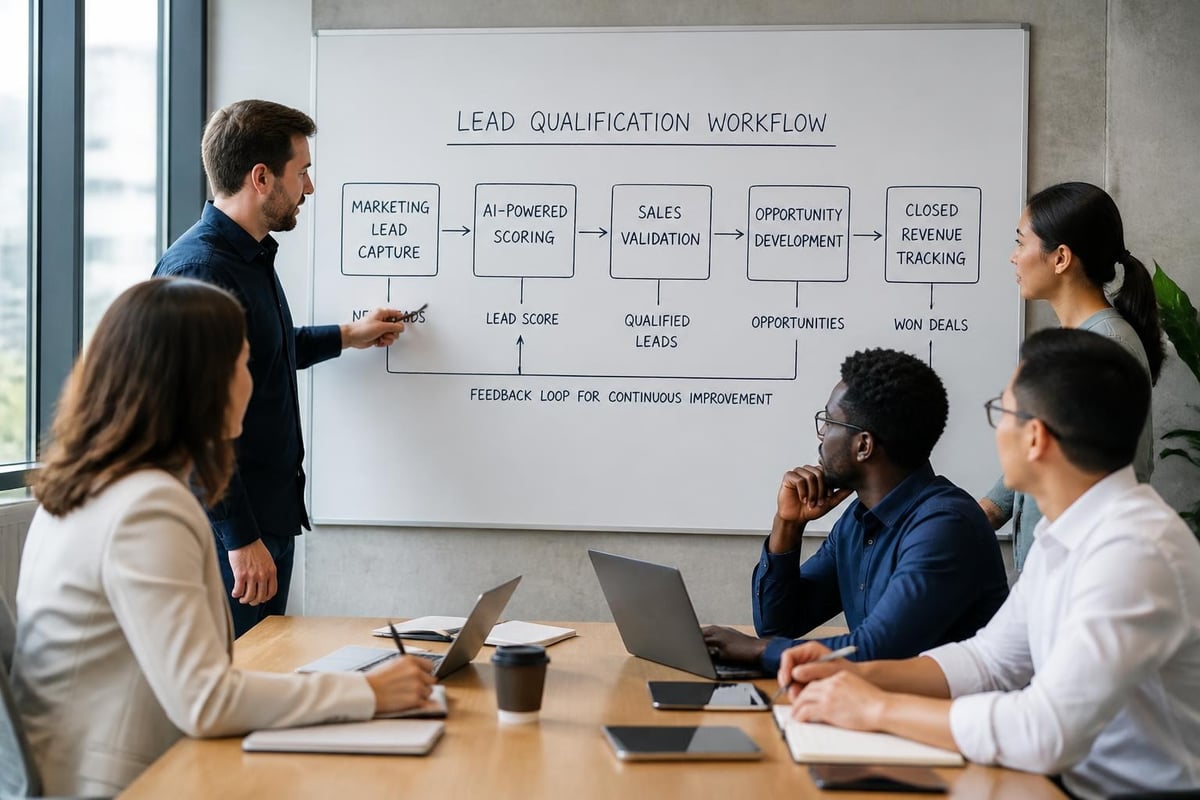
Improving Lead Quality and Qualification
Sales performance improvement efforts often focus on closing techniques while ignoring lead quality issues that doom deals from the start. Representatives pursuing poorly qualified opportunities waste time that could generate revenue from legitimate prospects.
Implementing Rigorous Qualification Frameworks
According to proven sales performance strategies, organizations with formal qualification criteria convert 23% more opportunities than those relying on representative intuition. Frameworks like BANT (Budget, Authority, Need, Timeline) or MEDDIC (Metrics, Economic Buyer, Decision Criteria, Decision Process, Identify Pain, Champion) provide consistent evaluation standards.
Modern qualification extends beyond traditional frameworks to include engagement signals:
- Content consumption patterns indicating research depth
- Website behavior suggesting buying stage
- Competitive evaluation activities
- Stakeholder involvement breadth
- Response time and communication quality
AI systems analyze these signals to generate lead scores that predict conversion likelihood. Representatives prioritize high-scoring opportunities while nurturing lower-scoring prospects until they demonstrate stronger buying intent.
Aligning Marketing and Sales on Lead Definitions
Misalignment between marketing and sales creates friction that undermines sales performance improvement initiatives. When marketing generates leads that sales considers unqualified, both teams waste resources while blaming each other for poor results.
Lead generation strategies that involve joint definition of qualification criteria eliminate this conflict. Service-level agreements specify the characteristics and behaviors that constitute a qualified lead, along with expected response times and follow-up procedures.
Regular feedback loops between teams enable continuous refinement. Sales provides insights about which lead sources and characteristics correlate with closed revenue, while marketing adjusts targeting and messaging to attract better-fit prospects.
Enhancing Customer Relationships and Retention
While new customer acquisition rightfully receives significant attention, sales performance improvement must also address existing customer relationships. Research consistently shows that retaining customers costs 5-25 times less than acquiring new ones, yet many organizations neglect systematic retention strategies.
Building Strategic Account Management Systems
High-value customers deserve structured attention that goes beyond reactive service. Strategic account management assigns dedicated resources to nurture relationships, identify expansion opportunities, and prevent competitive displacement.
Effective account management includes:
- Quarterly business reviews examining value delivered and future objectives
- Executive sponsor relationships connecting leadership teams
- Success planning that aligns solutions with customer goals
- Proactive issue identification and resolution before problems escalate
- Systematic upsell and cross-sell opportunity development
Organizations using AI-powered content marketing to support account teams maintain more consistent engagement. Automated systems deliver relevant insights, case studies, and product updates based on each account's industry, usage patterns, and expressed interests.
Measuring and Improving Customer Experience
Customer experience directly impacts retention, referrals, and expansion revenue. Yet many organizations lack systematic approaches to measuring and improving how customers perceive interactions with sales teams.
Net Promoter Score (NPS), Customer Satisfaction (CSAT), and Customer Effort Score (CES) provide quantifiable indicators of relationship health. Regular surveys combined with CRM analytics reveal which behaviors and processes drive positive experiences versus those that frustrate customers.
Designing Compensation and Incentive Structures
Compensation structures powerfully shape sales behavior, yet many organizations perpetuate plans that inadvertently discourage desired activities. Sales performance improvement requires aligning financial incentives with strategic objectives.
Balancing Activity and Outcome Metrics
Pure commission structures reward only closed revenue, potentially encouraging representatives to neglect pipeline development and customer success activities. Conversely, salary-heavy plans may reduce urgency and competitive drive.
Balanced compensation typically includes:
- Base salary providing stability and enabling long-term thinking
- Variable compensation tied to revenue achievement
- Accelerators rewarding performance above quota
- SPIFs (Special Performance Incentive Funds) driving specific behaviors
- Team bonuses encouraging collaboration and knowledge sharing
The optimal balance depends on sales cycle length, deal complexity, and strategic priorities. Organizations with extended sales cycles often weight compensation more heavily toward base salary, while transactional sales environments emphasize variable pay.
Recognition Programs Beyond Financial Rewards
While compensation forms the foundation, non-financial recognition significantly influences motivation and performance. Public acknowledgment, career development opportunities, and additional flexibility resonate with many representatives as powerfully as cash bonuses.
According to comprehensive sales improvement guides, organizations with robust recognition programs report 31% lower voluntary turnover and 12% higher productivity. Simple initiatives like monthly awards, leaderboards, and president's club trips create competitive energy and celebrate excellence.
Implementing Data-Driven Decision Making
Sales performance improvement shifts from art to science when organizations base decisions on comprehensive data rather than intuition or anecdotal evidence. The explosion of available metrics in 2026 creates both opportunities and challenges.
Selecting Meaningful KPIs
The abundance of trackable metrics tempts organizations to monitor everything, creating dashboard overload where critical signals drown in noise. Effective measurement focuses on metrics that directly predict revenue outcomes and can be influenced by sales activities.
| Metric Category | Leading Indicators | Lagging Indicators |
|---|---|---|
| Activity | Calls completed, emails sent, meetings booked | Revenue closed, quota attainment |
| Quality | Qualification rate, average deal size | Win rate, customer lifetime value |
| Efficiency | Response time, sales cycle length | Cost per acquisition, ROI |
| Development | Training completion, skill assessment scores | Ramp time, retention rate |
Leading indicators enable proactive intervention when performance drifts off track, while lagging indicators confirm whether adjustments produced desired results. Balanced dashboards monitor both types to provide comprehensive visibility.
Creating Accountability Through Transparency
When performance data remains locked in management systems, representatives lack context for self-improvement and teams miss opportunities for peer learning. Transparent reporting democratizes insights and creates healthy competition.
Modern sales platforms display real-time rankings, progress toward goals, and comparative performance across teams. This visibility motivates high performers while identifying representatives who need additional support. Tools for tracking sales activities make performance data accessible within daily workflows rather than requiring separate reporting systems.
Adapting to Market Changes and Buyer Evolution
Sales performance improvement in 2026 requires acknowledging that buyer behavior continues evolving rapidly. Strategies that worked perfectly last year may prove ineffective as prospects demand different engagement models and decision processes shift.
Monitoring Competitive Dynamics
Organizations operating in competitive markets must continuously assess how rival offerings, pricing, and go-to-market approaches impact their sales effectiveness. Competitive intelligence gathering should be systematic rather than ad hoc.
Effective competitive monitoring includes:
- Win/loss analysis identifying why prospects choose alternatives
- Battle card development arming representatives with differentiation messaging
- Pricing analysis ensuring offers remain competitive
- Feature gap assessment guiding product roadmap priorities
- Sales enablement updates as competitive landscape shifts
Research on AI applications in sales demonstrates how machine learning systems can analyze thousands of competitive interactions to identify successful positioning strategies and objection responses that win deals.
Building Flexibility Into Sales Methodologies
Rigid adherence to outdated playbooks guarantees declining performance as markets evolve. Organizations achieving sustained sales performance improvement build learning cultures where experimentation and adaptation are encouraged.
Testing alternative approaches through controlled experiments reveals what actually works versus what tradition suggests should work. A/B testing different outreach messages, meeting structures, or proposal formats generates empirical evidence for continuous refinement. According to strategic performance improvement research, organizations that systematically test and refine approaches achieve 28% faster performance gains than those following static methodologies.
Sustained sales performance improvement requires integrating strategic planning, skill development, process optimization, and technology enablement into cohesive systems that evolve with market conditions. Organizations that treat performance enhancement as an ongoing commitment rather than a one-time initiative build competitive advantages that compound over time. If you're ready to transform your sales capabilities with AI-powered solutions designed specifically for your business needs, Ryan Cook specializes in creating custom AI systems that support sales, marketing, and onboarding processes that drive measurable results.