July 2, 2026 · Bizware
Employee Onboarding Automation: Complete Guide for 2026
Discover how employee onboarding automation streamlines new hire processes, reduces manual tasks, and improves engagement with AI-powered solutions.

Modern businesses face mounting pressure to bring new employees up to speed quickly while maintaining consistent, high-quality onboarding experiences. Manual processes create bottlenecks, inconsistencies, and administrative burdens that drain resources from strategic initiatives. Employee onboarding automation addresses these challenges by leveraging technology to streamline workflows, reduce human error, and create scalable processes that grow with your organization. This transformation allows HR teams and hiring managers to focus on relationship building and strategic talent development rather than paperwork and repetitive tasks.
Understanding Employee Onboarding Automation
Employee onboarding automation refers to the use of technology, including artificial intelligence and workflow management systems, to handle repetitive tasks and coordinate activities involved in bringing new hires into an organization. This approach transforms traditional manual processes into streamlined digital workflows that execute consistently and efficiently.
The scope of automation extends far beyond simple document signing. Modern AI-powered onboarding solutions encompass everything from pre-boarding communications to training scheduling, equipment provisioning, and performance tracking during the critical first 90 days.
Core Components of Automated Onboarding Systems
Successful automation initiatives typically incorporate several key elements that work together to create seamless experiences:
- Digital document management that eliminates paper forms and manual routing
- Workflow orchestration that coordinates tasks across departments
- Integration capabilities connecting HR systems, payroll, IT provisioning, and communication tools
- Automated communications delivering timely information to new hires and stakeholders
- Progress tracking dashboards providing visibility into onboarding status
- Compliance monitoring ensuring all required steps are completed
These components create a foundation that supports both operational efficiency and improved employee experience. Organizations implementing comprehensive automation report significant improvements in time-to-productivity and new hire satisfaction scores.

Business Benefits of Automation
The financial and operational advantages of employee onboarding automation extend throughout organizations, impacting multiple departments and stakeholders. A leading telecom provider documented substantial cost savings after automating over 45,000 employee onboarding tasks annually, demonstrating the scalability potential of these systems.
Efficiency Gains and Cost Reduction
Manual onboarding processes consume enormous amounts of time from HR professionals, managers, and IT staff. Each new hire requires multiple touchpoints, document exchanges, and follow-up communications that collectively represent significant labor costs.
| Traditional Process | Automated Process | Time Savings |
|---|---|---|
| Document collection and verification | Automated digital forms with validation | 75-85% |
| IT equipment provisioning | Triggered workflows to IT teams | 60-70% |
| Training scheduling and tracking | Self-service scheduling with reminders | 50-65% |
| Compliance documentation | Automated routing and storage | 80-90% |
Organizations typically see return on investment within 6-12 months of implementation. The savings compound over time as processes become more refined and additional workflows are automated.
Consistency and Compliance
Automated systems ensure every new hire receives the same quality experience regardless of when they join, which department they enter, or who manages the process. This consistency proves particularly valuable for regulated industries where documentation and compliance requirements carry legal implications.
Standardization benefits include:
- Elimination of missed steps or forgotten tasks
- Audit trails documenting completion of required activities
- Automatic escalation when deadlines approach
- Centralized storage of compliance documentation
Modern employee onboarding best practices emphasize cross-functional coordination and personalization, both of which automation enables at scale. The technology handles coordination while freeing human resources to focus on personalization and relationship building.
Implementation Strategies for Marketing Services
Organizations offering marketing services face unique onboarding challenges. New team members need technical tool access, client context, brand guidelines, creative processes, and relationship introductions. Employee onboarding automation can address these specific requirements through customized workflows.
Mapping Your Current Process
Before implementing automation, document your existing onboarding journey completely. This mapping exercise reveals bottlenecks, redundancies, and opportunities for improvement that technology can address.
Essential mapping steps:
- Identify all stakeholders involved in onboarding from recruitment through 90-day mark
- Document every task currently performed manually or semi-manually
- Note timing and dependencies between different activities
- Capture pain points reported by new hires, managers, and HR staff
- Assess technology gaps where current tools fail to support needs
Marketing services firms should pay particular attention to client relationship transitions and knowledge transfer processes. These elements often require human judgment but benefit from automated reminders, document sharing, and structured check-in schedules.
Selecting Automation Tools
The market offers numerous platforms for employee onboarding automation, ranging from standalone solutions to modules within comprehensive HR management systems. Microsoft Power Automate has proven effective for organizations seeking flexible, customizable automation capabilities.
| Evaluation Criteria | Why It Matters | Questions to Ask |
|---|---|---|
| Integration capabilities | Must connect with existing tools | Does it work with our HRIS, email, and project management systems? |
| Customization options | Marketing workflows vary by role | Can we create role-specific onboarding paths? |
| User experience | Adoption depends on ease of use | Will non-technical managers be able to use this? |
| Scalability | Growth requires flexible systems | How does pricing change as we add employees? |
| Reporting capabilities | Metrics drive improvement | What analytics are available out of the box? |
For businesses focused on AI business solutions, selecting platforms that incorporate machine learning capabilities provides future-proofing. These systems can learn from past onboarding experiences to optimize task timing and identify potential issues before they impact new hires.
Designing Effective Automated Workflows
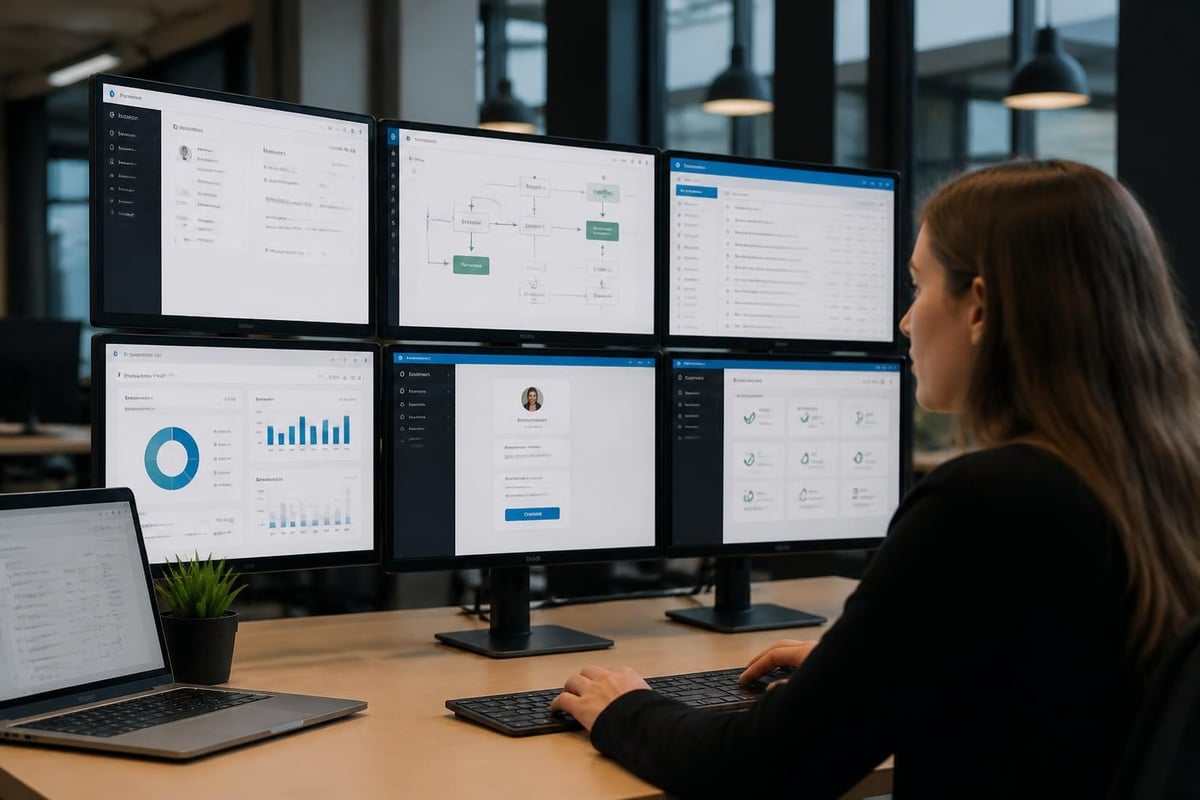
The technical implementation of employee onboarding automation requires careful workflow design that balances automation with human touchpoints. Completely automated processes often feel impersonal, while insufficient automation fails to deliver efficiency benefits.
Pre-Boarding Automation
The period between acceptance and start date represents a critical window for engagement. Automated pre-boarding workflows keep new hires excited and informed while reducing first-day administrative burden.
Effective pre-boarding sequences include:
- Welcome email sent immediately upon acceptance with company culture information
- Document requests triggered 2-3 weeks before start date
- IT provisioning notifications to relevant departments 10 days out
- Manager preparation reminders with suggested activities
- Automated calendar invitations for first-day agenda items
Marketing services organizations can enhance pre-boarding by automatically sharing recent client wins, team introductions, and relevant industry content. This positions new hires to contribute more quickly while demonstrating the organization's commitment to their success.
First Week and First Month Workflows
The initial days and weeks establish patterns that influence long-term employee engagement and retention. American Express Global Business Travel achieved a 90% reduction in emails through integrated automation that coordinated HR, IT, and facilities teams.
- Day one workflows focus on access provisioning, workspace setup, and orientation scheduling
- Week one automation delivers role-specific training assignments and team introduction coordination
- 30-day check-ins trigger automated surveys and manager conversation prompts
- 60-day assessments combine automated performance tracking with human evaluation
Each automated touchpoint should include clear next steps and easy escalation paths when issues arise. The goal is removing friction, not creating rigid processes that frustrate new employees or managers.
Integration with Sales and Marketing Systems
Organizations providing AI sales automation or marketing services benefit from connecting onboarding workflows with client-facing systems. This integration ensures new team members gain appropriate access while maintaining security and compliance.
CRM and Marketing Platform Access
Automated workflows can provision appropriate access levels based on role, department, and responsibilities. This eliminates delays while maintaining data security through rule-based access control.
- New account executives receive CRM access with appropriate pipeline visibility
- Marketing coordinators gain access to email platforms and social media management tools
- Analysts receive reporting dashboard credentials with role-appropriate data access
- Client service roles get provisioned into communication and project management systems
These automated provisioning workflows connect with existing identity management systems to ensure consistent security policies. AI content marketing teams particularly benefit from automated access to content repositories, SEO tools, and publishing platforms.
Knowledge Base and Training Content
Employee onboarding automation shines when delivering role-specific training content at optimal times. Rather than overwhelming new hires with everything on day one, intelligent systems can sequence learning based on role requirements and individual progress.
Progressive training delivery includes:
- Core company policies and culture during pre-boarding
- Department-specific processes during first week
- Tool-specific training aligned with first assignments
- Advanced skills development after initial competency demonstration
- Client relationship management education for customer-facing roles
Marketing services firms should automate delivery of brand guidelines, client communication templates, and service delivery frameworks. This ensures consistency while allowing team members to reference materials when needed rather than during forced training sessions.
Measuring Automation Success
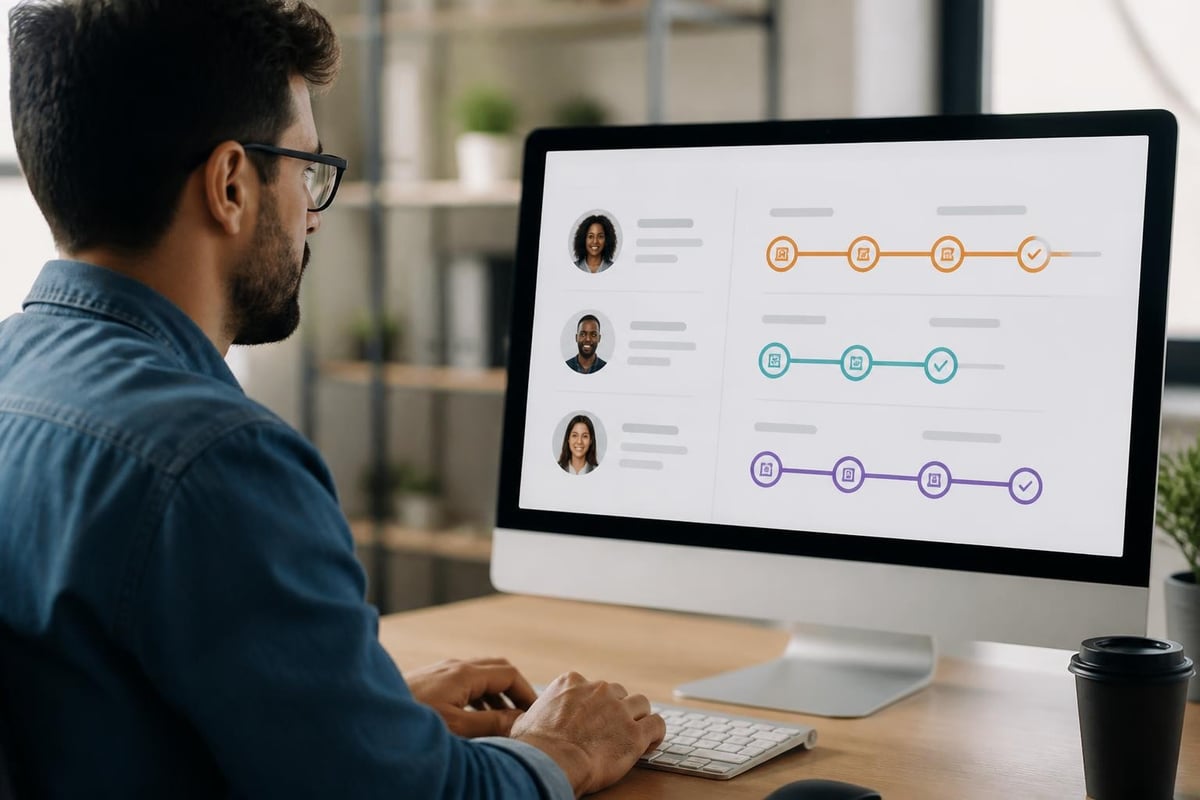
Implementing employee onboarding automation without proper measurement wastes the technology's potential for continuous improvement. Comprehensive analytics reveal what works, what needs refinement, and where human intervention adds the most value.
Key Performance Indicators
Organizations should track both efficiency metrics and experience metrics to evaluate automation effectiveness comprehensively.
| Metric Category | Specific Measures | Target Improvement |
|---|---|---|
| Efficiency | Time to complete onboarding tasks | 50-70% reduction |
| Efficiency | HR staff hours per new hire | 60-80% reduction |
| Efficiency | Cost per new hire onboarding | 40-60% reduction |
| Experience | New hire satisfaction scores | 20-30% increase |
| Experience | Time to first productive contribution | 30-40% reduction |
| Experience | 90-day retention rate | 10-15% increase |
A mid-sized IT company documented significant time and effort savings after automating their entire employee onboarding process. These quantifiable results justify continued investment and expansion of automation initiatives.
Continuous Improvement Processes
The most successful automation implementations treat onboarding as an evolving process rather than a one-time project. Regular review cycles identify opportunities for enhancement based on data and feedback.
Quarterly review activities should include:
- Analyzing completion rates for each automated workflow step
- Reviewing new hire feedback surveys for technology-related issues
- Assessing manager feedback on coordination and communication effectiveness
- Identifying manual workarounds that indicate automation gaps
- Benchmarking metrics against industry standards and previous periods
Organizations focused on marketing services should pay particular attention to client-facing readiness metrics. How quickly can new team members contribute to client deliverables? When do they feel confident representing the organization in client communications?
Advanced Automation Capabilities
As organizations mature in their employee onboarding automation journey, advanced capabilities become accessible that further enhance efficiency and personalization.
Artificial Intelligence Integration
Modern AI capabilities enable onboarding systems to learn from patterns and optimize experiences automatically. Natural language processing allows chatbots to answer new hire questions 24/7, reducing dependency on HR staff for routine inquiries.
Machine learning algorithms can predict which new hires might struggle based on engagement patterns during onboarding. Early identification enables proactive intervention before problems escalate to turnover.
AI-powered features include:
- Chatbots answering common onboarding questions instantly
- Predictive analytics identifying at-risk new hires
- Intelligent content recommendations based on role and interests
- Automated scheduling that considers individual preferences and optimal learning times
- Sentiment analysis of feedback identifying improvement opportunities
Companies offering custom AI solutions should leverage these capabilities in their own onboarding to demonstrate expertise and gather insights applicable to client implementations.
Multi-System Orchestration
Sophisticated automation platforms orchestrate activities across multiple systems without requiring manual intervention. This capability proves particularly valuable for organizations with diverse technology stacks.
Bloom & Wild streamlined processes using automation that coordinated multiple applications, saving thousands of hours annually. Similar multi-system orchestration can coordinate:
- HRIS databases triggering workflows in other systems
- Email platforms delivering personalized communications
- Learning management systems assigning role-specific training
- IT service management tools provisioning equipment and access
- Project management platforms adding new team members to appropriate projects
This orchestration eliminates the manual handoffs that create delays and errors in traditional onboarding processes.
Common Implementation Challenges
Despite clear benefits, employee onboarding automation initiatives face predictable obstacles that organizations should anticipate and address proactively.
Resistance to Change
HR professionals and managers accustomed to personal onboarding approaches may resist automation, viewing it as depersonalizing an important employee experience. Addressing this concern requires clear communication about automation's role as an enabler of personalization, not a replacement for human connection.
Change management strategies include:
- Demonstrating how automation frees time for relationship building
- Involving stakeholders in workflow design decisions
- Starting with pilot programs that prove value before full rollout
- Celebrating early wins and sharing success stories
- Providing adequate training on new systems and processes
Marketing teams understand the importance of selling ideas internally. Apply those same principles to drive adoption of employee onboarding automation across the organization.
Technical Integration Complexity
Legacy systems, incompatible data formats, and security requirements create technical hurdles during implementation. Organizations should allocate sufficient time and resources for integration work rather than expecting plug-and-play simplicity.
Working with experienced implementation partners who understand both the technology and onboarding best practices accelerates time-to-value. These partners bring proven frameworks and lessons learned from previous implementations that help avoid common pitfalls.
Maintaining the Human Touch
The most sophisticated employee onboarding automation still requires thoughtful human involvement at key moments. New hires need genuine connection with managers, teammates, and mentors that technology cannot replicate.
Critical human touchpoints include:
- Personal welcome calls from hiring managers
- Face-to-face or video introductions with team members
- Informal coffee chats or lunch meetings during first week
- Mentorship assignments pairing new hires with experienced employees
- Regular check-in conversations beyond automated surveys
Automation should enhance these interactions by ensuring they happen consistently and at optimal times, not replace them entirely.
Future Trends in Onboarding Technology
The employee onboarding automation landscape continues evolving rapidly as new technologies mature and organizations share best practices. Understanding emerging trends helps organizations plan investments strategically.
Hyper-Personalization
Future systems will leverage data analytics and AI to create uniquely tailored onboarding experiences for each individual. Rather than role-based workflows, algorithms will consider learning styles, career goals, personality traits, and individual preferences to optimize sequences and content.
This personalization extends to communication styles, training formats, and relationship-building approaches. Marketing professionals understand the power of personalization in customer experiences; applying similar principles to employee onboarding creates competitive advantages in talent acquisition and retention.
Virtual and Augmented Reality
As remote work becomes permanent for many organizations, VR and AR technologies offer innovative approaches to onboarding. New hires can experience virtual office tours, practice client presentations in simulated environments, and participate in immersive team-building exercises regardless of physical location.
These technologies prove particularly valuable for technical training and safety procedures where hands-on practice traditionally required physical presence.
Continuous Onboarding Models
The concept of onboarding as a finite process is giving way to continuous development frameworks that extend throughout employment. Employee onboarding automation platforms are expanding to support internal mobility, role changes, and ongoing skill development with the same systematic approach applied to new hires.
This evolution aligns with modern career patterns where employees frequently shift roles, acquire new responsibilities, and develop diverse skill sets within single organizations.
Employee onboarding automation represents a strategic investment that delivers measurable returns through efficiency gains, improved compliance, and enhanced new hire experiences. The technology continues advancing rapidly, offering increasingly sophisticated capabilities that personalize and optimize the critical first 90 days of employment. Organizations ready to transform their onboarding processes can leverage Ryan Cook's expertise in custom AI solutions to design and implement automation systems tailored to their specific needs, ensuring new team members contribute productively from day one while building lasting engagement.