
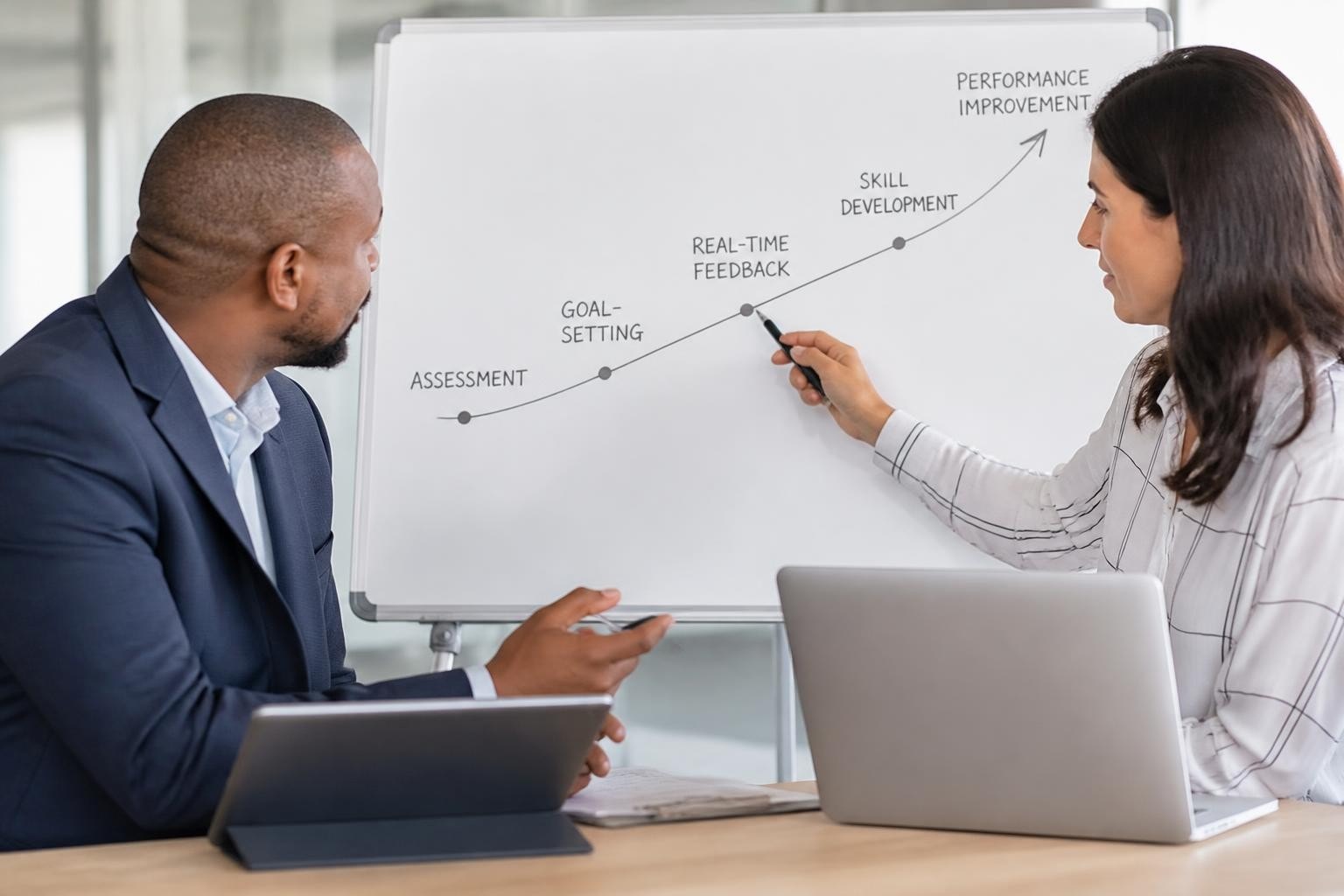
Sales coaching has evolved from occasional performance reviews into a strategic driver of revenue growth. Organizations that implement structured coaching programs see measurable improvements in win rates, deal velocity, and team retention. Yet many leaders struggle to move beyond generic feedback sessions to create coaching systems that actually change behavior. The difference between underperforming and high-performing sales teams often comes down to the quality and consistency of coaching practices embedded into daily workflows.
Understanding the Foundation of Effective Sales Coaching
Sales coaching best practices begin with clarity around what coaching actually means versus managing or training. Coaching focuses on unlocking individual potential through observation, feedback, and guided practice rather than simply directing activities or delivering knowledge.
The most effective coaches recognize that different coaching styles serve different purposes depending on the situation and the individual's development stage. A directive approach works when new reps need specific guidance on process execution, while a facilitative style helps experienced sellers develop strategic thinking skills.
Building a Coaching Framework
Strong coaching programs rest on three pillars:
- Consistent observation of actual sales activities, not just outcomes
- Data-driven feedback tied to specific behaviors and metrics
- Structured practice that reinforces new skills through repetition
Without observation, coaching becomes guesswork. Sales leaders need visibility into calls, demos, and customer interactions to identify precise improvement opportunities. Modern AI sales coaching software analyzes conversations at scale, flagging coaching moments that managers might miss while reviewing dozens of calls manually.
Research from Harvard Business School demonstrates that systematic coaching creates measurable value by improving both individual performance and team-wide capability development. The key lies in designing coaching that addresses specific skill gaps rather than applying generic advice.

Implementing Career-Stage Specific Coaching Approaches
Sales coaching best practices must account for where each team member sits in their professional journey. What salespeople need from leaders varies significantly at each career stage, requiring coaches to adapt their approach accordingly.
Coaching New Sales Representatives
Early-career reps need structured frameworks and clear process guidance. Focus coaching sessions on:
- Mastering discovery question sequences and active listening techniques
- Following proven talk tracks while developing natural delivery
- Understanding product positioning and competitive differentiation
- Building confidence through AI sales roleplay practice before live calls
New sellers benefit from frequent, short coaching interactions rather than lengthy monthly reviews. Daily or weekly touchpoints create learning momentum and catch bad habits before they solidify.
Developing Mid-Career Performers
Experienced reps require coaching that elevates strategic thinking and deal orchestration. These conversations should explore:
| Focus Area | Coaching Questions | Outcome Goal |
|---|---|---|
| Deal Strategy | What assumptions are you making about this buyer's decision process? | Develop critical thinking about complex sales cycles |
| Stakeholder Management | Who else needs to be involved for this deal to close successfully? | Expand influence mapping capabilities |
| Value Communication | How does this solution directly impact their Q1 revenue targets? | Strengthen business case articulation |
Mid-career coaching moves from "what to do" toward "how to think" about sophisticated sales situations. The coach becomes a strategic partner who helps the rep see blind spots in their approach.
Advancing Top Performers
Elite sellers often receive the least coaching, yet they represent the highest ROI opportunities. Advanced coaching focuses on:
- Refining executive presence and C-suite selling techniques
- Developing thought leadership and industry expertise
- Building personal brand and network effects
- Mentoring other team members to scale their impact
Top performers also benefit from external perspectives. Bringing in sales training consultants for specialized workshops prevents stagnation and introduces fresh methodologies.
Leveraging Technology to Scale Coaching Impact
Manual coaching approaches cannot keep pace with modern sales velocity. Sales coaching best practices now integrate technology to amplify manager effectiveness without sacrificing personalization.
Conversation Intelligence Platforms
AI-powered platforms analyze 100% of customer conversations, identifying coaching opportunities that human review would miss:
- Tracking talk-to-listen ratios and interruption patterns
- Flagging missed objection handling moments
- Measuring adherence to qualification frameworks like MEDDIC or BANT
- Benchmarking individual performance against team averages
These insights transform coaching from opinion-based to evidence-based. Instead of "I think you should ask better questions," coaches can say "Your discovery calls average 4 questions while top performers ask 12, focusing particularly on business impact and timeline."

Practice and Simulation Tools
Skills improve through repetition, but live customer calls are expensive practice grounds. AI sales training platforms create safe environments for reps to practice challenging scenarios:
- Handling aggressive objections without real deal risk
- Testing new pitch variations before buyer meetings
- Rehearsing executive presentations with instant feedback
- Building muscle memory for discovery frameworks
The best practice tools use realistic scenarios pulled from actual customer conversations, ensuring practice translates directly to performance improvement.
Performance Analytics Dashboards
Coaching requires clear performance visibility. Modern sales performance management software consolidates activity metrics, pipeline health, and skill assessments into unified dashboards that reveal:
- Which specific skills correlate with won deals
- How coaching interventions impact close rates over time
- Where individual reps excel and struggle compared to peers
- Leading indicators of future performance trends
Data-driven coaching eliminates guesswork and helps managers prioritize their limited time on highest-impact activities.
Creating a Sustainable Coaching Cadence
Sales coaching best practices fail when they exist as sporadic events rather than embedded rhythms. Sustainable coaching requires predictable cadences that balance structure with flexibility.
Daily Micro-Coaching
Brief daily interactions create continuous improvement momentum:
- 5-minute pre-call prep discussions on approach strategy
- Quick post-call debriefs focused on one specific improvement
- Slack or Teams messages highlighting positive moments observed in recorded calls
- Sharing relevant articles or tactics based on upcoming customer meetings
These micro-moments accumulate into significant skill development without requiring hour-long calendar blocks.
Weekly One-on-One Sessions
Structured weekly meetings provide depth that daily check-ins cannot. Effective weekly coaching sessions follow a consistent framework:
- Review metrics - Pipeline movement, activity completion, conversion rates
- Analyze 2-3 calls - Deep dive into specific moments with teachable insights
- Practice skills - Roleplay upcoming scenarios or work through objection responses
- Set commitments - Define 1-2 specific behaviors to implement this week
- Remove obstacles - Address blockers preventing success
Documenting these sessions in a shared tracker creates accountability and shows progress over time.
Monthly Strategic Reviews
Monthly coaching conversations zoom out to examine broader patterns and career development:
- Quarterly goal progress and pipeline health assessment
- Skill development trajectory across multiple competencies
- Career growth discussions and advancement planning
- Peer feedback integration and 360-degree perspective
These sessions balance immediate performance with long-term development, ensuring coaching serves both current revenue needs and future capability building.
Embedding Coaching into Organizational Culture
Individual manager effectiveness only goes so far. Sales coaching best practices achieve maximum impact when coaching becomes embedded into organizational DNA rather than dependent on individual leader initiative.
Leadership Modeling
Senior leaders must visibly prioritize and practice coaching. When executives participate in sales call analysis reviews, join roleplay sessions, and share their own improvement areas, it signals that development is valued at every level.
Building a business-driven coaching culture requires intentional design of systems, incentives, and behaviors that reinforce coaching as a strategic priority rather than administrative burden.
Manager Enablement
Sales managers often lack formal coaching training. Organizations that excel invest in developing coaching capabilities through:
- Certification programs in coaching methodologies and frameworks
- Manager-specific training on giving effective feedback
- Peer coaching circles where managers share challenges and tactics
- Regular calibration sessions to ensure consistent coaching quality across the team
The ROI on manager development compounds as each skilled coach improves an entire team's performance.
Cross-Functional Collaboration
Sales coaching gains effectiveness when it connects to broader go-to-market systems:
| Function | Coaching Collaboration | Benefit |
|---|---|---|
| Marketing | Share content performance data to inform customer conversation coaching | Align messaging and improve content utilization |
| Product | Surface customer feedback from calls for roadmap input | Strengthen product knowledge and competitive positioning |
| Customer Success | Review handoff quality and adoption conversations | Improve set-up-for-success behaviors in late-stage sales |
Breaking down silos ensures coaching addresses real customer experience challenges rather than optimizing in isolation.
Measuring Coaching Effectiveness
Sales coaching best practices include rigorous measurement to prove ROI and guide continuous improvement. Effective measurement tracks both leading indicators (behavior change) and lagging indicators (results).
Behavior Metrics
These metrics reveal whether coaching actually changes how reps sell:
- Average questions asked per discovery call
- Talk-to-listen ratio improvement trends
- Competitive mention frequency and positioning quality
- Objection handling attempt rate before discounting
- Stakeholder expansion rate in complex deals
Behavioral metrics provide early signals that coaching is working before revenue results materialize.
Performance Outcomes
Ultimate validation comes from business results:
- Win rate changes for coached vs. non-coached reps
- Average deal size and discount rate trends
- Sales cycle length reduction over time
- Quota attainment distribution across the team
- Sales performance metrics that correlate with specific coaching interventions
Forrester research on sales training services emphasizes that reinforcement and buyer-focused coaching directly impact measurable business outcomes when combined with appropriate technology enablement.
Qualitative Feedback
Numbers tell part of the story. Regular pulse surveys and interviews capture:
- Rep confidence levels in handling specific situations
- Perceived coaching quality and actionability
- Skill development progression from rep perspective
- Manager coaching burden and sustainability
Combining quantitative and qualitative data provides complete visibility into coaching program health.

Adapting Coaching for Remote and Hybrid Teams
Modern sales coaching best practices account for distributed team realities. Remote selling creates both challenges and opportunities for coaching effectiveness.
Overcoming Distance Limitations
Technology bridges geographic gaps:
- Video call recording provides complete visibility into remote customer interactions
- Screen sharing during coaching sessions enables collaborative call review
- Digital whiteboards facilitate remote roleplay and scenario planning
- Asynchronous feedback via sales call scoring software allows coaching at scale
The key is maintaining coaching frequency despite lack of physical proximity. Scheduled video check-ins prevent the "out of sight, out of mind" syndrome.
Leveraging Remote Advantages
Distributed teams unlock coaching benefits:
- Recorded calls create perfect coaching libraries for pattern recognition
- Time zone differences enable follow-the-sun coaching coverage
- Digital-first communication creates documentation that tracks improvement over time
- Remote work flexibility allows for just-in-time coaching around actual customer meetings
Organizations that master remote coaching often achieve better consistency than traditional office-based approaches that rely heavily on informal hallway conversations.
Personalizing Coaching to Individual Learning Styles
Sales coaching best practices recognize that one-size-fits-all approaches underserve team diversity. Effective coaches adapt methods to how each individual learns and processes feedback.
Assessment-Based Coaching
Understanding cognitive preferences and personality traits informs coaching approach:
- Analytical thinkers need data and logic in feedback conversations
- Relationship-oriented individuals respond to collaborative exploration
- Results-driven personalities want concrete action items and outcomes
- Creative types benefit from open-ended questions and experimentation
Simple assessments during onboarding help coaches tailor their approach to maximize receptivity and behavior change.
Multi-Modal Development
Different skills develop through different methods:
- Product knowledge improves through documentation, quizzes, and certification
- Objection handling requires repeated practice through roleplay simulation
- Discovery skills develop via call shadowing and conversation analysis
- Executive presence builds through video review and presentation coaching
Matching development methods to specific competencies accelerates improvement compared to generic training sessions.
Integrating AI and Human Coaching
Sales coaching best practices in 2026 blend artificial intelligence capabilities with irreplaceable human judgment. The most effective approaches leverage each for its unique strengths.
AI excels at:
- Analyzing conversation patterns across hundreds of calls
- Identifying micro-behaviors correlated with success
- Delivering instant feedback on practice sessions
- Tracking improvement trends over time
- Surfacing coaching moments managers should review
Human coaches provide:
- Strategic context and business judgment
- Emotional intelligence and empathy
- Career mentorship and motivation
- Complex situation navigation
- Creative problem-solving for unique challenges
The combination creates coaching that scales without losing personalization. An AI sales coach handles routine skill practice and feedback, freeing human managers to focus on strategic development and relationship building.
This integrated approach also addresses the time constraint challenge that prevents many managers from coaching consistently. When AI handles the heavy lifting of analysis and initial feedback, managers can focus their limited time on highest-value coaching conversations.
Implementing sales coaching best practices transforms sales organizations from collections of individual contributors into high-performing teams with shared capabilities and consistent excellence. The strategies outlined here-from career-stage specific approaches to AI-enhanced coaching cadences-provide a roadmap for building coaching systems that drive measurable revenue impact. Ryan Cook specializes in custom AI solutions that support sales, marketing, and onboarding, helping organizations implement the technology infrastructure needed to scale coaching effectiveness across distributed teams. Ready to elevate your coaching program with intelligent automation while maintaining the human touch that drives real behavior change?