October 15, 2026 · Bizware
Sales Performance Management Software: Complete Guide
Discover how sales performance management software drives revenue growth, automates compensation, and improves team productivity in 2026.

Sales teams today face unprecedented pressure to deliver results while navigating complex compensation structures, evolving quotas, and demanding performance metrics. Organizations investing in sales performance management software are discovering transformative capabilities that extend far beyond simple commission tracking. These platforms integrate analytics, automation, and strategic alignment to create revenue engines that scale with business growth. As sales cycles become more sophisticated and buyers expect personalized engagement, the ability to measure, optimize, and reward performance has become a competitive necessity rather than a luxury.
Understanding Sales Performance Management Software Architecture
Sales performance management software serves as the operational backbone for revenue organizations, connecting strategic objectives with individual seller activities. These platforms unify disparate data sources including CRM systems, ERP platforms, and HR databases to create comprehensive performance visibility.
The core architecture typically includes several interconnected modules. Incentive compensation management automates complex calculation rules, handling everything from straight commission to multi-tier accelerators with territory overlaps. Quota and territory planning modules enable revenue leaders to distribute targets fairly while accounting for market potential and historical performance. Analytics and reporting capabilities surface insights that drive coaching conversations and strategic adjustments.
Modern solutions have evolved beyond back-office calculation engines. Today's sales performance management software incorporates predictive analytics that forecast attainment probability, identify at-risk deals, and recommend intervention strategies. Machine learning algorithms analyze historical patterns to suggest optimal quota distributions and compensation plan structures that balance motivation with profitability.
Integration Capabilities That Matter
The value of any performance management platform depends heavily on its ability to connect with existing technology infrastructure. Leading solutions offer pre-built connectors to major CRM platforms like Salesforce, HubSpot, and Microsoft Dynamics, ensuring real-time data synchronization without manual exports.
Integration extends beyond sales systems. Payroll connectivity ensures commissioned earnings flow directly into compensation cycles, eliminating reconciliation errors and payment delays. HRIS integration maintains accurate organizational hierarchies, automatically adjusting reporting relationships and territory assignments as teams evolve.

API-first architecture has become table stakes for enterprise deployments. Organizations building custom AI solutions to enhance their sales processes need platforms that expose comprehensive APIs for data extraction, calculation triggers, and workflow automation.
Key Features Driving Measurable Outcomes
When evaluating sales performance management software, specific capabilities separate transformative platforms from basic calculation tools. Understanding these differentiators helps revenue leaders select solutions that address current pain points while supporting future scalability.
Compensation Plan Flexibility
The most sophisticated platforms support unlimited plan complexity without requiring custom development. This includes:
- Multi-dimensional crediting rules that split revenue across pre-sales, account executives, and customer success roles
- Time-based accelerators that increase payout rates as sellers approach or exceed quota
- Guarantee periods for new hires with automatic transitions to performance-based plans
- Clawback provisions for deals that cancel within specified timeframes
- Team-based incentives layered on individual performance metrics
Organizations frequently underestimate compensation plan complexity until they attempt automation. A mid-market software company might operate 15-20 distinct plan variations simultaneously, each with quarterly adjustments based on product launches or market conditions.
Real-Time Performance Visibility
Sales professionals perform best when they understand exactly where they stand relative to goals. Modern sales performance management software provides mobile-accessible dashboards that display current attainment, projected earnings, and pipeline coverage.
| Dashboard Component | Business Impact | Update Frequency |
|---|---|---|
| Quota Attainment % | Motivates urgency for month-end push | Real-time |
| Commission Forecast | Enables personal financial planning | Daily |
| Pipeline Health | Identifies coverage gaps early | Real-time |
| Leaderboard Position | Drives competitive motivation | Hourly |
| Historical Trending | Shows performance trajectory | Weekly |
This transparency eliminates the monthly "black box" experience where sellers wait days after quarter-end to learn their earnings. According to research on B2B sales analytics, organizations providing real-time performance data see 23% higher quota attainment compared to those relying on retrospective reporting.
Predictive Analytics and Forecasting
Advanced platforms leverage historical performance data to generate actionable predictions. These algorithms identify patterns invisible to manual analysis, such as which deal characteristics correlate with higher close rates or which reps benefit most from specific coaching interventions.
Forecasting capabilities extend to compensation planning. Finance teams model the P&L impact of proposed plan changes before implementation, testing scenarios like "what happens to sales expense ratio if we increase accelerators by 10% at 120% quota attainment?"
The sales effectiveness improvements from predictive capabilities compound over time as models refine with additional data. Organizations report 15-30% more accurate revenue forecasts within six months of implementation.
Implementation Best Practices for Maximum ROI
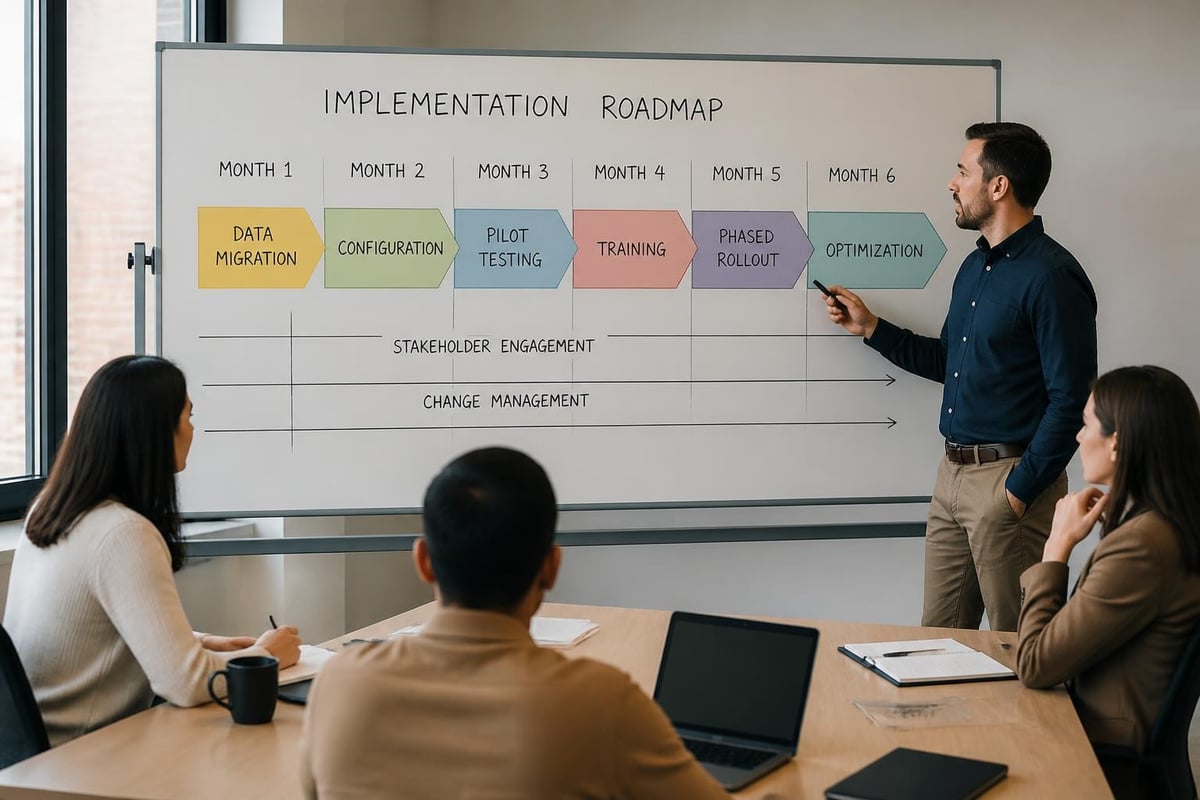
Successfully deploying sales performance management software requires careful planning beyond technology configuration. Organizations that treat implementation as a change management initiative rather than an IT project achieve dramatically better adoption and ROI.
Data Quality Foundation
Clean, consistent data is non-negotiable for accurate performance management. Before implementation begins, audit your CRM for:
- Opportunity stage definitions that reflect actual sales methodology
- Product hierarchies that enable proper revenue categorization
- Account ownership rules that clearly assign credit responsibility
- Historical close dates to establish performance baselines
- Territory assignments with complete geographic or vertical coverage
Many organizations discover significant data hygiene issues during SPM implementation. Addressing these problems delivers value beyond compensation accuracy, improving forecast reliability and pipeline management across the revenue organization.
Change Management and Training
The most common implementation failure mode involves perfect technical configuration undermined by poor user adoption. Sales teams resist new systems when they perceive administrative burden without clear personal benefit.
Effective change management starts by identifying "performance management champions" within the sales organization. These influential individual contributors pilot the system, provide feedback, and demonstrate value to peers. Their testimonials during broader rollout prove more persuasive than executive mandates.
Training should emphasize personal benefits first and operational requirements second. Show sellers how to access earnings projections, model deal scenarios, and track progress toward accelerators before covering data entry obligations. As organizations develop onboarding best practices, they're finding that role-specific training paths dramatically accelerate time-to-productivity for new sales hires.
Governance and Continuous Optimization
Post-implementation governance determines long-term platform value. Establish a cross-functional steering committee including sales operations, finance, HR, and sales leadership to review system performance quarterly.
Key governance responsibilities include:
- Monitoring calculation accuracy through random audits
- Reviewing disputed commissions and identifying root causes
- Evaluating new compensation plan requests for feasibility
- Assessing integration health and data synchronization status
- Prioritizing enhancement requests based on business impact
Regular optimization cycles keep the platform aligned with evolving business needs. Market expansion into new geographies might require multi-currency support. Product bundling strategies demand more sophisticated crediting rules. As highlighted in guidance on sales performance management, continuous refinement separates high-performing revenue organizations from those treating SPM as a "set and forget" investment.
Vendor Selection: Evaluating Your Options
The sales performance management software market includes established enterprise vendors, innovative startups, and platform-specific solutions. Understanding the competitive landscape helps match organizational requirements with vendor capabilities.
Enterprise Platforms vs. Specialized Solutions
Large vendors like Oracle, SAP, and Anaplan offer comprehensive suites that integrate SPM with broader business planning and analytics capabilities. These platforms excel in complex, multi-national deployments requiring extensive customization and scalability.
The IDC MarketScape assessment of SPM vendors provides detailed capability comparisons across 15+ providers, evaluating factors like calculation flexibility, user experience, and total cost of ownership.
Specialized vendors focus exclusively on incentive compensation and performance management, often delivering superior user experiences and faster implementation timelines. These solutions typically cost 40-60% less than enterprise platforms while meeting the needs of organizations under $500M in revenue.
| Vendor Type | Best Fit | Typical Implementation | Annual Cost Range |
|---|---|---|---|
| Enterprise Suite | Multi-national, 1000+ sellers | 6-12 months | $250K - $2M+ |
| Specialized SPM | Mid-market, complex plans | 2-4 months | $50K - $250K |
| CRM-Native | Simple plans, small teams | 2-6 weeks | $10K - $50K |
| Custom Build | Unique requirements | 4-8 months | $100K - $500K |
Critical Evaluation Criteria
Beyond basic calculation accuracy, effective vendor evaluation examines several dimensions that impact long-term success. The Forrester Wave evaluation of SPM solutions identifies 40+ criteria across current offering, strategy, and market presence.
User experience determines adoption rates and administrative efficiency. Request demonstrations from actual sales users, not just administrators, to assess mobile functionality and dashboard intuitiveness. Poor user experience undermines even the most sophisticated calculation engines.
Configurability vs. customization represents a crucial tradeoff. Platforms requiring custom code for plan changes create ongoing dependency on expensive professional services. Leading solutions enable business users to configure complex rules through visual interfaces without IT involvement.
Vendor financial stability and roadmap matter for platforms that become mission-critical to revenue operations. Research the vendor's funding status, customer retention rates, and product investment priorities. Assess alignment between their roadmap and your strategic requirements for the next three years.
Measuring Success and Ongoing Value Realization
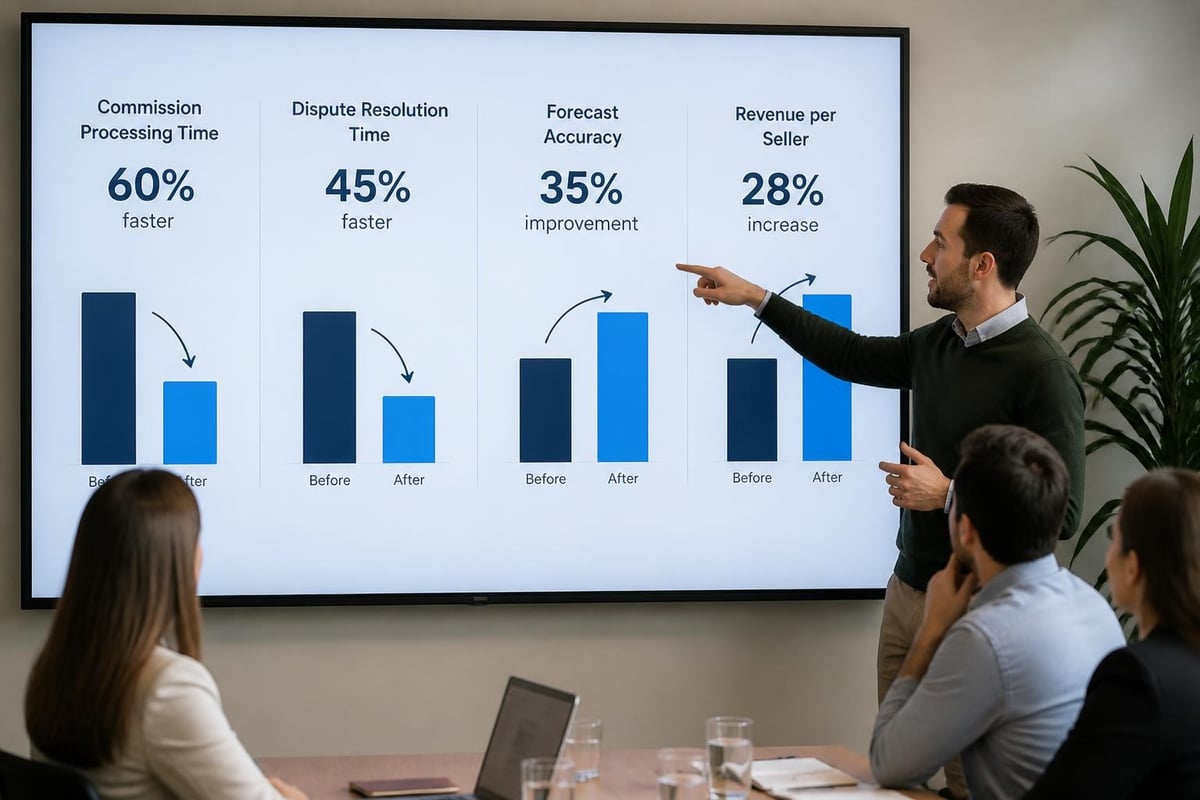
Implementing sales performance management software generates measurable returns across multiple dimensions. Establishing baseline metrics before deployment enables quantification of specific improvements and ROI calculation for continued investment justification.
Operational Efficiency Gains
The most immediate benefits appear in sales operations efficiency. Manual commission calculations that previously consumed 40-60 hours per month become automated processes requiring 5-10 hours of oversight and exception handling. This productivity improvement typically delivers complete ROI within 12-18 months based solely on labor savings.
Error rates drop dramatically when complex calculations shift from spreadsheets to purpose-built software. Organizations report 85-95% reductions in commission disputes following implementation, freeing sales leadership to focus on coaching rather than payment reconciliation.
Process cycle time improvements extend beyond calculation speed. Month-end close timelines compress as real-time data eliminates manual aggregation. Payment cycles shorten from 30+ days after quarter-end to 7-10 days, improving seller satisfaction and cash flow predictability.
Revenue Performance Improvements
Strategic value emerges as performance visibility drives better decision-making. Detailed sales performance metrics enable identification of high-performing behaviors that can be replicated across the team through targeted coaching.
Compensation plan optimization generates significant returns by aligning incentives with strategic priorities. Organizations refine plans quarterly based on actual performance data, testing hypotheses about which plan structures drive desired behaviors most cost-effectively.
The ability to model plan changes before implementation prevents costly mistakes. A SaaS company might discover through modeling that proposed accelerators would increase sales expense by 18% while only driving 7% revenue growth, prompting redesign before rollout.
Strategic Insights and Predictive Capabilities
Advanced analytics capabilities transform sales performance management software from operational tools into strategic assets. Pattern recognition across thousands of deals identifies which product combinations, deal sizes, or customer segments produce highest lifetime value.
Territory optimization algorithms balance workload and opportunity across the seller population, eliminating the perception of unfair quota distribution that drives top performer attrition. According to BCG research on sales excellence, organizations using data-driven territory planning achieve 12-15% higher revenue per seller compared to those relying on manual approaches.
Predictive models identify flight risk among high performers before they resign, triggering retention conversations and interventions. The cost of replacing a top seller typically exceeds $200,000 when accounting for lost revenue during vacancy, recruiting expenses, and ramp time for backfills.
Emerging Trends Shaping the Future
The sales performance management software category continues rapid evolution as artificial intelligence, integration capabilities, and user expectations advance. Understanding emerging trends helps organizations make platform selections that remain relevant across multi-year planning horizons.
AI-Powered Coaching and Recommendations
Artificial intelligence is transitioning from analytical curiosity to practical application in performance management. Modern platforms analyze call recordings, email communications, and activity patterns to identify coaching opportunities with specific, actionable recommendations.
Rather than generic advice to "increase call volume," AI-powered coaching suggests "focus on enterprise accounts in financial services where your win rate is 38% versus 22% company average." This specificity accelerates sales performance improvement by directing effort toward proven strengths.
Natural language interfaces enable sellers to query their performance data conversationally. Questions like "what deals am I at risk of losing this quarter?" generate instant analysis of pipeline health, competitive threats, and recommended actions. Organizations building AI sales assistant capabilities are discovering that conversational interfaces dramatically increase data utilization compared to traditional dashboards.
Revenue Intelligence Integration
The convergence of sales performance management software with revenue intelligence platforms creates comprehensive visibility across the entire revenue lifecycle. These integrated systems track customer interactions from initial marketing touch through renewal, attributing revenue impact across all contributing activities.
Connected ecosystems enable sophisticated analysis like "which marketing campaigns generate opportunities that convert at highest rates for our enterprise sellers?" This closed-loop measurement drives more efficient marketing investment and better lead routing decisions.
As organizations adopt AI sales automation tools, integration between performance management and automated workflows becomes critical. Sellers need visibility into how automated outreach sequences contribute to quota attainment and which automation-sourced opportunities warrant personal attention.
Skills-Based Performance Management
Traditional quota-centric performance management is expanding to encompass broader skill development and capability assessment. Modern platforms track competency progression across dimensions like discovery effectiveness, objection handling, and business case development.
This holistic approach aligns with AI sales training initiatives that develop specific capabilities rather than generic "more activity" mandates. Performance dashboards display skill scores alongside revenue metrics, enabling managers to identify development needs before they impact quota attainment.
Certification tracking and continuous learning integration ensure sellers maintain product knowledge as offerings evolve. Organizations implementing skills-based management report 25-30% faster ramp times for new hires and more consistent performance across tenure levels.
Advanced Plan Modeling and Scenario Planning
Finance and sales operations teams increasingly demand sophisticated what-if modeling before committing to compensation plan changes. Leading platforms now offer Monte Carlo simulation capabilities that test plan performance across thousands of scenarios, identifying unintended consequences before costly implementation.
These modeling tools evaluate questions like "how would our sales expense ratio change if top performers accelerate faster than historical trends?" or "what's the probability that proposed guaranteed draws for new hires will exceed budget?" Risk-adjusted planning prevents surprises that damage financial performance or seller morale.
Scenario planning extends to quota setting, where algorithms optimize distribution based on territory potential, historical performance, and strategic growth priorities. As covered in HubSpot's guide to sales performance management, organizations using algorithmic quota setting achieve 18% better forecast accuracy compared to purely top-down approaches.
Integration with Broader Sales Technology Stack
Sales performance management software delivers maximum value when thoughtfully integrated with complementary sales technology investments. Understanding how these systems interact prevents redundancy while ensuring comprehensive coverage of revenue operations needs.
CRM as the System of Record
Customer relationship management platforms remain the authoritative source for opportunity data, customer interactions, and pipeline status. Sales performance management software consumes this data but rarely modifies it, maintaining clear system boundaries that prevent circular dependencies.
Real-time bi-directional sync ensures commission calculations reflect the latest opportunity information while CRM users access earnings projections without switching applications. As explained in Oracle's implementation guidance, proper integration architecture prevents data inconsistencies that erode trust in both systems.
API design matters significantly for performance and reliability. Event-driven architectures that trigger incremental updates outperform batch synchronization approaches that create latency and increase error risk. Organizations should evaluate integration patterns during vendor selection, not discover limitations after purchase.
Conversation Intelligence and Coaching Platforms
The emergence of AI-powered conversation analysis creates new opportunities for performance insight. Platforms like Gong, Chorus, and custom solutions analyze sales calls to identify successful techniques, competitive mentions, and buyer objections.
Connecting these insights to sales performance management software enables correlation analysis between conversation quality metrics and revenue outcomes. Organizations discover which talk-to-listen ratios, feature discussions, or discovery questions predict highest close rates, then coach to replicate winning behaviors.
Integration also enables automated performance reviews that combine quantitative results with qualitative conversation analysis. Managers receive comprehensive preparation materials highlighting both quota attainment and specific call examples demonstrating strengths or development needs.
Enablement and Learning Management Systems
Sales enablement platforms house training content, playbooks, and best practice guidance that supports skill development. When integrated with performance management systems, these platforms recommend specific learning resources based on individual performance gaps.
A seller struggling with competitive losses might receive automated recommendations for battlecard training and successful competitive deal analyses. This targeted enablement proves more effective than generic "complete this course" mandates disconnected from actual performance challenges.
Completion tracking within performance dashboards holds sellers accountable for professional development while providing visibility into capability building across the organization. Revenue leaders correlate training participation with subsequent performance improvements, calculating ROI on enablement investments.
Sales performance management software represents a critical investment for organizations serious about revenue growth, operational efficiency, and seller satisfaction. The platforms explored throughout this guide deliver measurable returns through automation, strategic insights, and alignment of individual motivations with organizational objectives. As you evaluate solutions for your specific requirements, focus on integration capabilities, user experience, and vendor partnerships that support your growth trajectory. Ryan Cook specializes in implementing custom AI solutions that enhance sales performance management systems with intelligent automation, predictive analytics, and seamless integration across your revenue technology stack.
Give every rep sales coaching after every call
Biz grades every sales call against your playbook and role-plays the exact gaps with each rep — before their next call.