
Sales organizations face mounting pressure to deliver consistent revenue growth while navigating longer sales cycles, more sophisticated buyers, and fierce competition. Traditional one-time workshops and generic curricula no longer equip teams with the adaptive skills needed to win in today's market. Modern sales training programs must deliver measurable behavior change, reinforce learning continuously, and integrate with the tools sellers use daily. This shift from event-based training to ongoing enablement represents the fundamental evolution reshaping how companies develop sales talent in 2026.
The Current State of Sales Training Investment
Organizations are doubling down on sales development despite economic uncertainty. The sales training market continues to expand as companies recognize that seller capability directly impacts revenue outcomes. Yet many programs fail to deliver expected returns because they focus on information transfer rather than skill application.
The disconnect between training completion and actual performance improvement stems from several factors. Most programs lack reinforcement mechanisms, ignore individual learning styles, and fail to measure behavioral change in real selling situations. Companies spend millions on content development but minimal resources on ensuring sellers actually apply new skills during customer conversations.
Investment Patterns and Priorities
Budget allocation for sales training programs reveals clear trends across industries:
- Onboarding acceleration: New hire ramp time reduction remains the top priority
- Digital selling skills: Virtual engagement capabilities command growing investment
- Consultative methodology: Moving beyond product knowledge to business acumen
- Technology adoption: Training on sales enablement platforms and AI tools
- Soft skills development: Communication, negotiation, and relationship building
The shift toward continuous learning models requires different budget structures. Rather than large annual expenditures on off-site events, leading organizations distribute spending across coaching technology, microlearning content, and performance analytics platforms.

Designing Effective Sales Training Programs
Successful programs begin with clear business outcomes rather than training objectives. Revenue targets, win rate improvements, and deal velocity metrics should drive curriculum design. This alignment ensures every learning activity connects directly to performance indicators that matter to the business.
Competency Framework Development
Building a competency model requires analysis of top performers and market requirements. The framework should define specific behaviors that correlate with success at each stage of the sales process.
Core competency categories include:
- Discovery and qualification skills
- Value articulation and differentiation
- Objection handling and negotiation
- Relationship development and account planning
- Technology utilization and data hygiene
Each competency needs clear proficiency levels with observable behaviors. Vague descriptions like "strong communication skills" provide no actionable guidance. Instead, define specific actions such as "asks three probing questions before presenting solutions" or "references customer data to personalize outreach messages."
Learning Methodology Selection
The most effective sales training programs blend multiple delivery methods to accommodate different learning preferences and reinforce concepts through repetition. No single approach works for all skills or all learners.
| Method | Best Use Case | Retention Rate | Scalability |
|---|---|---|---|
| Instructor-led workshops | Complex methodology introduction | Medium | Low |
| Video microlearning | Process review and reminders | Medium | High |
| Role-play practice | Objection handling and discovery | High | Medium |
| Field coaching | Real-deal application | Very High | Low |
| Peer learning groups | Problem-solving and sharing | Medium | High |
| AI simulation | Safe skill practice at scale | High | Very High |
Research from the Association for Talent Development demonstrates that spaced repetition and active practice produce significantly higher skill retention than passive content consumption. Programs should incorporate multiple touchpoints over weeks rather than compress learning into intensive single sessions.
Leveraging Technology for Scalable Development
Modern sales training programs increasingly rely on technology platforms to deliver personalized learning experiences, track progress, and provide on-demand support. The right technology stack enables organizations to scale coaching that previously required expensive one-on-one time.
AI-Powered Training Solutions
Artificial intelligence transforms how sellers practice and receive feedback. AI sales training platforms create realistic conversation simulations where reps can refine objection handling, discovery questions, and value propositions without risking real opportunities.
These systems analyze speech patterns, word choice, and response quality to provide specific improvement recommendations. Unlike human coaches who can only review occasional calls, AI evaluates every practice session and identifies individual development areas. This continuous feedback loop accelerates skill acquisition dramatically.
The technology also adapts difficulty levels based on performance. Struggling sellers receive simpler scenarios with more guidance, while advanced reps face complex situations that challenge their capabilities. This personalization ensures each team member works at their optimal learning edge.
Integration with Sales Workflows
Training technology delivers maximum impact when embedded in daily workflows rather than existing as separate systems. Sellers won't consistently access standalone learning portals, but they will engage with guidance that appears contextually within their CRM or communication tools.
Key integration points include:
- Just-in-time content recommendations before calls
- Automated coaching prompts after customer conversations
- Performance dashboards within sales management systems
- Real-time battle cards during active opportunities
- Automated skill assessments triggered by pipeline stages
Sales coaching software that connects to email, calendar, and video platforms can analyze actual customer interactions and surface specific coaching moments. This approach ensures training addresses real performance gaps rather than hypothetical scenarios.
Measuring Training Effectiveness and ROI
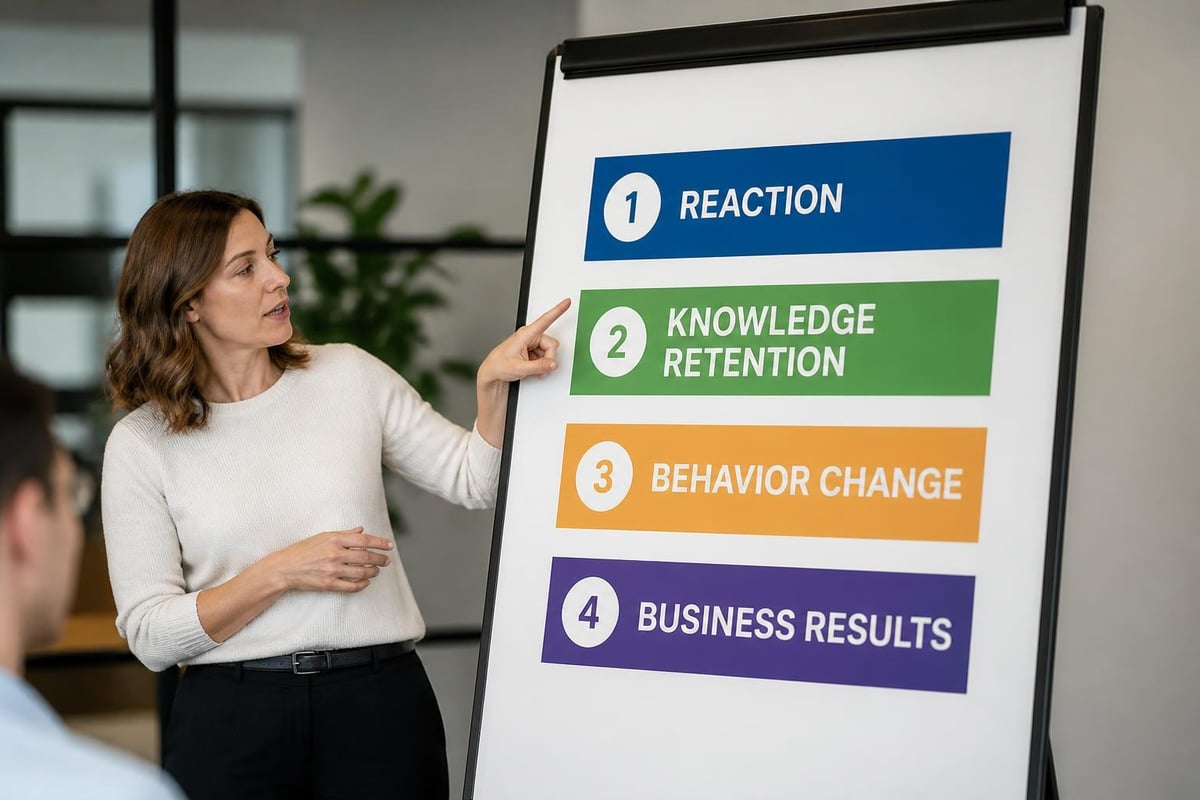
The question "Did the training work?" requires multiple measurement approaches. Leading indicators like completion rates and satisfaction scores matter less than behavioral changes and business outcomes. Comprehensive measurement frameworks track impact across four levels.
Behavior Change Metrics
Observable changes in seller actions provide the clearest evidence of training effectiveness. These metrics require manager observation, conversation analysis, or system usage data rather than self-reported surveys.
Critical behavior indicators include:
- Discovery call duration and question count
- Use of value-based language in emails and presentations
- CRM data quality and opportunity documentation
- Prospecting activity levels and channel mix
- Adherence to sales process stages and exit criteria
Technology platforms can automate much of this measurement. Conversation intelligence tools analyze call recordings for specific behaviors taught in training programs. CRM analytics reveal whether sellers apply learned methodologies when managing opportunities.
Business Outcome Correlation
Ultimate training success appears in revenue metrics. While isolating training impact from other variables proves challenging, statistical analysis can identify correlations between participation and performance improvements.
| Metric | Measurement Period | Expected Improvement | Attribution Confidence |
|---|---|---|---|
| New hire quota attainment | 6 months post-training | 15-25% increase | High |
| Win rate | 90 days post-training | 5-12% increase | Medium |
| Average deal size | 120 days post-training | 8-15% increase | Medium |
| Sales cycle length | 90 days post-training | 10-20% reduction | Low |
| Pipeline generation | 60 days post-training | 20-30% increase | Medium |
Companies should establish baseline performance before launching new sales training programs and track cohorts over time. Comparing trained versus untrained seller performance within similar territories provides clearer attribution than organization-wide trend analysis.
Harvard Business Review research highlights that training ROI depends heavily on opportunity for application. Skills that sellers can immediately practice in their daily work deliver faster returns than capabilities requiring specific deal situations.
Reinforcement and Continuous Learning Systems
The forgetting curve erodes newly learned skills rapidly without structured reinforcement. Studies show sellers lose 80% of training content within 90 days unless organizations implement ongoing practice and application support. Effective reinforcement strategies combat this natural decay through multiple mechanisms.
Spaced Learning and Microlearning
Rather than front-loading all content, modern programs distribute learning across extended timeframes. Short, focused modules delivered weekly maintain engagement and allow time for practical application between lessons.
Microlearning content works best for:
- Process reminders and checklists
- Product update communications
- Competitive intelligence briefings
- Skill refreshers before key meetings
- Best practice sharing from top performers
These brief touchpoints keep training concepts active in working memory and create multiple retrieval opportunities that strengthen retention. Sales enablement software can automate delivery based on individual seller needs and upcoming activities.
Manager-Led Coaching Integration
Frontline sales managers represent the most powerful reinforcement mechanism for any training program. When managers consistently observe, provide feedback, and hold sellers accountable for applying learned skills, behavior change accelerates dramatically.
However, managers need specific coaching frameworks aligned with training content. Generic "How did that call go?" conversations produce minimal impact compared to structured debriefs using consistent evaluation criteria.
Effective coaching integration requires:
- Manager training on observation and feedback techniques
- Coaching guides tied to each curriculum module
- Required coaching frequency standards and accountability
- Technology tools that surface coaching moments automatically
- Regular manager calibration sessions to ensure consistency
The State of Sales Enablement reveals that organizations investing in manager enablement see 2-3x greater training program effectiveness compared to those focusing solely on individual contributor development.
Customizing Programs for Different Seller Segments
One-size-fits-all training wastes resources and frustrates participants. New hires need different content than veteran sellers. Inside sales reps face distinct challenges from field account executives. Effective sales training programs acknowledge these differences through segmented design.
New Hire Onboarding Acceleration
Reducing time-to-productivity for new sellers directly impacts revenue capacity. Comprehensive onboarding programs address product knowledge, sales process, tools proficiency, and initial skill development within an integrated curriculum.
The typical onboarding journey spans 90-120 days with clear milestones:
- Week 1-2: Company, product, and market foundations
- Week 3-4: Sales methodology and process training
- Week 5-8: Supported customer interactions and skill practice
- Week 9-12: Independent selling with close observation
- Month 4+: Ongoing skill development and specialization
Best practices for onboarding emphasize early wins and progressive responsibility increases. Rather than delaying customer contact until all training completes, modern programs involve new hires in real interactions quickly with appropriate support structures.

Ongoing Skill Development for Experienced Sellers
Veteran team members often resist training they perceive as basic or redundant. Advanced programs must offer genuine skill enhancement and acknowledge existing expertise while introducing new capabilities.
Effective approaches for experienced sellers include:
- Specialized skill tracks: Advanced negotiation, enterprise selling, or vertical expertise
- Peer-led learning: Top performers sharing techniques with colleagues
- Challenge-based development: Solving real current deals collaboratively
- Executive presence: Communication skills for C-level interactions
- Business acumen: Financial analysis and ROI modeling capabilities
These programs work best when optional and clearly tied to career progression. Mandatory generic training breeds resentment among high performers who feel their time could be better spent selling.
Building Internal Training Capacity
Organizations face a build-versus-buy decision for sales training programs. External vendors bring specialized expertise and proven methodologies, while internal teams offer company-specific customization and ongoing support capacity.
Internal Team Structure
Dedicated sales enablement functions typically include content developers, instructional designers, and program managers. Team size scales with seller population, generally one enablement professional per 30-50 sales reps.
Key roles and responsibilities:
| Role | Primary Focus | Required Skills |
|---|---|---|
| Enablement Manager | Program strategy and stakeholder alignment | Business acumen, project management |
| Instructional Designer | Curriculum development and delivery method selection | Learning science, content creation |
| Content Developer | Sales plays, battle cards, and supporting materials | Sales expertise, communication |
| Technology Administrator | Platform management and analytics | Technical proficiency, data analysis |
| Facilitator/Trainer | Delivery of live training sessions | Presentation skills, sales credibility |
Many organizations supplement internal teams with external partners for specialized needs. Forrester's analysis of sales training services helps companies evaluate vendor capabilities across methodology strength, delivery effectiveness, and industry expertise.
Content Development and Curation
Creating proprietary training content requires significant investment but yields materials precisely aligned with company methodology and market positioning. The development process typically spans 6-12 weeks per major curriculum module.
Organizations should prioritize custom content for:
- Unique sales methodology and process
- Competitive differentiation and positioning
- Industry-specific business acumen
- Company products and solution architecture
- Internal systems and tools training
Generic skill development like handling sales objections often works well with licensed or off-the-shelf content, reducing development costs while maintaining quality.
Aligning Training with Business Strategy
Sales training programs must reflect and reinforce overall go-to-market strategy. When training contradicts strategic direction, sellers receive mixed messages that undermine both initiatives. This alignment requires ongoing collaboration between sales leadership, enablement teams, and executive stakeholders.
Strategic Priorities Translation
Business objectives like "expand into enterprise accounts" or "increase average deal size" require specific seller capabilities. Training curricula should explicitly develop these capabilities rather than assuming sellers will make connections independently.
Common strategic shifts and corresponding training needs:
- Enterprise expansion: Account planning, stakeholder mapping, consensus building
- Product-to-solution selling: Business acumen, ROI modeling, consultative discovery
- Market vertical focus: Industry knowledge, specialized use cases, regulatory understanding
- Channel partner strategy: Partner enablement, co-selling, relationship management
- Customer expansion: Account management, renewal optimization, upsell identification
SHRM guidance on aligning learning programs with business needs emphasizes starting with desired business outcomes and working backward to required capabilities. This outcome-first approach ensures training investments support strategic priorities rather than addressing symptoms of deeper misalignment.
Cross-Functional Coordination
Sales training programs impact and require support from multiple departments. Marketing provides messaging and competitive intelligence. Product teams contribute technical knowledge and roadmap context. Customer success shares retention insights and expansion patterns.
Formal governance structures prevent enablement from operating in isolation. Monthly stakeholder reviews ensure training content remains current with product releases, competitive dynamics, and customer feedback. This coordination proves especially critical when companies launch new solutions or enter new markets.
Adapting to Remote and Hybrid Selling Environments
The permanent shift toward virtual selling demands different skills than traditional field sales. Sellers must engage buyers effectively through video, build relationships without face-to-face interaction, and leverage digital tools to create value. Sales training programs must address these evolved requirements explicitly.
Digital Engagement Skills
Virtual selling requires intentional energy management, concise communication, and strategic use of visual aids. Sellers accustomed to in-person rapport building often struggle to establish trust through screens.
Critical virtual selling competencies include:
- Video presence and non-verbal communication
- Screen sharing and virtual presentation skills
- Asynchronous communication through video messages
- Digital whiteboarding and collaborative tools
- Managing technical difficulties professionally
AI sales coaching platforms provide safe practice environments where sellers can refine virtual presentation skills and receive feedback on camera presence, pacing, and engagement techniques.
Technology Stack Proficiency
Modern sellers juggle numerous tools: CRM systems, video platforms, sales engagement software, conversation intelligence, and content repositories. Poor technology adoption undermines both seller productivity and training program effectiveness.
Effective technology training balances feature education with workflow integration. Sellers need to understand not just how tools work but when and why to use specific capabilities. Context-driven training that demonstrates technology solving real selling challenges produces higher adoption than feature-by-feature walkthroughs.
Emerging Trends Reshaping Sales Development
Sales training programs continue evolving as new technologies, buyer behaviors, and competitive dynamics emerge. Organizations that anticipate these trends can build capabilities before competitors, creating sustainable advantages.
Personalization at Scale
Adaptive learning platforms customize content sequences, practice scenarios, and coaching feedback based on individual performance data. This personalization previously required dedicated coaches but now operates automatically through AI algorithms.
Systems analyze which concepts individual sellers grasp quickly versus where they struggle, then adjust subsequent learning paths accordingly. High performers accelerate through foundational material while those needing additional support receive supplementary resources and practice opportunities.
Skills-Based Development
Traditional role-based training assumes all account executives need identical capabilities. Skills-based approaches recognize that individual sellers possess different strength profiles and should develop along personalized paths.
This model requires granular skill assessment and tracking beyond broad role categories. Sales performance management systems can identify specific capability gaps and recommend targeted development activities addressing individual needs rather than generic team training.
Just-in-Time Learning
Sellers increasingly expect immediate access to information exactly when needed rather than completing training modules weeks before applying the knowledge. Mobile-friendly microlearning, AI-powered content recommendations, and searchable knowledge bases enable this on-demand approach.
The shift toward just-in-time support changes content design requirements. Materials must work as standalone references rather than sequential courses. Effective organization, robust search capabilities, and clear relevance indicators become critical for adoption.
Effective sales training programs deliver measurable business results through continuous skill development, technology integration, and strategic alignment. The most successful approaches blend proven learning science with modern AI capabilities that scale personalized coaching to entire sales organizations. Ryan Cook specializes in building custom AI solutions that transform sales training from one-time events into ongoing performance systems, helping teams develop capabilities faster and apply them more consistently in real customer interactions.