

The modern business landscape demands more than traditional sales tactics. Organizations struggling with stagnant revenue, inconsistent pipeline performance, or inefficient sales processes increasingly turn to specialized expertise to drive transformation. A b2b sales consultant brings strategic insight, proven methodologies, and objective perspective to help companies unlock revenue potential and build sustainable growth engines. Whether you're scaling your marketing services firm or optimizing your existing sales infrastructure, understanding the value and application of expert sales consulting can be the difference between incremental improvement and transformational results.
Understanding the Role of a B2B Sales Consultant
A b2b sales consultant operates as a strategic partner who diagnoses sales challenges, designs customized solutions, and guides implementation to drive measurable revenue outcomes. Unlike internal sales managers focused on daily execution, consultants bring fresh perspective shaped by experience across multiple industries and sales environments.
Core Responsibilities and Expertise Areas
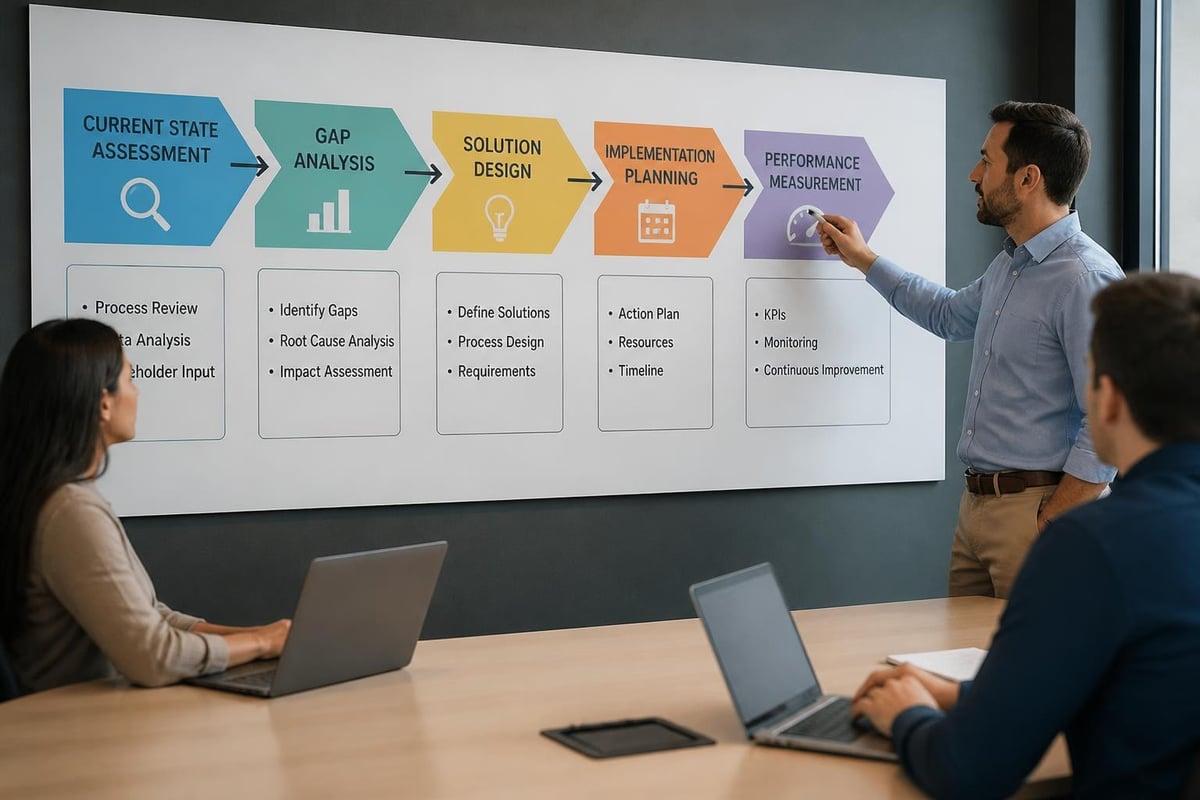
The scope of a b2b sales consultant extends far beyond basic sales training. These professionals conduct comprehensive assessments of your current sales infrastructure, identifying gaps in process, technology, talent, and strategy. They analyze conversion rates at each pipeline stage, evaluate sales team competencies, and benchmark performance against industry standards.
Key focus areas include:
- Sales process optimization and standardization
- Pipeline architecture and forecasting accuracy
- Technology stack evaluation and implementation
- Sales talent assessment and development
- Compensation structure design
- Market positioning and competitive strategy
Modern consultants increasingly integrate AI-driven sales enablement tools to amplify human capabilities. This technological dimension separates forward-thinking consultants from those relying solely on traditional methodologies.
The Strategic Assessment Phase
Every effective consulting engagement begins with rigorous discovery. A skilled b2b sales consultant examines your entire revenue ecosystem, from lead generation through customer retention. This involves quantitative analysis of metrics like customer acquisition cost, sales cycle length, and win rates, combined with qualitative insights from sales team interviews and customer feedback.
The assessment reveals hidden friction points that internal teams often overlook. Perhaps your sales methodology misaligns with how modern B2B buyers actually research solutions. Maybe your CRM data quality prevents accurate forecasting. Or your onboarding process leaves new sales representatives struggling for months before reaching productivity.
| Assessment Component | Key Questions | Deliverable |
|---|---|---|
| Process Analysis | Where do deals stall? What handoffs fail? | Process flow documentation with bottleneck identification |
| Technology Audit | Which tools drive adoption? What redundancies exist? | Technology stack optimization recommendations |
| Talent Evaluation | Who performs best? What competencies predict success? | Competency framework and individual development plans |
| Market Position | How do competitors position? What value resonates? | Competitive positioning and messaging framework |
Building High-Performance Sales Infrastructure
Once assessment reveals opportunities, a b2b sales consultant designs and implements infrastructure that supports consistent, scalable revenue growth. This infrastructure encompasses people, process, and technology working in harmony.
Implementing Proven Sales Methodologies
Generic sales approaches rarely deliver optimal results. Consultants help organizations select and customize methodologies that align with their specific market dynamics, buyer personas, and product complexity. Whether implementing Sandler Training techniques or developing hybrid approaches, the focus remains on creating repeatable frameworks that new team members can quickly adopt.
For marketing services businesses selling custom AI solutions, consultants might design consultative selling frameworks that emphasize discovery of client pain points before presenting technical capabilities. This shifts conversations from feature-focused pitches to strategic business discussions that command premium pricing.
Optimizing the Sales Technology Stack
Technology should enable sellers, not burden them with administrative overhead. A b2b sales consultant evaluates whether your current tools actually improve productivity or merely create data entry obligations. Practical guidance on digital sales tools helps consultants recommend solutions that integrate seamlessly with existing workflows.
Modern sales stacks increasingly incorporate AI sales automation capabilities that handle routine tasks while surfacing insights that guide strategic decisions. From intelligent lead scoring to conversational intelligence that analyzes sales calls, these technologies amplify consultant recommendations with continuous improvement mechanisms.
Essential technology categories include:
- Customer Relationship Management (CRM) platforms
- Sales engagement and sequencing tools
- Proposal and contract management systems
- Conversational intelligence and call recording
- Sales content management and enablement
- Forecasting and pipeline analytics
- AI-powered coaching and training platforms
The key lies not in maximizing tool count but in ensuring each technology delivers measurable return on investment and genuine adoption among sales teams.
Transforming Sales Team Performance
Technology and process improvements mean nothing without capable people executing the strategy. A b2b sales consultant focuses significant attention on talent development, from hiring practices through ongoing skill enhancement.
Designing Competency-Based Hiring
Many organizations hire based on charisma and enthusiasm rather than predictive success factors. Consultants establish competency frameworks that identify specific behaviors, skills, and attributes that correlate with high performance in your unique selling environment. Research-backed sales assessment methodologies provide objective evaluation criteria that reduce hiring mistakes and accelerate ramp time.
For businesses selling complex AI solutions, consultants might prioritize consultative questioning skills, technical aptitude, and strategic thinking over traditional relationship-building strengths. This ensures new hires can navigate sophisticated enterprise sales cycles where multiple stakeholders evaluate technical fit alongside business value.
Implementing Continuous Development Systems
Top performers continuously refine their craft. A b2b sales consultant designs development systems that provide ongoing skill enhancement rather than one-time training events. This includes structured coaching programs where managers observe calls and provide specific feedback, peer learning forums where team members share winning strategies, and microlearning modules that deliver bite-sized skill development.

AI-powered sales coaching platforms now enable personalized development at scale. These systems analyze individual performance patterns, identify skill gaps, and deliver targeted training content precisely when sellers need it. Consultants integrate these technologies with human coaching to create comprehensive development ecosystems.
Effective development programs include:
- Weekly one-on-one coaching sessions with specific skill focus
- Monthly team workshops addressing common challenges
- Quarterly business reviews with individual development planning
- Role-playing exercises using actual scenarios from your sales process
- Shadowing programs pairing new hires with top performers
- External training for advanced skills and certifications
Driving Account-Based Revenue Growth
For organizations targeting enterprise accounts or high-value clients, a b2b sales consultant brings specialized expertise in account-based strategies that align sales and marketing efforts.
Implementing Account-Based Marketing Integration
Traditional lead generation approaches waste resources on prospects unlikely to convert. Consultants help organizations adopt account-based marketing best practices that concentrate resources on high-potential accounts. This requires tight alignment between sales and marketing teams, shared account selection criteria, and coordinated engagement strategies.
For marketing services businesses, this might involve identifying companies recently securing funding rounds who need rapid scaling support, or organizations publicly announcing digital transformation initiatives requiring AI implementation expertise. Rather than generic outreach, teams develop customized engagement strategies for each target account.
| ABM Component | Sales Role | Marketing Role | Consultant Contribution |
|---|---|---|---|
| Account Selection | Provide ideal customer profile insights | Research and score accounts | Facilitate alignment and establish criteria |
| Content Development | Share customer pain points and objections | Create customized content assets | Design content frameworks and messaging |
| Engagement Strategy | Execute personalized outreach | Orchestrate multi-channel campaigns | Map buyer journey and touchpoint strategy |
| Performance Measurement | Report pipeline and revenue impact | Track engagement and influence | Define success metrics and reporting cadence |
Aligning Sales and Marketing Functions
Revenue growth accelerates when sales and marketing operate as unified revenue teams rather than separate departments. A b2b sales consultant facilitates this alignment through shared goals, integrated processes, and collaborative planning.
This includes establishing service level agreements defining lead quality standards, implementing closed-loop reporting where sales provides feedback on lead outcomes, and creating joint account planning sessions where both teams contribute intelligence and strategy. Strategies for generating qualified leads become more effective when sales insights inform marketing targeting and messaging.
Leveraging Data and AI for Sales Excellence
Modern b2b sales consulting increasingly emphasizes data-driven decision-making and artificial intelligence applications that transform sales effectiveness.
Building Predictive Analytics Capabilities
Intuition alone no longer suffices for complex sales forecasting and pipeline management. A b2b sales consultant implements analytics frameworks that surface leading indicators of deal health, identify at-risk opportunities before they stall, and predict which prospects most likely convert.
These analytics examine historical patterns across thousands of data points: email engagement rates, meeting frequencies, stakeholder involvement, competitive presence, and deal progression velocity. Machine learning models identify which combinations predict successful outcomes, enabling sales leaders to coach teams proactively rather than reactively.
Key analytics applications include:
- Win probability scoring for pipeline deals
- Next-best-action recommendations for sales reps
- Churn prediction for existing customer accounts
- Territory and quota optimization modeling
- Pricing sensitivity analysis
- Sales activity correlation with outcomes
Implementing AI-Powered Sales Tools
Artificial intelligence transforms sales from art to science without eliminating the human relationship element. A b2b sales consultant helps organizations select and deploy AI solutions for business that augment human capabilities rather than replace them.
Conversational AI analyzes sales calls in real-time, suggesting responses to objections and flagging when reps deviate from proven messaging. Generative AI creates personalized email sequences and proposal content tailored to specific prospect industries and challenges. Predictive AI identifies which existing customers are most receptive to expansion conversations based on usage patterns and satisfaction indicators.

For businesses focused on onboarding optimization, consultants might implement AI training platforms that accelerate new sales rep productivity through interactive simulations and personalized learning paths. This reduces the typical six-to-nine-month ramp period that drains resources and delays revenue impact.
Measuring and Optimizing Sales Performance
Transformation initiatives fail without rigorous measurement frameworks that track progress and identify emerging opportunities. A b2b sales consultant establishes comprehensive performance management systems that balance leading and lagging indicators.
Establishing Key Performance Metrics
Effective measurement begins with identifying which metrics actually predict revenue outcomes versus vanity metrics that create false confidence. Consultants help organizations focus on sales performance metrics that drive behavior aligned with strategic goals.
Leading indicators provide early warning signals and coaching opportunities. These include sales activity metrics like discovery calls conducted, proposals submitted, and follow-up response rates. Lagging indicators measure ultimate outcomes: revenue booked, average deal size, and customer lifetime value.
Critical metrics frameworks include:
- Activity Metrics: Calls made, emails sent, meetings scheduled, demonstrations delivered
- Pipeline Metrics: Qualified opportunities created, stage progression velocity, pipeline coverage ratio
- Conversion Metrics: Lead-to-opportunity rate, opportunity-to-close rate, average sales cycle length
- Revenue Metrics: Monthly recurring revenue, average contract value, customer acquisition cost
- Retention Metrics: Logo retention rate, net revenue retention, expansion revenue percentage
Implementing Continuous Improvement Processes
Measurement without action wastes resources. A b2b sales consultant designs review cadences and improvement processes that translate insights into performance gains. This includes daily team huddles addressing immediate blockers, weekly pipeline reviews identifying deals needing intervention, and monthly business reviews analyzing trend patterns.
Sales performance improvement methodologies create feedback loops where data informs coaching, coaching influences behavior, and behavior drives better outcomes. This systematic approach replaces random acts of management with intentional development focused on highest-impact opportunities.
Scaling Revenue Through Systematic Approaches
Sustainable growth requires systems that work independently of individual heroics. A b2b sales consultant builds scalable revenue engines that maintain performance as organizations add team members and expand into new markets.
Documenting Playbooks and Best Practices
Tribal knowledge trapped in top performers' heads limits organizational capability. Consultants extract this expertise into documented playbooks that new team members can follow to accelerate their success. These include prospecting scripts, discovery question frameworks, objection handling approaches, and closing techniques that work in your specific market.
For marketing services businesses selling AI solutions, playbooks might detail how to navigate complex stakeholder environments, position custom development against off-the-shelf alternatives, and structure phased implementations that reduce buyer risk. HubSpot's practical B2B sales tips provide foundational tactics that consultants customize for industry-specific applications.
Building Revenue Operations Functions
As organizations mature, they benefit from dedicated revenue operations teams that support sales execution. A b2b sales consultant helps establish these functions, which handle technology administration, data quality, reporting, sales compensation, and process optimization. This frees sales leaders to focus on coaching and strategy rather than administrative tasks.
Revenue operations teams also manage sales effectiveness initiatives that continuously refine processes based on performance data. They identify which sales motions generate highest ROI, which markets offer greatest expansion potential, and which customer segments deliver best lifetime value.
Navigating Sales Transformation Challenges
Implementing consultant recommendations requires managing organizational change effectively. Resistance, competing priorities, and execution gaps derail many well-designed initiatives.
Overcoming Common Implementation Obstacles
Change initiatives face predictable resistance patterns. Sales teams comfortable with existing approaches question why transformation is necessary, especially if they've achieved historical success. A b2b sales consultant addresses this resistance through transparent communication about market shifts requiring adaptation, data demonstrating current approach limitations, and inclusive design processes that incorporate team input.
Common challenges and solutions include:
- Resistance to new technology: Start with champions who demonstrate value, then expand adoption incrementally
- Competing strategic priorities: Secure executive sponsorship and protected implementation resources
- Insufficient training investment: Build comprehensive change management plans with sustained support beyond launch
- Data quality issues: Establish governance processes and incentivize accurate CRM usage
- Inconsistent leadership commitment: Create executive accountability through regular steering committee reviews
Sustaining Momentum Beyond Initial Implementation
The first 90 days determine whether transformation sticks or fades. A b2b sales consultant designs sustainability mechanisms including ongoing coaching, performance dashboards that maintain visibility, celebration of early wins that build confidence, and gradual capability building that prevents overwhelm.
Sales performance management systems institutionalize new behaviors through compensation alignment, promotion criteria updates, and recognition programs that reinforce desired approaches. This ensures transformation becomes "how we do business" rather than "that consultant project we tried."
Engaging a skilled b2b sales consultant accelerates revenue growth by implementing proven methodologies, optimizing processes, and building team capabilities that drive sustainable results. Whether you're struggling with pipeline inconsistency, team performance gaps, or scaling challenges, expert guidance transforms sales from unpredictable activity into reliable revenue engine. Ryan Cook specializes in implementing custom AI solutions that enhance sales effectiveness, streamline marketing operations, and optimize onboarding processes for businesses ready to leverage technology for competitive advantage.