

Sales leaders face unprecedented pressure to deliver results in an increasingly competitive marketplace. The difference between high-performing and underperforming teams often comes down to systematic approaches to coaching, training, and enablement. Understanding how to improve sales team performance requires a combination of proven methodologies and modern technology, particularly as AI-powered tools reshape the sales landscape in 2026.
Build a Foundation with Clear Performance Metrics
The first step in learning how to improve sales team performance is establishing measurable benchmarks. Without clear metrics, you're navigating without a compass.
Define What Success Looks Like
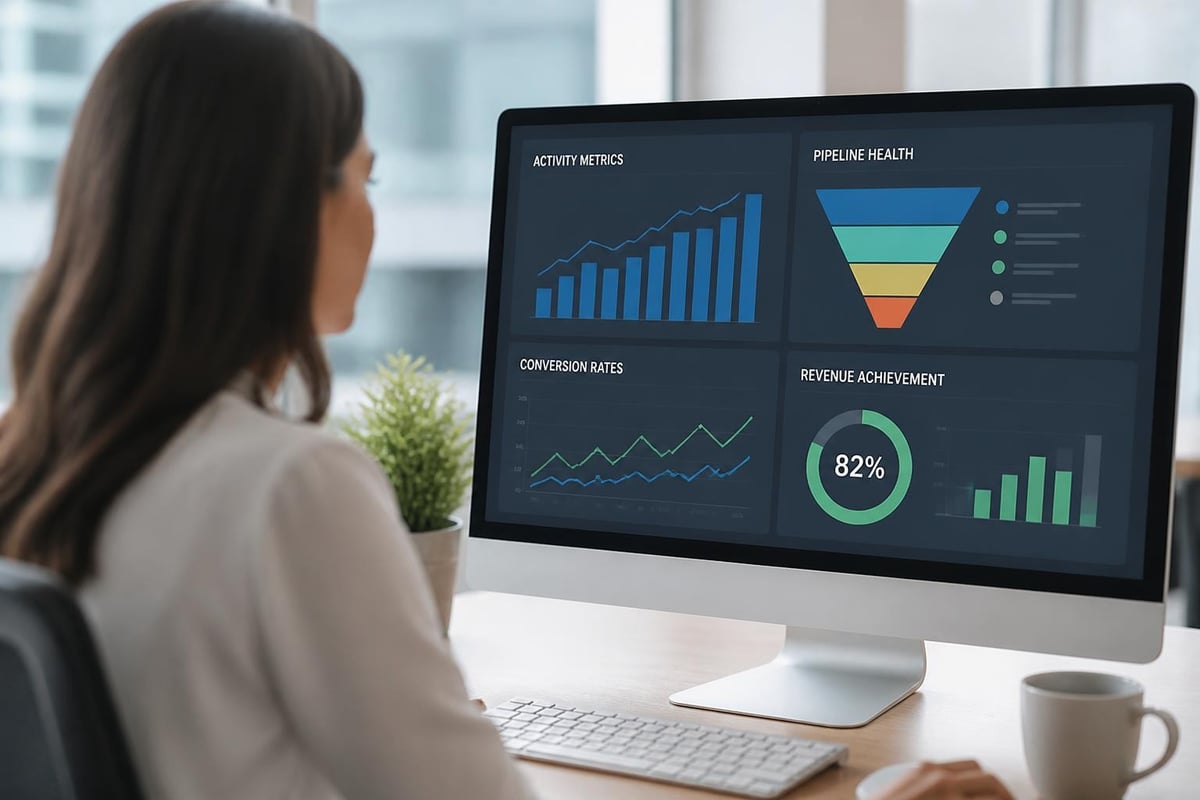
Sales performance extends far beyond quota attainment. Modern teams track a comprehensive set of indicators that predict future success:
- Activity metrics: Calls made, emails sent, meetings booked
- Pipeline metrics: Opportunity creation rate, pipeline velocity, deal size
- Conversion metrics: Win rate, average sales cycle length, proposal-to-close ratio
- Revenue metrics: Quota attainment, average contract value, customer lifetime value
- Quality metrics: Customer satisfaction scores, retention rates, upsell percentages
Research published in the Journal of the Academy of Marketing Science demonstrates that sales effectiveness correlates most strongly with activity levels, adaptive selling behaviors, and relationship-building skills. These findings underscore the importance of tracking both quantitative outputs and qualitative behaviors.
Create Performance Scorecards
Individual scorecards provide visibility into each team member's strengths and development areas. A well-designed scorecard includes:
| Metric Category | Example KPIs | Measurement Frequency |
|---|---|---|
| Activity | Calls per day, emails sent | Daily/Weekly |
| Pipeline | New opportunities, pipeline value | Weekly |
| Conversion | Demo-to-close rate | Monthly |
| Revenue | Monthly recurring revenue added | Monthly |
| Quality | Customer satisfaction score | Quarterly |
These scorecards become the foundation for coaching conversations and performance improvement plans. Sales leaders who review scorecards weekly with their teams see significantly higher performance than those who conduct only monthly or quarterly reviews.
Implement Continuous Coaching and Development
Knowing how to improve sales team performance requires moving beyond annual training events to continuous skill development. The most successful organizations embed coaching into daily workflows.
Leverage AI-Powered Coaching Tools
Traditional coaching models struggle to scale. Sales managers typically spend less than three hours per month coaching each representative, yet high performers receive significantly more attention than those who need it most.
AI assistants can add substantial value to your sales team by providing on-demand coaching and feedback. Modern AI sales coaching software analyzes call recordings, identifies improvement opportunities, and delivers personalized recommendations at scale.
These platforms enable:
- Real-time conversation intelligence during customer calls
- Automated identification of successful talk tracks and messaging
- Personalized skill development paths based on individual performance gaps
- Simulated practice scenarios for high-stakes conversations
The AI sales roleplay capabilities available in 2026 allow representatives to practice objection handling, discovery questioning, and closing techniques in risk-free environments before engaging with actual prospects.
Structure Effective Coaching Sessions
Harvard Business School research on sales coaching and value creation reveals that the most effective coaching focuses on specific behaviors rather than general feedback. Productive coaching sessions follow a consistent framework:
- Pre-work: Representative reviews their own performance data and identifies one area for improvement
- Discussion: Manager and representative analyze specific examples (call recordings, email threads, deal progression)
- Skill practice: Role-play or simulation to demonstrate improved technique
- Action planning: Define specific behaviors to implement before the next session
- Accountability: Track adoption of new behaviors through metrics and observation
When managers dedicate time to this structured approach, representatives improve faster and retain new skills more effectively than through ad-hoc feedback alone.
Optimize Your Onboarding Process
New hire ramp time directly impacts team performance. Research from Baylor University's Keller Center identifies critical activities that accelerate early-tenure sales success and reduce first-year turnover.
Design a Structured Ramp Plan
Top-performing organizations compress time-to-productivity through systematic onboarding. Their programs include:
- Week 1-2: Product knowledge, ideal customer profile, competitive positioning
- Week 3-4: Sales methodology, tools training, shadowing experienced reps
- Week 5-6: Conducting discovery calls with manager observation
- Week 7-8: Managing full sales cycle with reduced quota
- Week 9-12: Transitioning to full quota with ongoing coaching support
Implementation of onboarding best practices can reduce time-to-first-deal by 30-40% compared to informal approaches. The key is balancing structured curriculum with hands-on practice and real customer interactions.

Provide Resources and Enablement
Understanding how to improve sales team performance means equipping your team with the right materials at the right time. According to Highspot's State of Sales Enablement Report, organizations with formal enablement programs see 15% higher quota attainment than those without.
Essential enablement resources include:
- Battle cards for competitive situations
- Case studies organized by industry and use case
- ROI calculators and value assessment tools
- Email templates for different stages of the buying journey
- Presentation decks customized for various buyer personas
- Objection handling guides based on real customer conversations
Modern sales enablement software ensures representatives can find the right content within seconds, rather than spending hours searching shared drives or recreating materials from scratch.
Foster Healthy Competition and Recognition
Sales cultures thrive on achievement and recognition. Strategic use of competition motivates without creating destructive internal dynamics.
Implement Multi-Dimensional Leaderboards
Rather than focusing solely on revenue, recognize excellence across multiple categories:
| Recognition Category | What It Measures | Why It Matters |
|---|---|---|
| Revenue Leader | Highest closed revenue | Celebrates top performers |
| Most Improved | Largest month-over-month growth | Encourages development |
| Pipeline Builder | Most qualified opportunities created | Recognizes future success |
| Team Player | Most assists/referrals to colleagues | Promotes collaboration |
| Customer Champion | Highest satisfaction scores | Emphasizes quality relationships |
This approach ensures representatives at different experience levels and with different strengths all have opportunities for recognition.
Create Meaningful Incentives
Financial compensation matters, but non-monetary recognition often drives sustained motivation. Effective programs include:
- Public acknowledgment in team meetings and company communications
- Additional professional development opportunities for top performers
- Input into strategic decisions and territory planning
- Flexible scheduling or remote work privileges
- Executive exposure and mentorship opportunities
The combination of recognition and development opportunities creates a performance culture where continuous improvement becomes the norm rather than the exception.
Align Sales and Marketing Functions
Disconnected sales and marketing teams waste resources and confuse buyers. Organizations that learn how to improve sales team performance recognize that alignment between these functions multiplies effectiveness.
Establish Shared Definitions and Goals
Sales and marketing must agree on fundamental definitions:
- What constitutes a qualified lead?
- At what point should a prospect be contacted by sales?
- How should lead quality be measured and reported?
- What content and messaging resonate with different buyer stages?
When both teams work toward shared revenue goals rather than separate metrics, collaboration replaces finger-pointing. Monthly alignment meetings should review:
- Lead volume and quality trends
- Content performance and usage by sales
- Win/loss analysis and competitive insights
- Upcoming campaigns and sales initiatives
- Feedback loops between customer conversations and marketing messaging
Implement Closed-Loop Reporting
Marketing teams need to understand what happens to the leads they generate. Sales teams need visibility into which campaigns and channels produce the best opportunities. Sales performance management software connects these data points, showing the complete journey from initial marketing touch through closed revenue.
This visibility enables both teams to optimize their efforts based on actual results rather than assumptions.
Leverage Technology Strategically
Technology should amplify human capabilities, not replace them. Knowing how to improve sales team performance in 2026 requires thoughtful technology adoption.
Choose Tools That Integrate
The average sales representative uses 10+ tools daily. This fragmentation creates inefficiency and data silos. When evaluating new platforms, prioritize:
- Native integrations with your CRM
- Single sign-on and unified user experience
- Automatic data capture and synchronization
- Mobile accessibility for field sellers
- Intuitive interfaces requiring minimal training
Sales call analysis software exemplifies this integration imperative. The best platforms automatically sync conversation insights to your CRM, surface relevant content recommendations, and update pipeline forecasts without manual data entry.

Adopt AI Thoughtfully
Artificial intelligence transforms sales operations when applied to specific problems. Recent research on AI-enabled team coaching and interventions demonstrates measurable improvements in collaboration and individual performance when AI tools provide timely feedback and guidance.
Practical AI applications for sales teams include:
- Conversation analysis to identify successful patterns and coaching opportunities
- Predictive analytics to prioritize highest-probability opportunities
- Automated administrative tasks (meeting scheduling, CRM updates, follow-up emails)
- Personalized learning recommendations based on individual skill gaps
- Real-time battle card suggestions during customer conversations
The key is starting with clear use cases and measurable success criteria rather than adopting AI for its own sake. Understanding how AI solutions work helps leaders make informed decisions about which capabilities will deliver the greatest impact for their specific teams.
Conduct Regular Performance Reviews
Formal performance reviews create accountability and clarity. These conversations should never surprise representatives if coaching happens consistently, but they serve important functions.
Quarterly Business Reviews
Every 90 days, conduct structured reviews covering:
- Results review: Performance against goals, with context for market conditions and territory changes
- Skill assessment: Progress on development priorities identified in previous review
- Goal setting: Objectives and key results for next quarter
- Career development: Longer-term aspirations and path to advancement
- Resource needs: Tools, support, or enablement required for success
These conversations work best when representatives prepare self-assessments in advance. Self-awareness and ownership drive improvement faster than manager-directed development plans.
Annual Calibration Sessions
Leadership teams should conduct annual calibration to ensure consistent performance standards across managers. These sessions review:
- Performance ratings and supporting evidence
- Compensation decisions and promotion readiness
- High-potential identification and succession planning
- Team composition and territory alignment
- Coaching effectiveness and manager development needs
Calibration prevents bias and ensures equitable treatment while identifying organizational patterns that require systemic solutions rather than individual interventions.
Build a Culture of Continuous Improvement
Sustainable performance gains require cultural change, not just process improvements. Organizations that consistently outperform competitors embed improvement into their identity.
Encourage Knowledge Sharing
Top performers often develop personal techniques and insights that could benefit the entire team. Create formal mechanisms for sharing:
- Monthly "best practices" sessions where reps present successful approaches
- Internal case studies documenting significant wins
- Peer mentoring programs pairing experienced and newer team members
- Slack channels or forums for real-time question answering
- Recorded training sessions available in your learning management system
When knowledge flows freely, the entire team's performance ceiling rises. Individual excellence becomes collective capability.
Experiment and Iterate
The best approach to sales constantly evolves as markets, buyers, and competition change. Encourage controlled experimentation:
| Experiment Type | Example | Measurement Period |
|---|---|---|
| Messaging | Test two value propositions with similar prospects | 2-4 weeks |
| Process | Compare qualification frameworks | 1 month |
| Outreach | Test email vs. phone vs. social selling | 2 weeks |
| Content | Compare case study formats | 1 month |
| Timing | Test optimal follow-up intervals | 2-4 weeks |
Document results and scale what works. This disciplined approach to testing prevents opinions from overruling evidence while maintaining flexibility to adapt quickly.
Measure What Matters
Finally, understanding how to improve sales team performance requires relentless focus on leading indicators. Sales performance metrics should emphasize activities and behaviors that predict future revenue rather than only measuring closed deals.
Track both individual and team-level metrics. Individual accountability drives personal performance, while team metrics encourage collaboration and prevent zero-sum competition between representatives.
The most effective organizations review these metrics in multiple forums:
- Daily stand-ups for activity and pipeline movement
- Weekly one-on-ones for coaching and problem-solving
- Monthly team meetings for recognition and knowledge sharing
- Quarterly business reviews for strategic planning
This rhythm creates consistent visibility and reinforcement without overwhelming teams with excessive meetings.
Invest in Leadership Development
Sales managers often receive promotions based on individual performance without formal management training. This gap undermines team performance regardless of other investments in tools and processes.
Train Managers to Coach
The transition from individual contributor to manager requires entirely different skills. Effective coaching training includes:
- Active listening and powerful questioning techniques
- Giving constructive feedback without damaging relationships
- Conducting effective role-plays and skill practice
- Using data to guide development conversations
- Balancing accountability with support
- Managing different personality types and learning styles
Organizations that invest in formal manager development see significantly higher team performance than those expecting managers to figure it out independently. Consider external sales training programs or engaging a sales training consultant to accelerate manager capability building.
Provide Ongoing Support
Management is challenging, particularly during economic uncertainty or organizational change. Create support systems for your sales leaders:
- Regular manager meetings to share challenges and solutions
- Executive coaching for newer or struggling managers
- Clear escalation paths for performance issues
- Protected time for coaching (not just deal reviews)
- Recognition programs for managers whose teams show consistent improvement
When managers feel supported, they're better equipped to support their teams effectively.
Improving sales team performance in 2026 requires a systematic approach combining clear metrics, continuous coaching, effective onboarding, strategic technology adoption, and strong leadership development. The most successful organizations treat performance improvement as an ongoing discipline rather than a one-time initiative, constantly measuring results and adapting their approach based on evidence. If you're ready to transform your sales team's capabilities through AI-powered coaching, intelligent automation, and data-driven enablement, Ryan Cook delivers custom solutions designed specifically for your organization's unique challenges and opportunities.