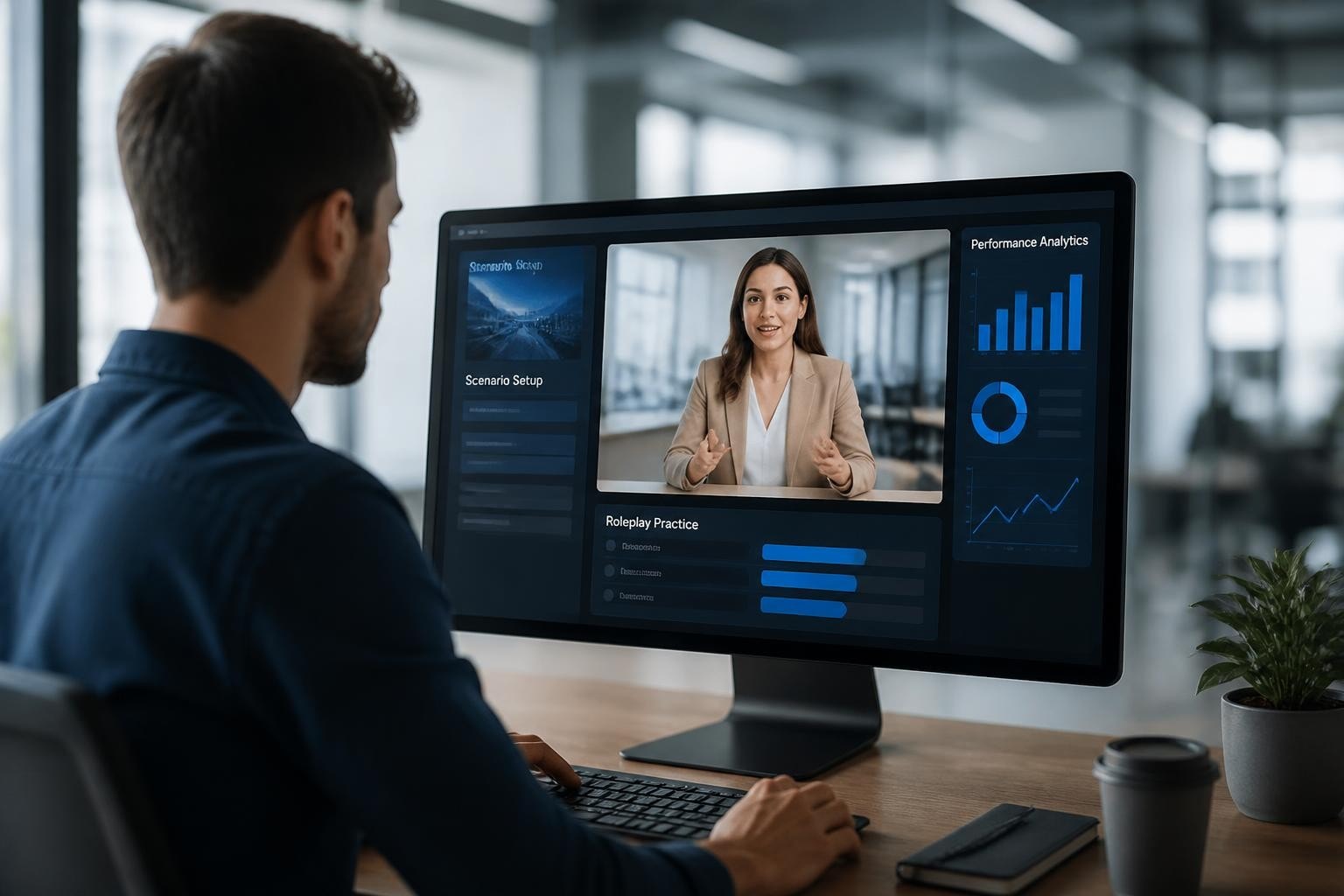
Sales teams face unprecedented pressure to perform in 2026. Traditional training methods struggle to keep pace with evolving buyer expectations, complex product portfolios, and competitive markets. AI sales roleplay software has emerged as a transformative solution, enabling sales professionals to practice conversations with intelligent virtual buyers that respond like real prospects. These platforms combine natural language processing, machine learning, and conversational AI to create realistic practice environments that scale across entire organizations. Unlike one-time workshops or occasional manager observations, modern roleplay technology provides continuous skill development opportunities that adapt to each seller's needs and learning pace.
The Evolution of Sales Practice Technology
Sales training has undergone a dramatic transformation over the past decade. Traditional approaches relied heavily on in-person workshops, manager ride-alongs, and peer-to-peer practice sessions that consumed significant time and resources while offering limited scalability.
The introduction of video review tools marked the first digital shift, allowing teams to record and analyze calls after the fact. However, these solutions focused on post-mortem analysis rather than proactive skill building. Sales performance management software evolved to track metrics, but still lacked the practice component essential for improvement.
AI sales roleplay software represents the next generation. These platforms leverage large language models and conversational AI to simulate realistic buyer interactions in a safe, controlled environment. Sales professionals can practice objection handling, discovery questions, and closing techniques against virtual prospects that respond with human-like reasoning and pushback.
Key Technological Advances Driving Adoption
Several breakthroughs have made AI-powered roleplay viable for enterprise deployment:
- Natural language understanding that interprets seller intent and responds contextually
- Persona modeling that creates realistic buyer profiles based on industry, role, and pain points
- Real-time feedback systems that identify improvement areas during or immediately after practice sessions
- Adaptive difficulty scaling that adjusts challenge levels based on seller performance
- Integration capabilities with existing CRM and sales enablement platforms
Research on role-playing language agents and persona techniques demonstrates how modern AI systems can maintain consistent character traits, goals, and objections throughout extended conversations, creating truly realistic practice scenarios.

Core Capabilities of Modern Roleplay Platforms
Understanding what distinguishes effective ai sales roleplay software from basic chatbots helps organizations make informed purchasing decisions. The most impactful platforms combine multiple sophisticated capabilities into cohesive training experiences.
Scenario Library and Customization
Leading platforms offer extensive libraries of pre-built scenarios covering common sales situations. Discovery calls, product demonstrations, pricing negotiations, and renewal conversations all require different skills and approaches.
Organizations benefit most when they can customize scenarios to match their specific products, buyer personas, and competitive landscape. The ability to upload product documentation, competitor battlecards, and customer testimonials enables the AI to respond with company-specific knowledge during practice sessions.
| Feature | Basic Platforms | Advanced Platforms |
|---|---|---|
| Scenario variety | 10-20 generic templates | 100+ customizable scenarios |
| Industry specificity | General business contexts | Industry and vertical tailoring |
| Custom persona creation | Limited or unavailable | Full persona builder with detailed attributes |
| Knowledge base integration | Not supported | Upload documents, web content, CRM data |
| Multilingual support | English only | 20+ languages with cultural context |
Feedback Mechanisms and Coaching Insights
The value of practice depends heavily on the quality of feedback provided. AI sales roleplay software analyzes conversations across multiple dimensions, identifying specific moments where sellers excelled or missed opportunities.
Automated scoring evaluates performance against established frameworks like SPIN selling, Challenger methodology, or custom rubrics. Systems track metrics including:
- Talk-to-listen ratio and monologue duration
- Question quality and discovery effectiveness
- Objection handling approach and success rate
- Value articulation and differentiation strength
- Closing confidence and next-step commitment
Beyond numerical scores, the most effective platforms provide actionable coaching insights similar to those delivered by AI sales coaches. Natural language explanations highlight what worked well and suggest specific alternative approaches for challenging moments.
A workplace deployment study on LLM role-play training found that participants receiving detailed AI feedback showed measurably better skill retention and transfer to real customer conversations compared to traditional training approaches.
Implementation Strategies for Maximum Impact
Deploying ai sales roleplay software successfully requires more than purchasing licenses and expecting adoption. Organizations that achieve the highest return on investment follow deliberate implementation strategies aligned with their broader sales enablement initiatives.
Integration with Existing Sales Stack
Modern sales teams already use numerous tools for CRM, content management, conversation intelligence, and performance tracking. Roleplay platforms deliver greater value when they connect to these existing systems rather than creating another disconnected data silo.
CRM integration enables practice scenarios based on actual opportunities in the pipeline. A seller preparing for a major enterprise negotiation can practice against an AI persona configured with details from their CRM account record, including industry, company size, previous interactions, and known pain points.
Conversation intelligence connectivity allows the AI to analyze patterns from real customer calls and create practice scenarios addressing observed skill gaps. If analysis reveals that reps struggle with a particular objection, AI sales training platforms can automatically generate focused practice sessions on that specific challenge.
Learning management system alignment ensures roleplay activities integrate into broader certification and onboarding programs rather than existing as standalone exercises.
Building Effective Practice Habits
Technology alone does not improve performance. Sales leaders must cultivate organizational habits that make regular practice part of the team's routine.
- Establish baseline expectations for practice frequency and volume
- Incorporate practice into onboarding as a core competency requirement
- Create pre-call preparation rituals using scenario-based warmups
- Leverage manager review workflows where leaders examine practice sessions
- Celebrate improvement milestones to reinforce positive behaviors
Sales training programs that integrate AI roleplay see higher engagement when practice becomes expected rather than optional. Teams that treat roleplay like athletes treat practice drills develop muscle memory for challenging conversations.

Measuring ROI and Business Impact
Investment in ai sales roleplay software requires justification through measurable business outcomes. Forward-thinking organizations establish clear metrics before deployment and track impact across multiple dimensions.
Performance Metrics and Attribution
Direct attribution can be challenging since multiple factors influence sales results. However, several metrics indicate whether roleplay technology delivers value:
Leading indicators provide early signals of impact:
- Practice session volume and consistency
- Scenario completion rates and retry patterns
- Score improvement trajectories over time
- Confidence self-assessments before and after practice
- Time to proficiency for new hires
Lagging indicators connect to revenue outcomes:
- Win rates for opportunities where sellers practiced relevant scenarios
- Average deal size progression
- Sales cycle length reduction
- Quota attainment improvements
- Customer satisfaction and renewal rates
Research from Harvard Business School on AI, ROI, and sales productivity demonstrates that organizations measuring both activity metrics (practice volume) and outcome metrics (revenue impact) gain clearer insight into which training approaches deliver results.
Cost Efficiency Compared to Traditional Methods
Traditional sales training involves substantial hidden costs beyond workshop fees and consultant rates. Travel expenses, lost selling time, and the opportunity cost of having entire teams off the floor create significant financial burden.
| Training Approach | Cost per Rep per Year | Scalability | Consistency | Practice Frequency |
|---|---|---|---|---|
| In-person workshops | $8,000-$15,000 | Low | Variable by facilitator | Quarterly |
| Manager coaching | $5,000-$10,000 | Limited by manager capacity | Depends on manager skill | Weekly to monthly |
| Peer roleplay | $2,000-$4,000 | Moderate | Highly variable | As scheduled |
| AI roleplay software | $1,200-$3,600 | Unlimited | Consistent framework | Daily or on-demand |
The economics become particularly compelling for distributed teams, new market expansion, and high-velocity sales environments where continuous skill development directly impacts revenue.
Addressing Common Implementation Challenges
Despite proven benefits, organizations encounter predictable obstacles when deploying ai sales roleplay software. Proactive planning and change management address these challenges before they undermine adoption.
Seller Resistance and Engagement
Some sales professionals initially resist AI-based practice, viewing it as unnecessary or questioning whether virtual scenarios translate to real-world performance. This resistance often stems from uncertainty rather than actual experience with the technology.
Effective countermeasures include:
- Starting with voluntary pilot programs featuring respected top performers
- Showcasing specific scenarios where practice prevented real-world mistakes
- Gamifying elements to make practice competitive and engaging
- Having managers model desired behaviors by completing practice sessions themselves
- Sharing aggregated data showing correlation between practice volume and results
According to insights from how AI assistants can add value to your sales team, sales professionals embrace AI tools when they clearly augment human capabilities rather than feeling like surveillance or replacement mechanisms.
Data Privacy and Governance Considerations
AI roleplay platforms process potentially sensitive information about sales methodologies, product positioning, competitive intelligence, and pricing strategies. Organizations must establish governance frameworks addressing:
- What data the platform can access and store
- How practice conversations are retained and who can review them
- Whether AI models are shared across customers or isolated
- Compliance requirements for regulated industries
- Geographic data residency for international deployments
A Harvard Business Review case study on deploying generative AI salesbots examines the organizational decision-making process around AI adoption, highlighting the importance of cross-functional alignment between sales leadership, IT security, legal, and compliance teams.

Selecting the Right Platform for Your Organization
The ai sales roleplay software market has expanded rapidly, with solutions ranging from simple chatbot interfaces to sophisticated enterprise platforms. Making the right selection requires evaluating capabilities against your specific requirements and organizational context.
Evaluation Criteria Framework
Technical capabilities:
- Conversation quality and persona realism
- Response latency and system reliability
- Customization depth for scenarios and personas
- Analytics sophistication and reporting flexibility
- Integration breadth with existing sales tools
Business considerations:
- Pricing structure and cost predictability
- Implementation timeline and complexity
- Vendor stability and product roadmap
- Customer support and success resources
- Security certifications and compliance documentation
User experience factors:
- Interface intuitiveness for both reps and managers
- Mobile accessibility for remote practice
- Feedback clarity and actionability
- Setup effort required for new scenarios
- Administrative burden for ongoing management
Gartner's market overview of B2B sales AI role-play applications provides valuable context on vendor landscape segmentation and capability differentiation across the market.
Build vs. Buy Considerations
Some organizations with substantial technical resources consider building custom roleplay solutions rather than purchasing commercial platforms. This approach offers maximum customization but requires significant ongoing investment.
Build advantages:
- Perfect alignment to proprietary methodologies
- Complete control over data and privacy
- Unlimited customization potential
- No per-seat licensing costs
Build challenges:
- Substantial upfront development investment
- Ongoing maintenance and improvement burden
- Difficulty keeping pace with rapid AI advancement
- Internal expertise requirements across AI, conversation design, and learning science
- Opportunity cost of engineering resources
Most organizations find that custom AI solutions combining commercial platforms with tailored configuration and integration deliver the optimal balance of capability and efficiency.
Future Trends Shaping Sales Roleplay Technology
The ai sales roleplay software category continues to evolve rapidly as underlying AI capabilities advance and vendors incorporate user feedback into product development. Several trends will significantly impact how organizations leverage these platforms in coming years.
Multimodal Interaction Capabilities
Current platforms primarily operate through text or voice-only interfaces. The next generation will incorporate video analysis, enabling practice with visual elements like screen sharing, product demonstrations, and facial expression recognition.
This advancement allows sellers to practice complete presentation delivery, not just verbal components. The AI can provide feedback on slide design effectiveness, pacing, body language (when using video), and visual storytelling alongside traditional conversation analysis.
Adaptive Learning Pathways
Rather than following linear training curricula, future platforms will create personalized learning journeys based on individual skill profiles, role requirements, and career progression goals. The system identifies specific skill gaps through practice performance and automatically curates scenario sequences optimized for each seller's development needs.
AI training platforms that adapt content difficulty and focus areas based on real-time performance data accelerate skill development by ensuring practice time addresses actual needs rather than generic curriculum.
Team-Based Scenarios and Collaboration
While current roleplay focuses on individual practice, emerging capabilities enable multi-participant scenarios simulating complex enterprise sales situations. Account executives, solution engineers, and sales leaders can practice coordinated calls together against multiple AI personas representing different stakeholder roles.
This collaborative practice builds team coordination skills and alignment on messaging, roles, and handoffs that often determine success in complex B2B sales.
Integration with Revenue Intelligence
The distinction between practice and real-world execution will continue to blur. Platforms will analyze actual customer conversations, identify specific improvement opportunities, automatically generate relevant practice scenarios, and then verify skill transfer in subsequent real calls.
This closed-loop system connects sales call analysis software with training interventions and outcome measurement, creating a comprehensive performance improvement engine.
Organizational Change Management for AI Adoption
Technology implementation succeeds or fails based on how effectively organizations manage the human change process. Deploying ai sales roleplay software requires intentional change management addressing mindsets, behaviors, and organizational culture.
Executive Sponsorship and Messaging
Visible leadership support determines whether new tools get adopted or ignored. When sales leaders actively use roleplay platforms, discuss practice in team meetings, and celebrate skill improvement, teams recognize practice as valued and important.
Effective executive sponsors:
- Participate in practice sessions and share their own development areas
- Incorporate practice metrics into performance reviews and one-on-ones
- Allocate dedicated time for skill development in team schedules
- Share stories connecting practice to closed deals and improved results
- Provide resources and support for ongoing training initiatives
Manager Enablement as Force Multipliers
Frontline sales managers serve as the critical bridge between organizational initiatives and seller behaviors. Equipping managers to leverage roleplay insights in sales coaching software workflows maximizes platform impact.
Manager enablement should include:
- Training on interpreting AI-generated feedback and scores
- Frameworks for incorporating practice insights into coaching conversations
- Scenario creation guidance for team-specific challenges
- Best practices for balancing AI insights with human judgment
- Recognition strategies that reinforce desired practice habits
When managers view AI roleplay as augmenting rather than replacing their coaching role, they become enthusiastic advocates who drive sustained adoption across their teams.
Creating Safe Learning Environments
Practice requires psychological safety. Sellers must feel comfortable making mistakes, trying new approaches, and exposing skill gaps without fear of negative consequences.
Organizations build this safety by:
- Clearly separating development activities from performance evaluation
- Limiting access to practice sessions (only the seller and their direct manager)
- Celebrating learning moments and improvement trajectories
- Normalizing ongoing development even for top performers
- Framing AI feedback as objective data rather than judgment
Research from ACL's workshop on LLM roleplay and social influence explores how system design choices impact user comfort and engagement, providing valuable insights for creating psychologically safe practice environments.
Specialized Applications Across Sales Functions
While ai sales roleplay software initially focused on core selling skills, the technology has expanded to support various specialized sales functions and unique use cases that drive business value beyond traditional training.
New Hire Onboarding Acceleration
Bringing new sellers to productivity quickly directly impacts revenue and reduces costly ramp time. AI roleplay enables new hires to practice essential conversations before engaging real prospects, building confidence and competence in a risk-free environment.
Employee onboarding automation that incorporates AI practice scenarios helps new team members master product knowledge, discovery frameworks, and objection responses faster than traditional shadowing and classroom approaches alone.
Progressive roleplay sequences can mirror the typical new hire journey:
- Week 1-2: Company overview and product basics with supportive AI personas
- Week 3-4: Standard discovery conversations with common objections
- Week 5-6: Complex scenarios including competitive situations
- Week 7-8: Advanced negotiations and multi-stakeholder dynamics
This structured approach builds skills systematically while providing objective readiness assessments before releasing new hires to actual prospects.
Vertical and Industry Specialization
Sales teams serving multiple industries or verticals face the challenge of understanding diverse business models, pain points, and buying processes. Generic training cannot address this complexity effectively.
AI personas can embody specific industry roles complete with appropriate terminology, concerns, budget processes, and decision-making criteria. A healthcare-focused persona responds differently than a manufacturing or financial services prospect, forcing sellers to demonstrate genuine industry knowledge and relevance.
This capability proves particularly valuable for B2B sales consultants and teams expanding into new markets where sellers lack direct experience with prospect environments.
Objection Handling Mastery
Certain objections appear repeatedly across sales conversations but still trip up many sellers. Understanding how to handle sales objections theoretically differs from performing well when prospects actually push back.
Dedicated objection-focused scenarios allow unlimited practice against the same challenging situation until sellers develop confident, natural responses. The AI can vary how the objection gets raised, test different rebuttal approaches, and progressively increase difficulty.
Sellers preparing for high-stakes conversations can practice the specific objections they anticipate, refining their approach until they achieve consistent success in the practice environment before the real interaction.
AI sales roleplay software has matured from experimental technology to essential infrastructure for high-performing sales organizations. The combination of realistic practice environments, scalable delivery, objective feedback, and measurable impact creates competitive advantages that compound over time as teams continuously improve their skills. Organizations seeking to accelerate sales performance, reduce new hire ramp time, and build consistent execution across distributed teams will find these platforms deliver substantial returns when implemented thoughtfully. If you're ready to transform how your team develops sales capabilities, Ryan Cook specializes in designing and deploying custom AI solutions that integrate seamlessly with your existing sales processes and drive measurable business results.